
Here's the breakdown to the cost to install an electrical panel: Learn pricing, factors, and how to get an accurate California quote.
Date
Oct 22, 2025
Author
RC Admin
Read
6 min
Thinking about upgrading your electrical panel? The first question on most homeowners' minds is, "What's this going to cost me?" For a standard replacement or upgrade in California, you can generally expect to invest somewhere between $2,500 and $4,500.
This price covers the new panel itself, the crucial work done by a professional electrician, and any necessary permits. Of course, the final number depends on a few things, like the panel's capacity (measured in amps) and how complex the job is.
Understanding the Baseline Cost to Install an Electrical Panel
Think of your electrical panel as the heart of your home’s electrical system. It takes all the power coming in from the utility company and safely distributes it to every outlet, light, and appliance in your house. When it’s time to replace this critical component, understanding the costs is your first step.
For homeowners in California, knowing these numbers helps you budget for what is truly an essential home improvement.
Several factors will nudge the final price up or down, but let's start with the basics. Most modern homes need either a 100-amp or 200-amp panel. A 100-amp panel is often just fine for smaller homes without a lot of heavy-duty appliances.
On the other hand, a 200-amp panel has become the go-to standard for new construction. It's also the right choice for homes with high-demand equipment like central air conditioning, a hot tub, or an EV charger.
Typical Price Ranges
It’s no surprise that the cost difference between panel sizes can be pretty significant. A 100-amp panel installation will usually fall on the lower end of the price spectrum.
Industry data from Homewyse shows that the basic cost to install an electrical service panel can range from $1,283 to $1,556 per panel, which accounts for local labor rates and specific site conditions. More broadly, you can expect a 100-amp panel installation to cost between $2,500 and $3,500 all-in.
A new electrical panel isn't just another expense—it's a critical investment in your home's safety and future. It ensures your system can handle today's technology, from a fully-equipped home office to the latest smart home gadgets.
To give you a clearer picture of where your money goes, here’s a quick summary of what you can expect to pay. Keep in mind, these are national averages. Prices here in California can be higher due to different labor rates and stricter local regulations.
Estimated Cost Breakdown for a Standard Installation
This table provides an at-a-glance look at the typical costs you'll encounter for a standard electrical panel installation.
Cost Component | Average Price Range (National) |
|---|---|
New Electrical Panel (100-200 Amp) | $200 - $600 |
Professional Labor | $1,500 - $3,500 |
Permits and Inspection Fees | $250 - $600 |
Total Estimated Cost | $1,950 - $4,700 |
As you can see, the bulk of the cost comes from professional labor—and for good reason. This is a complex job that requires a licensed expert to ensure everything is done safely and up to code.
Ready to future-proof your home's electrical system? If you're in Los Angeles or Ventura County and need a panel upgrade for a new EV charger or a home backup generator, contact RC Generators & Electric today for a precise and reliable quote.
What Really Drives Your Final Installation Cost
When you start getting quotes for a new electrical panel, you’ll probably notice the prices can be all over the map. One homeowner's project in Los Angeles could be priced completely differently from another's, even if they look similar on paper. That’s because the final cost to install an electrical panel is more than just the box on the wall—it’s a mix of several key factors.
Understanding these variables is the best way to make sense of any estimate an electrician gives you. The big three shaping your total bill are the panel itself, the professional labor needed to get it done right, and any required permits.
This infographic gives you a quick visual breakdown of how the total cost is typically structured.
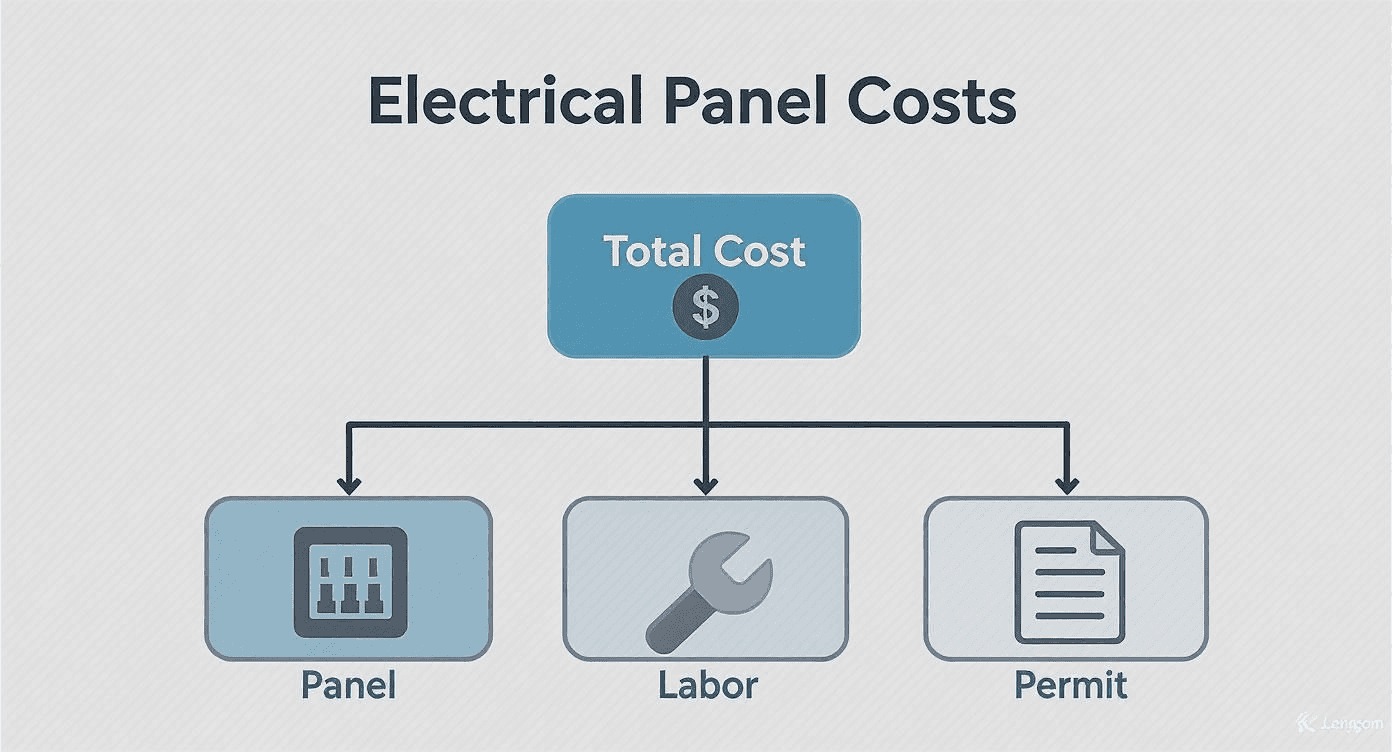
As you can see, labor often makes up the biggest chunk of the budget. It’s a clear reminder of why hiring a skilled, licensed professional is so critical for a major safety upgrade like this.
Amperage: The Power and Price Driver
The single biggest factor dictating the cost is the panel's amperage (amps). Think of amperage as the capacity of your home's electrical system.
A 100-amp panel is fine for smaller, older homes with basic electrical needs. But a 200-amp panel, which is the standard in most modern homes, is built to handle more power for things like central air conditioning, a home backup generator, or an EV charger.
Because a higher-amperage panel can manage more electricity, the hardware itself costs more. On top of that, upgrading amperage often requires thicker wiring from the utility line to your house, adding to both material and labor costs. A 200-amp upgrade is a more involved job than a simple 100-amp swap, and the price tag reflects that.
Labor and Your Home's Layout
The second major piece of the puzzle is labor, and this is where costs can really vary. An electrician's time on the job is shaped by a few things unique to your home:
Panel Location: Is your panel easy to get to in the garage? Or is it tucked away in a cramped closet or an old basement? Difficult access means more time and higher labor costs.
Existing Wiring: If your home's wiring is old, disorganized, or not up to current California electrical codes, the electrician will need extra time to safely connect it to the new panel.
Structural Modifications: Sometimes a new, larger panel won't fit neatly into the old spot. This might mean cutting into drywall or making other small adjustments, which adds to the project’s timeline.
An experienced electrician doesn't just swap a box; they re-engineer the heart of your home's electrical system for safety and reliability. The labor cost reflects this expertise and the detailed work required to meet strict safety standards.
Panel Brand and Quality
Just like with cars or kitchen appliances, brand matters. It might be tempting to go with the cheapest panel you can find, but established brands like Square D, Siemens, or Eaton have earned their reputation for reliability and durability.
A high-quality panel will have better-made circuit breakers and a tougher construction, which lowers the risk of failures down the road. Spending a little extra on a trusted brand is an investment in your home’s long-term safety and your peace of mind.
Local Permits and Inspection Fees
Finally, you can't forget the paperwork. In California, replacing an electrical panel is not a DIY project—it legally requires a permit from your local city or county, whether that's Los Angeles or Ventura County.
These permits ensure the work is done to code and gets inspected by an official third party when it’s finished. This is a non-negotiable step that protects you and your home. The fees for these permits and inspections are passed on to you and will be included in your electrician's final quote.
Navigating all these costs takes expertise. If you're planning an electrical upgrade for a home backup system or an EV charger, you need a team that understands California's specific requirements. Contact RC Generators & Electric for a detailed and transparent quote for your panel installation.
Deciding Between an Upgrade and a Replacement
When your home's electrical panel starts acting up, you'll face a big question that directly impacts your wallet: do you need a simple replacement, or is it time for a full upgrade? While the terms sound alike, they describe two very different jobs with two very different price tags.
A replacement is a like-for-like swap. If you have a 100-amp panel that’s failing, a replacement means putting in a brand new 100-amp panel. An upgrade, on the other hand, boosts your home's total electrical capacity—think of it as widening the electrical highway into your house to handle more traffic.
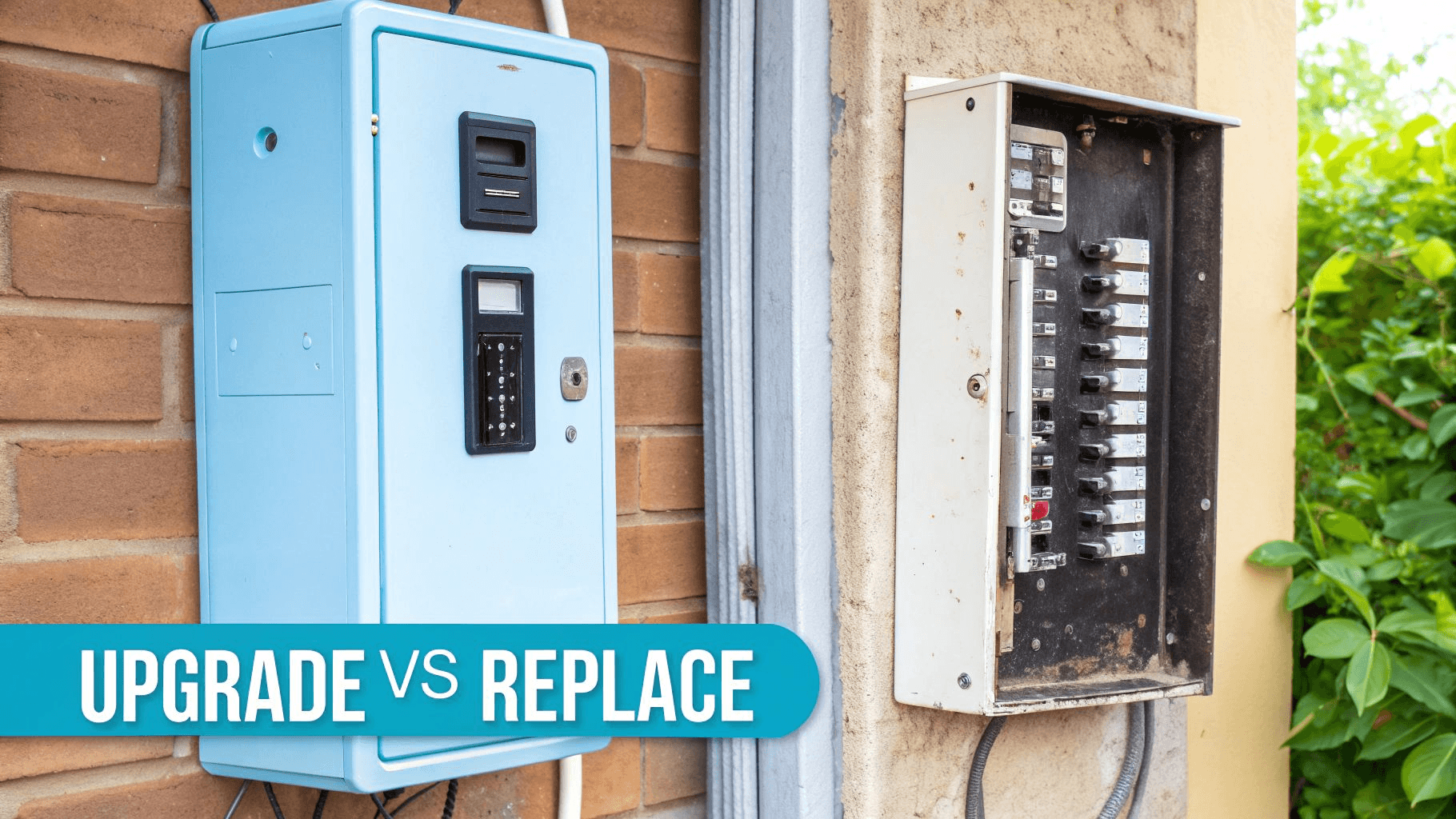
This difference is the single biggest factor determining the cost to install an electrical panel. A replacement is straightforward, but an upgrade is a smart investment in your home's future.
Telltale Signs You Need an Upgrade
How do you know if you need more electrical capacity? Your house will usually give you some pretty clear hints that it's struggling to keep up with modern life. Ignoring them isn't just inconvenient—it can be a safety risk.
You should be thinking seriously about an upgrade if you see any of these signs:
Flickering or Dimming Lights: Do your lights dip whenever you run the microwave or another big appliance? That's a classic sign your panel is straining under the load.
Frequently Tripped Breakers: Breakers are a safety feature, but if they're tripping all the time, your circuits are overloaded. You're simply asking for more power than your system can safely deliver.
Plans for Major Additions: Thinking about installing a power-hungry appliance? Adding a whole-home backup generator or an EV charger puts a massive new demand on your system that older panels weren't built for.
An electrical panel upgrade isn't just about adding more slots for breakers; it's about fundamentally increasing your home’s power supply. It prepares your home for the future and ensures it can safely run everything you need.
The Cost Difference Between Replacing and Upgrading
The price gap between a replacement and an upgrade is significant because an upgrade is a much bigger job. Bumping up from a 100-amp service to today's standard 200-amp service involves more than just swapping out the box.
An electrician will likely need to install a new, thicker service cable running from the utility line to your meter, and possibly a new meter base to handle the extra power. This adds real material and labor costs to the project. For California homeowners, especially those in older homes, this is a very common and necessary project.
On average, the cost to upgrade an electrical panel from 100 amps to 200 amps falls somewhere between $1,300 and $3,000. This is a necessary step for many older homes that simply weren't built for the power demands of 2024.
While it costs more upfront, the investment is well worth it. You're ensuring your home is safe, functional, and ready for whatever's next—whether that's an electric car or a new home office. An upgrade empowers your home for the future; a replacement just maintains the past.
Budgeting for Additional and Hidden Expenses
When you get an initial quote for your electrical panel installation, it's easy to assume you have the final number. But the price for the panel and the direct labor to install it is often just the starting line. The true cost to install an electrical panel can increase once an electrician gets a look at what’s really going on behind your walls.
Several related jobs and surprise discoveries can add to your project's scope and budget. Knowing about these potential "add-ons" is the best way to avoid sticker shock when the final bill arrives.
Uncovering Old Wiring Issues
The biggest wildcard in any panel upgrade is almost always the condition of your home’s existing wiring. This is especially true in older California homes that might not have seen an electrical update in decades. What an electrician finds can seriously change the complexity and cost of the job.
If your home has outdated wiring, a simple panel swap won't be enough. To keep you safe and meet modern electrical codes, your electrician will need to do corrective work to safely connect these old circuits to the new panel. This extra labor can add anywhere from $400 to over $1,000 depending on how widespread the problem is.
Adding Dedicated Circuits for New Appliances
A panel upgrade is often triggered by the desire to add new, power-hungry equipment. Whether you’re installing a home backup generator, a new EV charger, or a modern electric stove, each one needs its own dedicated circuit to run safely.
Think of a dedicated circuit as a private express lane for electricity. It guarantees that a high-power device gets all the electricity it needs without overloading the system. The cost to run a new dedicated circuit usually falls between $200 and $800. The final price depends on how far the appliance is from the panel and how difficult it is to run the new wire.
"A panel upgrade is the perfect time to 'future-proof' your home's electrical system. Planning for additional circuits now for potential future needs—like a second EV charger or a workshop—can save you significant money and hassle down the road."
Installing a Subpanel for Expanded Needs
Planning a big home addition, finishing a basement, or turning your garage into a workshop? If so, your main electrical panel might not have enough physical slots for all the new circuits you’ll need. The solution is often to install a subpanel.
A subpanel acts like a satellite distribution center, pulling power from the main panel and sending it to a specific area of your home. This approach keeps your wiring organized and prevents the main panel from becoming dangerously overcrowded. Installing a subpanel can add $500 to $2,000 to your total project cost.
Factoring in Drywall and Finishing Repairs
Finally, it’s important to remember that electrical work can sometimes get a little messy. To access wiring or fit a new, larger panel, your electrician might have to cut into your drywall. While a good electrician will try to be as precise as possible, some cosmetic repairs are often unavoidable.
Most electricians don't specialize in drywall repair, so this finishing work usually isn't included in their quote. You should probably budget an extra $200 to $500 for a handyman to come in and patch, sand, and repaint any affected spots.
How California Pricing Stacks Up to the National Average
When you're planning a big home project, it’s easy to look up national cost averages to get a ballpark figure. But if you’re a homeowner in California, those numbers can be misleading. The Golden State has its own economic reality, and the cost to install an electrical panel here is almost always higher than elsewhere.
The biggest reasons for this are California's high cost of living and the strong demand for skilled tradespeople. Electricians, just like everyone else, have higher business expenses—from insurance to fuel—and those costs get passed on to the customer in their labor rates.
Not All of California Is Created Equal
Even within the state, prices can swing dramatically depending on where you live. Your final quote is heavily tied to your zip code. High-cost-of-living areas will naturally have the highest prices for electrical work.
Here’s a rough breakdown of what that looks like:
Major Metro Hotspots (Bay Area, Los Angeles): If you live here, expect to pay a premium. Labor rates for a licensed electrician can easily be 20-30% higher than the national average, pushing the total project cost to the upper end of most estimates.
More Affordable Regions (Central Valley, Inland Empire): In areas with a lower cost of living, you'll find more competitive pricing. Labor rates are closer to the national average, though material costs and permit fees are still high due to statewide regulations.
Bottom line: a panel upgrade in San Francisco could easily cost thousands more than the exact same job in Bakersfield.
That’s why it’s so important for California homeowners to get local quotes instead of trusting broad national estimates. A local electrician knows the specific code requirements, permit processes, and labor market in your city, which means you’ll get a far more accurate number.
Why California’s Strict Codes Add to Your Budget
California is famous for having some of the toughest building and electrical codes in the country. These rules are all about maximizing safety—which is a good thing—but they also add to the final bill.
Stricter codes often mean more expensive materials are required, like specific types of circuit breakers or thicker wiring. On top of that, the installation itself can be more complicated, requiring extra time from your electrician to make sure every detail is up to code. This careful, by-the-book work is a big part of why the cost to install an electrical panel is higher here.
Ultimately, you can't get a true sense of cost from a generic online calculator. For homeowners in Los Angeles and Ventura County, you need a quote that’s based on your home’s unique needs and our area's specific pricing.
Ready for an accurate, no-surprise quote for your panel installation? Contact RC Generators & Electric today for a professional assessment tailored to your California home.
Finding the Right Electrician for Your Project
Choosing the right professional for your panel installation is about more than just comparing quotes. When it comes to electrical work, expertise is non-negotiable—the safety of your home and family is on the line.
Going with the lowest bidder without doing your homework can lead to failed inspections, dangerous wiring, or even fire hazards. The goal is to find a qualified, reputable electrician who will do the job right the first time, ensuring your home is safe and up to California’s tough electrical codes.
A great electrician doesn't just install a new panel; they provide peace of mind. That means hiring someone who is not only skilled but is also transparent, communicates well, and stands behind their work.
Vetting Your Candidates The Smart Way
Before you get quotes, build a shortlist of potential electricians. Start by looking for professionals with a solid local presence and positive reviews in your community. A company with deep roots in your area will know the local permitting offices and what inspectors look for, which can save you headaches.
Once you have a few names, it’s time to do some digging. Here are the absolute must-checks:
License and Insurance: This is the bare minimum. Always ask for their California state contractor license number and double-check that it’s active. You also need proof of liability insurance and workers' compensation coverage—this protects you if an accident happens on your property.
Specific Experience: Ask them directly about their experience with residential panel upgrades. This is especially important if you have an older home or you’re planning a major amperage increase.
References and Past Work: Ask for references from recent clients who had similar projects done. A confident, professional electrician will have no problem connecting you with happy customers.
Key Questions to Ask Every Electrician
With your vetted list in hand, it's time to have a real conversation. The way they answer these questions will tell you everything you need to know.
How do you handle the permitting process? A true professional will manage the entire permit application and schedule all the inspections for you. If they tell you a permit isn't necessary, that's a massive red flag.
What brand of panel and breakers do you use? You want to hear names like Square D, Siemens, or Eaton. Reputable electricians stick with these brands because they’re known for quality and reliability.
What kind of warranty do you offer on your workmanship? A professional stands by their work. Look for a warranty of at least one year on labor.
Will you provide a detailed, itemized quote? A vague, one-line estimate isn't good enough. You need a clear breakdown of costs covering materials, labor, and any permit fees.
Comparing quotes is about more than just the final number. A lower bid might not include essential work like drywall repair or may use lower-quality materials, costing you more in the long run.
Comparing Your Quotes
Once you have at least three detailed quotes, lay them out side-by-side. Look past the bottom-line price and into the specifics. Does one quote include a higher-quality panel? Does another outline a more thorough process for dealing with old wiring?
Often, the most professional and detailed quote comes from the most reliable electrician. For homeowners looking for trusted electrical services in Los Angeles and Ventura County, you can find a list of our service areas to see if we operate near you. Choosing a trusted, local expert is the final, crucial step in making sure your project is a success.
Common Questions About Electrical Panel Costs
Thinking about a panel installation is a big investment, and it's natural to have questions. Getting straightforward answers is the best way to feel confident about your project. Here are a few of the most common things we hear from homeowners across California.
What Are the Signs I Need a New Electrical Panel?
Your home is pretty good at telling you when its electrical system is struggling. You should definitely start thinking about an upgrade if you notice any of these classic warning signs:
Breakers that trip constantly: This is your panel's way of saying it can't keep up with your electricity demands.
Flickering or dimming lights: If your lights dip every time the AC or microwave kicks on, the panel is being pushed to its limit.
A faint burning smell: Any weird smells coming from your panel are a serious red flag. Call a professional immediately.
Visible rust or corrosion: Physical damage is more than just an eyesore—it compromises the panel's safety and ability to function correctly.
If your panel is over 25 years old, still uses old-school fuses, or you’re planning to add a major new appliance like an EV charger or a home backup generator, an upgrade isn't just a good idea—it's essential for safety.
Can I Install an Electrical Panel Myself?
Let’s make this one simple: no, absolutely not.
Installing an electrical panel is a complex, high-voltage job. One wrong move carries a severe risk of electrocution or starting a fire. In California, this kind of work legally requires a licensed and insured electrician to make sure everything is up to the strict state and local codes. For your own safety, this is one project you must leave to a qualified professional.
How Long Does a Typical Panel Installation Take?
A straightforward panel replacement—swapping an old panel for a new one with the same amperage—usually takes about 4 to 8 hours. Keep in mind your home’s power will be completely shut off during this time.
However, if the job is a full service upgrade (like going from a 100-amp to a 200-amp service) or involves a lot of rewiring, it can easily take a full day, sometimes longer. Your electrician will be able to give you a clear timeline based on what your specific project involves.
Ready to make sure your home's electrical system is safe, reliable, and ready for whatever you throw at it? For a professional assessment and a clear, detailed quote on your electrical panel installation in Los Angeles or Ventura County, trust the experts at RC Generators and Electric.