
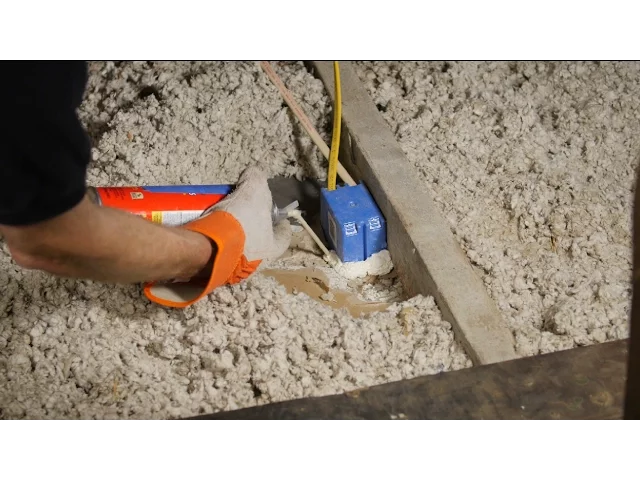
Discover practical home energy efficiency tips to cut bills and boost comfort. Simple, actionable steps you can start today for noticeable savings.
Date
Dec 3, 2025
Author
RC Admin
Read
8 min
For homeowners in California, managing high energy costs, especially during peak seasons, is a constant challenge. Compounded by the ever-present risk of power outages from wildfires, heatwaves, or grid instability, achieving an energy-efficient home is no longer just about saving money—it's about resilience and peace of mind. This guide provides 10 essential home energy efficiency tips tailored specifically for California residents, empowering you to take control of your utility bills and enhance your home’s security.
We'll cover everything from simple, low-cost fixes you can implement this weekend to major upgrades that future-proof your property. You will learn how to reduce your carbon footprint and prepare for any grid disruption with practical, consumer-friendly advice. The strategies outlined here are designed to deliver tangible results, whether you’re looking to make minor adjustments or invest in long-term solutions like a whole-home backup generator. To kickstart your journey toward significant energy savings, delve deeper into comprehensive strategies on how to reduce energy consumption in your home.
This listicle cuts through the noise to provide clear, step-by-step guidance. We will explore everything from smart thermostats and LED lighting to more robust upgrades like high-efficiency HVAC systems, ENERGY STAR appliances, and attic insulation. We’ll also touch on advanced solutions, such as integrating a Generac home backup generator to ensure your energy-efficient systems stay powered during an outage. Let's explore the practical strategies that will cut down your utility bills and fundamentally improve your home's comfort, value, and readiness for anything.
1. Upgrade to a Programmable or Smart Thermostat
One of the most impactful and accessible home energy efficiency tips is upgrading from a manual thermostat to a smart or programmable model. These advanced devices automate your home’s heating and cooling schedules, eliminating the guesswork and human error that lead to wasted energy. A smart thermostat learns your family's patterns, automatically adjusting the temperature when you're away or asleep, which can significantly reduce your HVAC system's workload.
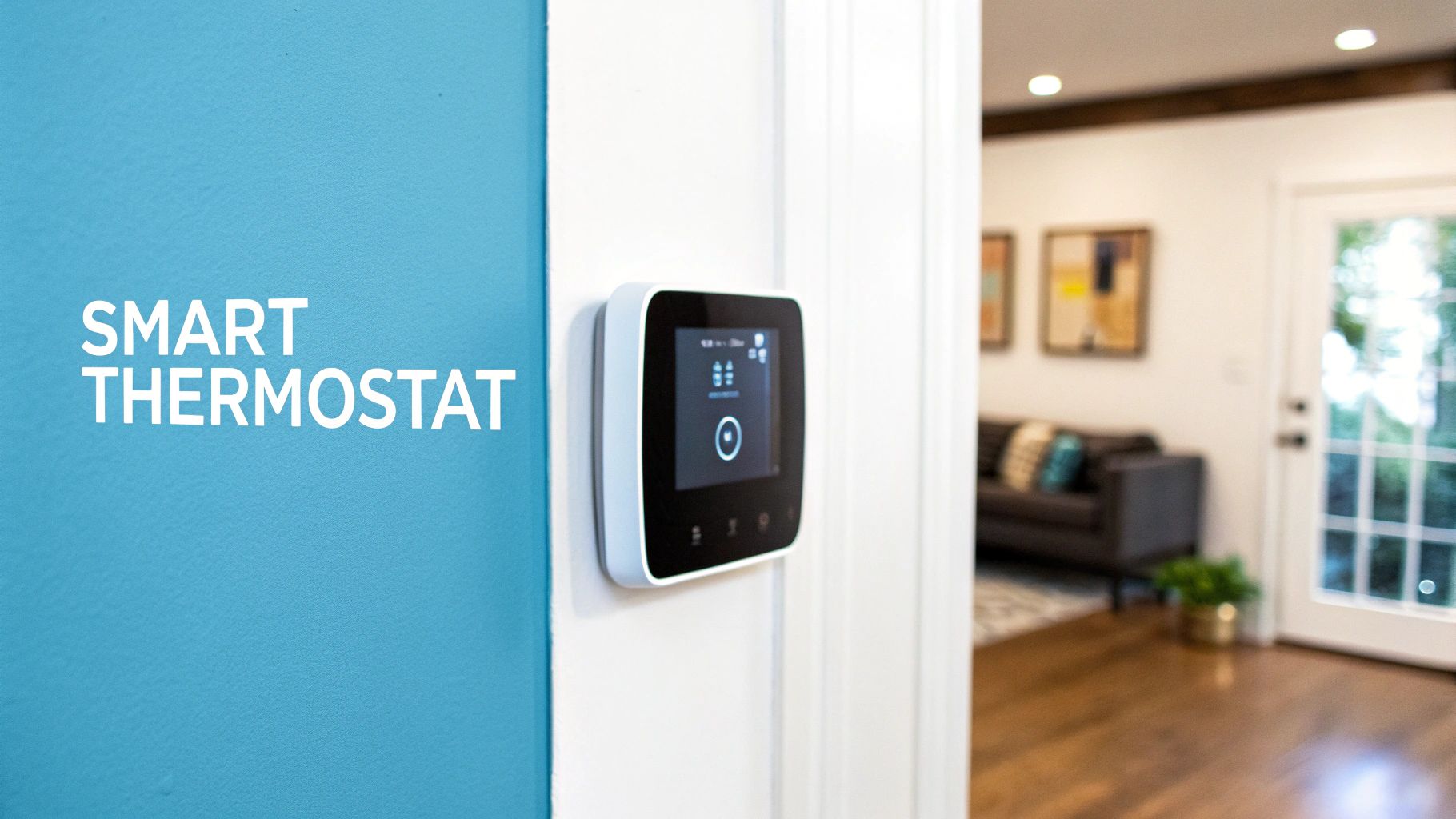
This simple upgrade can lead to substantial savings. According to ENERGY STAR, homeowners can save an average of 8% on heating and cooling bills, which translates to about $50 per year. In the varied climates of California, where you might need heating in the morning and cooling in the afternoon, this automated control is especially valuable.
How to Maximize Your Smart Thermostat
To get the most out of your new device, follow these best practices:
Trust the Automation: Allow the thermostat's learning features to optimize settings based on your behavior. Resist the urge to constantly make manual adjustments.
Use Remote Sensors: Some models use remote sensors to measure temperature in different rooms, ensuring consistent comfort throughout your home and preventing the system from overworking to cool or heat unused areas.
Enable Geofencing: This feature uses your smartphone's location to automatically switch to an "Away" mode when you leave and resume your preferred temperature as you return home.
Review Energy Reports: Most smart thermostats provide detailed energy usage reports via their app. Regularly review these to identify patterns and find new opportunities to save.
Integrating with Your Home System
A smart thermostat is a central component of an efficient home. It can integrate with other smart devices and even your home backup power system. For instance, during a power outage when your Generac home generator is running, a smart thermostat can be programmed to operate more conservatively, extending your fuel supply while maintaining essential comfort.
Ready to gain control over your energy bills? Our team can assess your HVAC system's compatibility and install the right smart thermostat for your home. Contact RC Generators and Electric today to schedule a consultation.
2. Improve Insulation and Air Sealing
A significant portion of your home's energy consumption is dedicated to maintaining a comfortable indoor temperature. One of the most effective home energy efficiency tips is to improve your home's insulation and seal air leaks, which together form a protective thermal envelope. Proper insulation slows heat transfer, while air sealing prevents conditioned air from escaping and outside air from seeping in, drastically reducing the strain on your HVAC system.
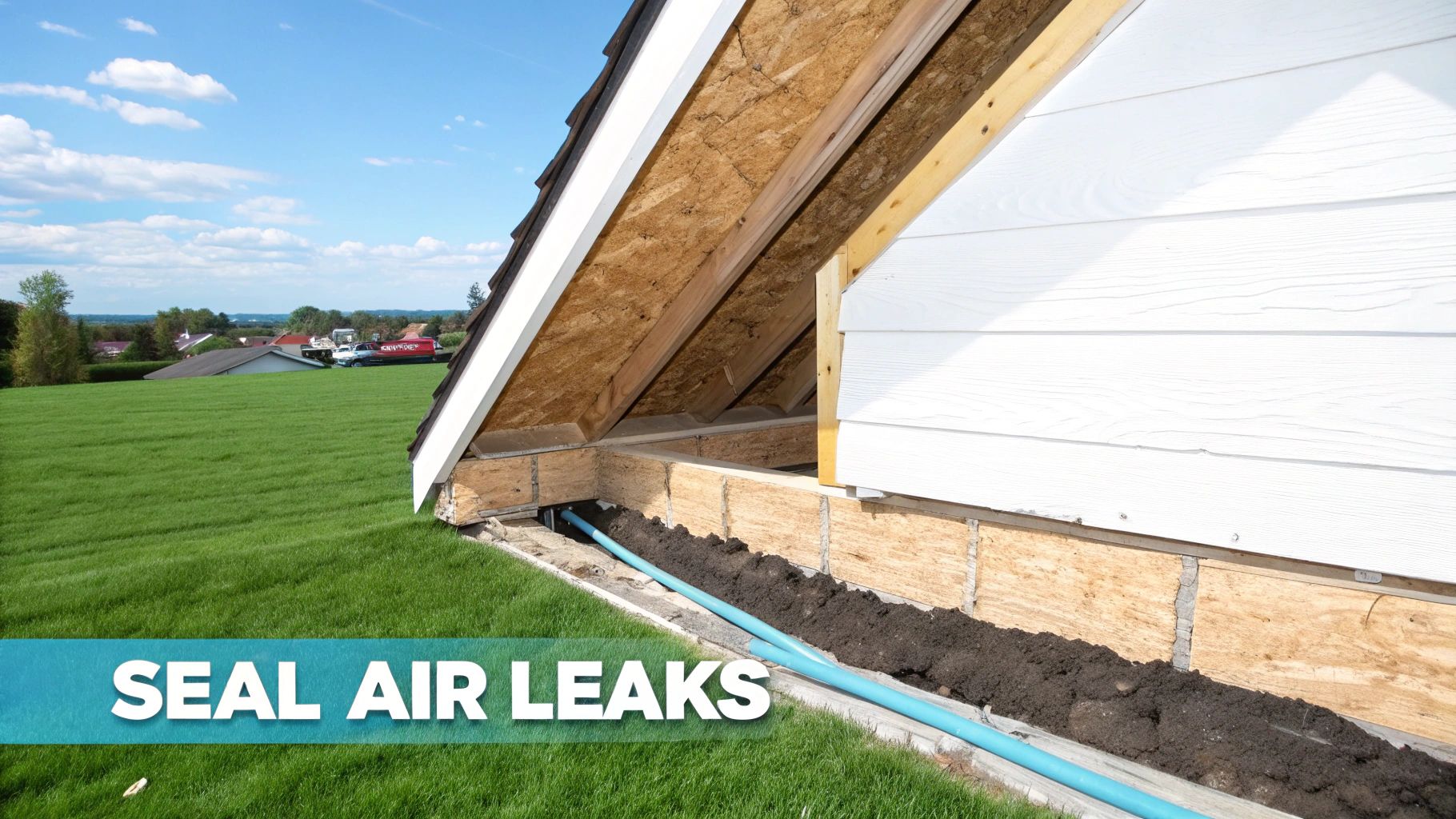
The U.S. Department of Energy estimates that homeowners can save an average of 15% on heating and cooling costs by air sealing their homes and adding insulation in key areas like attics and crawl spaces. In California, where temperature swings can be dramatic, this means your home stays cooler in the summer and warmer on chilly winter nights without excessive energy use.
How to Maximize Your Home's Thermal Envelope
To effectively reduce energy waste, follow a strategic approach to sealing and insulating:
Prioritize the Attic: Since heat rises, attics are a major source of heat loss. Ensuring it is properly insulated is the most impactful first step.
Seal Leaks First: Before adding new insulation, it's crucial to seal all air leaks. Common culprits include gaps around recessed lighting, plumbing vents, wiring holes, and attic hatches.
Don't Forget Ductwork: Leaky ducts in unconditioned spaces like attics or crawl spaces can lose a significant amount of the air that passes through them. Crucial for preventing these air leaks and improving overall system efficiency, you can also learn how to effectively seal ductwork with mastic sealant.
Address Windows and Doors: Apply weatherstripping to doors and caulk around window frames to eliminate drafts, which are major sources of energy loss.
Integrating with Your Home System
A well-insulated and sealed home not only lowers your monthly utility bills but also enhances the performance of your entire energy system. During a power outage, your Generac home backup generator won't have to work as hard to maintain a stable temperature. This efficiency helps conserve fuel and extends the generator's runtime, ensuring your family remains comfortable and safe for longer.
Ready to stop air leaks and boost your home's efficiency? Our team can perform an energy assessment and recommend the best insulation and sealing solutions for your property. Contact RC Generators and Electric today to learn more.
3. Install ENERGY STAR Certified Windows and Doors
Your windows and doors are significant sources of energy loss, acting as openings that allow heat to escape in the winter and enter in the summer. Upgrading to ENERGY STAR certified models is one of the most effective home energy efficiency tips for tackling this issue. These high-performance products feature advanced technologies like multiple panes of glass, special coatings, and insulated frames that drastically reduce heat transfer.
This investment pays dividends in both comfort and cost savings. According to the EPA, replacing old windows with ENERGY STAR certified models can lower household energy bills by an average of 12%, which translates to significant savings year after year. For homeowners in California, where intense sun can drive up cooling costs, windows with specialized coatings designed for warm climates can make a substantial difference in maintaining a comfortable indoor temperature without overworking the AC.
How to Maximize Your Window and Door Upgrade
To ensure you get the best performance and return on your investment, follow these guidelines:
Prioritize Problem Areas: If a full replacement isn't in the budget, focus on the south and west-facing windows first, as they receive the most direct sunlight and contribute most to heat gain.
Choose the Right Features: Look for windows with coatings and gas fills (like argon) appropriate for California’s climate. This helps block solar heat in the summer while retaining indoor heat on cool nights.
Ensure Proper Installation: Even the best windows will underperform if installed incorrectly. Always use a certified professional to ensure a perfect, airtight seal that prevents drafts and moisture intrusion.
Add Window Treatments: Combine your new windows with effective treatments like blinds, curtains, or reflective films for an additional layer of insulation and energy savings.
Supporting a Resilient and Efficient Home
High-performance windows and doors do more than just lower your utility bills; they create a more resilient and comfortable home. This improved insulation means your home stays comfortable for longer during a power outage. When your home is running on a backup power source like a Generac generator, this efficiency reduces the generator's workload, helping conserve fuel while keeping your home secure.
Upgrading your home's thermal envelope is a foundational step toward total energy independence. Contact RC Generators and Electric to learn more about how our electrical services can complement your home efficiency projects.
4. Upgrade to Energy-Efficient HVAC Systems
Your heating, ventilation, and air conditioning (HVAC) system is typically the largest energy consumer in your home. Upgrading an outdated unit to a modern, high-efficiency model is one of the most impactful home energy efficiency tips you can follow, offering significant long-term savings and improved comfort. These new systems are engineered to provide superior heating and cooling while using a fraction of the energy.
ENERGY STAR certified HVAC systems can reduce your heating and cooling costs by up to 20%, while some of the latest models can achieve even greater savings. This is thanks to advancements like variable-speed motors that precisely match output to your home's needs, avoiding the inefficient on-off cycles of older units. For homeowners in California, this means substantial savings during both summer heatwaves and cool winter nights.
How to Maximize Your HVAC Upgrade
To ensure you get the best performance and savings from a new system, consider these key steps:
Prioritize Proper Sizing: An oversized or undersized unit will run inefficiently and wear out faster. Insist that your installer performs a professional load calculation to determine the exact size needed for your home.
Consider a Heat Pump: For the California climate, a high-efficiency heat pump is an excellent all-in-one solution, providing both heating and cooling in a single, incredibly efficient unit.
Check for Rebates and Credits: Federal tax credits and local utility rebates can significantly reduce the upfront cost of a new system. Always research available incentives before making a purchase.
Don't Forget Maintenance: Once installed, protect your investment with regular professional servicing and consistent air filter changes to maintain peak efficiency.
Integrating with Your Home System
A modern HVAC system pairs perfectly with other energy-saving upgrades, especially a smart thermostat, to create a fully optimized climate control ecosystem. Furthermore, its efficiency becomes a critical asset during a power outage. When your Generac home backup generator is active, a high-efficiency HVAC unit draws less power, allowing the generator to run more economically and support other essential circuits for a longer duration, ensuring your comfort and safety are never compromised.
Ready to explore a high-efficiency HVAC solution for your home? Our expert electricians can ensure your home's electrical panel is ready for the upgrade. Contact RC Generators and Electric today to schedule an electrical system assessment.
5. Install LED Lighting Throughout the Home
One of the fastest and most cost-effective home energy efficiency tips is to replace outdated incandescent bulbs with modern LED (Light Emitting Diode) lighting. LEDs use up to 80% less energy and can last 25 times longer, offering immediate savings on your electricity bill and reducing the frequency of replacements. This simple swap significantly cuts down your home's overall energy consumption with minimal effort.
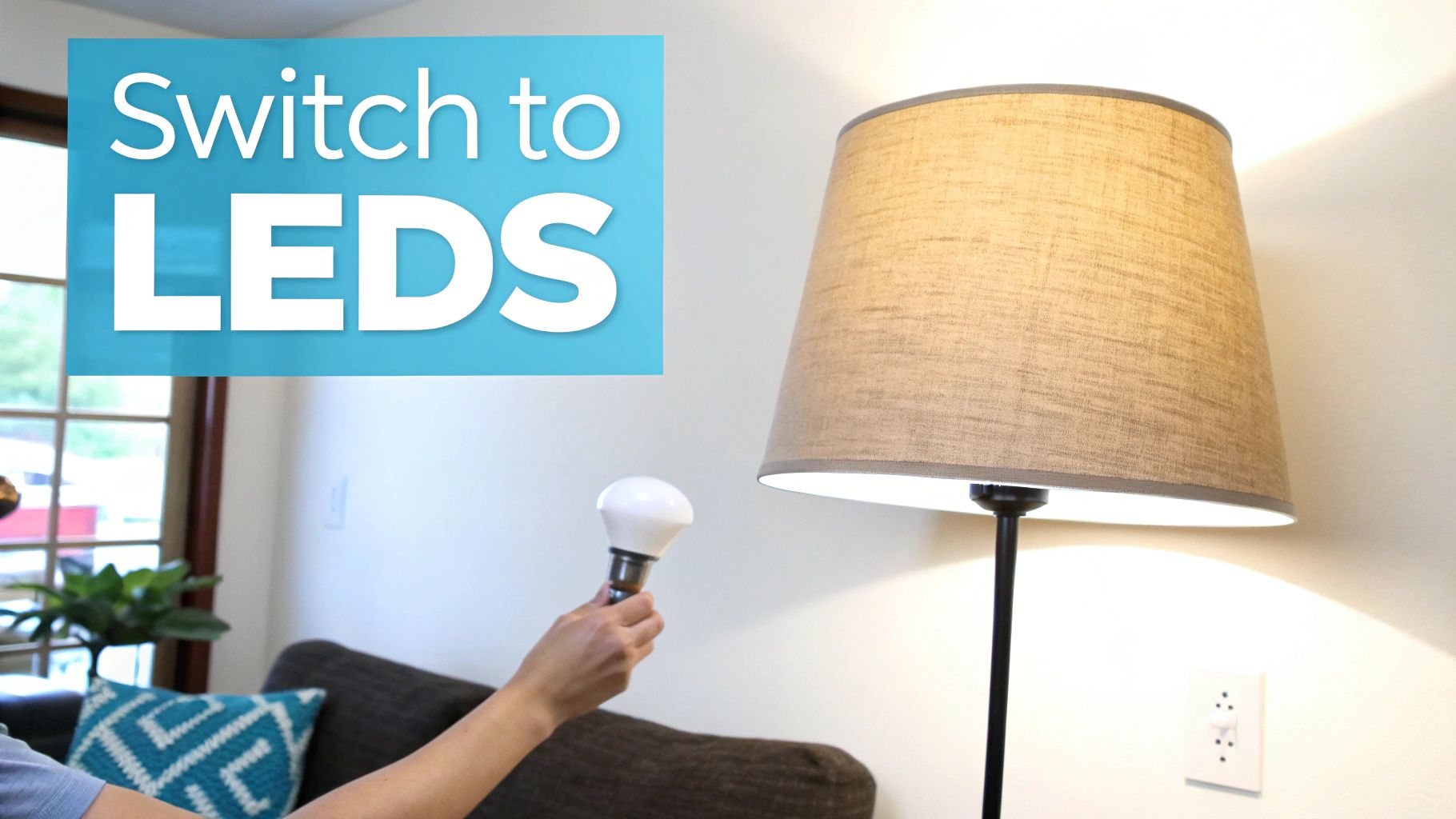
This upgrade pays for itself quickly, often within a year. According to the Department of Energy, switching to LED lighting can save the average household about $225 in energy costs per year. For California homeowners, this means more money in your pocket and less strain on the electrical grid, especially during peak usage times in the summer.
How to Maximize Your LED Lighting
To get the most out of your lighting upgrade, consider these best practices:
Prioritize High-Use Areas: Start by replacing bulbs in the most frequently used fixtures, such as those in the kitchen, living room, and outdoor security lights, to see the fastest return on investment.
Choose the Right Color Temperature: Select a "warm white" for a cozy, inviting atmosphere in living areas and bedrooms. Opt for a "cool white" or "daylight" for task-oriented spaces like kitchens, bathrooms, and garages.
Check for Dimmer Compatibility: If you have dimmer switches, ensure you purchase LED bulbs specifically marked as "dimmable" to avoid flickering or buzzing.
Integrate Smart Controls: Pair your LEDs with smart switches or use smart bulbs to automate schedules, dim lights remotely, and further enhance your energy savings.
Integrating with Your Home System
LED lighting is a foundational part of an efficient and resilient home. Because they consume significantly less power, they are an ideal partner for a home backup power system. During a power outage when your Generac generator is active, the low energy draw from LED lights helps conserve fuel and allows your generator to dedicate more power to larger appliances, extending your system's runtime and maintaining comfort.
Ready to brighten your home and lower your bills? We specialize in designing and installing comprehensive indoor and outdoor lighting solutions. Contact RC Generators and Electric today to schedule a consultation.
6. Install Solar Water Heating Systems
Harnessing the abundant California sun to heat your water is one of the smartest home energy efficiency tips for reducing utility bills. A solar water heating system uses rooftop collectors to absorb solar energy, which then heats water stored in a tank for your showers, laundry, and dishes. This significantly cuts down your reliance on a conventional gas or electric water heater, one of the most energy-intensive appliances in any home.
These systems are highly effective in the sunny climate of California. According to the U.S. Department of Energy, solar water heaters can reduce your water heating bills by 50% to 80%. This translates into substantial long-term savings and a quicker return on your investment, often within 5-10 years, especially when combined with federal and state incentives.
How to Maximize Your Solar Water Heater
To ensure you get the most from your system, consider these best practices:
Assess Your Site: Before installation, a professional should evaluate your roof's orientation (south-facing is ideal), shading, and structural integrity to ensure maximum sun exposure and performance.
Size It Right: The system should be sized based on your household's daily hot water consumption. An oversized system is inefficient, while an undersized one won't meet your needs.
Choose Freeze Protection: Even in parts of California, temperatures can drop. Systems with freeze protection ensure longevity and reliability.
Combine with an Efficient Backup: For cloudy days, pair your solar system with a high-efficiency tankless water heater. This provides a reliable on-demand backup without the energy waste of a traditional storage tank.
Integrating with Your Home System
A solar water heater is a powerful step toward energy independence and can be part of a larger, resilient home energy strategy. While it operates separately from your electrical system, its energy savings free up capacity for other needs. This efficiency pairs perfectly with a home backup power system. In an extended outage where your Generac home generator is active, having a solar-heated water supply means the generator doesn't have to power an electric water heater, conserving fuel for more critical appliances.
Interested in tapping into solar energy for your hot water needs? Our team can evaluate your home's suitability and design a system that maximizes savings. Contact RC Generators and Electric today to schedule a consultation.
7. Install Rooftop Solar Panels (Photovoltaic)
One of the most powerful home energy efficiency tips for homeowners in sunny California is to generate your own clean electricity by installing a rooftop solar photovoltaic (PV) system. These systems use solar panels to convert sunlight directly into electricity, dramatically reducing or even eliminating your reliance on the grid. With ever-improving technology and significant financial incentives, solar is a more accessible and economically sound investment than ever before.
This long-term upgrade can completely transform your home's energy profile. Beyond monthly savings, a solar installation increases your property value and reduces your carbon footprint. In California, where sunshine is abundant, a properly sized system can often offset 100% of a household's annual electricity consumption, especially when taking advantage of programs like Net Energy Metering. You can learn more about net metering in our detailed guide.
How to Maximize Your Solar Investment
To get the most out of your solar panel system, follow these best practices:
Get Multiple Quotes: Consult with several reputable, licensed solar installers to compare equipment, warranties, and pricing.
Assess Your Roof: Before installation, ensure your roof is in good condition and can support the panels for their entire 25+ year lifespan. Maximize placement on south-facing roof areas for optimal sun exposure.
Utilize Incentives: Take full advantage of the federal 30% Residential Clean Energy Credit and any available state or local rebates to significantly reduce the upfront cost.
Monitor Your Production: Use the system's monitoring app to track your energy generation and consumption, ensuring it’s performing as expected and helping you identify further saving opportunities.
Integrating with Your Home System
A solar PV system is the cornerstone of a truly energy-independent home. For ultimate resilience, pair it with a home battery storage solution. This combination allows you to store excess solar energy generated during the day to power your home at night or during a grid outage. For guaranteed backup, a Generac home generator can provide an additional layer of security, ensuring you have power no matter the weather or grid conditions.
Ready to harness the power of the sun and achieve energy independence? Contact RC Generators and Electric today to explore our solar-powered generator and home battery backup solutions.
8. Upgrade to Energy-Efficient Appliances
Beyond your HVAC system, your home's appliances are major energy consumers. Upgrading older, inefficient models to modern, energy-efficient ones is a powerful home energy efficiency tip that provides returns for years. Appliances certified by the ENERGY STAR program are designed to use significantly less energy and water than standard models without sacrificing performance.
The savings can be substantial. ENERGY STAR certified refrigerators, dishwashers, washing machines, and dryers can reduce energy consumption by 10% to 50%. For example, a new ENERGY STAR clothes washer uses about 25% less energy and 33% less water than a regular model. Over the appliance's lifespan, these savings add up, often making the higher initial investment worthwhile.
How to Choose the Right Efficient Appliances
To maximize your return on investment, be strategic with your appliance upgrades:
Prioritize High-Use Items: Start with the appliances you use most, like your refrigerator or washing machine, to see the biggest impact on your utility bills.
Look for "Most Efficient": For the best performance, look for the ENERGY STAR "Most Efficient" designation, which recognizes the top-tier products in energy savings.
Size It Right: Ensure the appliance is appropriately sized for your household. An oversized refrigerator, for instance, will waste energy cooling empty space.
Check for Rebates: Many California utility providers offer rebates for purchasing ENERGY STAR certified appliances, which can help offset the cost.
Integrating Appliances with Your Home's Energy System
Modern "connected" or smart appliances offer advanced energy-saving features, such as the ability to shift cycles to off-peak hours when electricity rates are lower. This is particularly beneficial for homeowners with a home battery system, as it allows you to run appliances using stored energy instead of expensive grid power. During an outage, running efficient appliances reduces the load on your Generac home generator, conserving fuel and extending its runtime.
Considering an electrical upgrade to support new appliances? Our licensed electricians can ensure your home's wiring is ready. Contact RC Generators and Electric today to schedule an electrical safety inspection.
9. Add Attic or Roof Ventilation and Radiant Barriers
Your attic can become a massive heat trap during California's sunny days, superheating the air and radiating that heat down into your living spaces. One of the most effective home energy efficiency tips is to combat this by improving attic ventilation and installing a radiant barrier. These two upgrades work in tandem to dramatically lower attic temperatures, which in turn reduces the strain on your air conditioning system.
A radiant barrier, a reflective material installed on the underside of your roof, can block up to 95% of the sun's radiant heat from entering the attic. Proper ventilation, using soffit and ridge vents, then expels the hot air that does accumulate. Together, they can reduce attic temperatures by as much as 30°F, leading to significant savings on your cooling bills, often between 5-10% annually.
How to Maximize Attic Efficiency
To get the most benefit from these improvements, ensure they are implemented correctly:
Balance Your Vents: Proper ventilation creates a natural airflow that pulls cool air in from lower vents (soffits) and pushes hot air out through higher vents (ridges).
Don't Block Soffits: When adding attic insulation, make sure it doesn't cover your soffit vents. Use baffles to maintain a clear channel for air to enter.
Proper Radiant Barrier Installation: The reflective side of the barrier must face an air gap to be effective. It should be installed on the underside of the roof rafters, not laid directly on top of your insulation.
Seal Attic Air Leaks: Before upgrading ventilation or barriers, find and seal any air leaks between your living space and the attic around light fixtures, plumbing vents, and attic access hatches.
Integrating with Your Home System
A cooler attic not only reduces your cooling load but also protects your home's infrastructure, including wiring and ductwork. This overall reduction in energy demand makes your home more resilient and efficient. When a power outage occurs and your Generac home backup generator kicks in, a well-ventilated home requires less energy to stay cool. This extends the generator's fuel efficiency, allowing it to power your essential circuits for longer while maintaining comfort.
Ready to lower your cooling costs and improve your home’s comfort? Our team can assess your attic's needs and provide expert electrical solutions. Contact RC Generators and Electric today to schedule an evaluation.
10. Utilize Smart Power Strips and Energy Monitoring
Many of our everyday electronics continue to draw power even when they're turned off. This phenomenon, known as "phantom load" or "vampire power," can account for up to 10% of your total residential electricity use. One of the most effective home energy efficiency tips to combat this is deploying smart power strips and energy monitoring devices to take control of your consumption.
Unlike traditional power strips, smart models can automatically cut power to devices in standby mode. Meanwhile, whole-home energy monitors provide real-time data on your electricity usage, helping you pinpoint which appliances are the biggest energy hogs. This granular insight empowers you to make informed decisions and stop paying for electricity you aren't actually using.
How to Maximize Your Energy Monitoring
To get the most out of these smart tools, follow these best practices:
Target Entertainment Centers: Plug your TV, gaming console, and sound system into a single smart power strip. Schedule it to power down completely overnight or when you're away.
Identify Energy Hogs: Use an energy monitor to identify which appliances have the highest standby power consumption. This could be an old refrigerator in the garage or a complex home office setup.
Leverage Time-of-Use Rates: For homeowners in California on time-of-use (TOU) billing plans, schedule non-essential devices to power off entirely during expensive peak hours.
Review Usage Reports: Regularly check the app-based reports from your monitoring device to spot trends and share the data with your family to encourage everyone to participate in saving energy. For more ideas, explore our other ways to reduce electricity bills.
Integrating with Your Home System
Energy monitoring provides crucial data that enhances the efficiency of your entire home electrical system. By understanding your baseline energy needs, you can more accurately size a home backup system. For example, knowing your typical load helps ensure your Generac home generator or home battery backup system is perfectly matched to your household's requirements, preventing overspending on a system that is too large or experiencing issues with one that's too small during an outage.
Ready to uncover hidden energy waste in your home? Our expert electricians can help you integrate smart plugs and whole-home energy monitors. Contact RC Generators and Electric today to schedule a consultation.
Top 10 Home Energy Efficiency Measures Comparison
Item | Implementation Complexity 🔄 | Cost & Resource Requirements ⚡ | Expected Outcomes 📊⭐ | Ideal Use Cases 💡 | Key Advantages ⭐ |
|---|---|---|---|---|---|
Upgrade to a Programmable or Smart Thermostat | Low–Medium — simple install, some setup & learning | $200–$300; Wi‑Fi, smartphone; occasional pro for compatibility | 📊 10–23% energy ↓; moderate savings ($10–$23/mo) | Homes with Wi‑Fi, scheduled occupancy, smart homes | Remote control, learning schedules, energy reports |
Improve Insulation and Air Sealing | Medium — diagnostic + professional sealing/insulation | $1,000–$3,000; materials, labor, possible permits | 📊 15–20% heating/cooling ↓; $200–$400/yr; high ROI | Older or leaky homes, attics/basements/crawlspaces | Highest ROI; reduces HVAC load; improves comfort/moisture control |
Install ENERGY STAR Certified Windows and Doors | High — full replacement, precise installation | $5,000–$15,000 (whole home); certified installers | 📊 12–15% energy ↓; $200–$500/yr; longer payback (10–20 yrs) | Drafty or outdated windows; aesthetic/property-value projects | Reduces drafts/noise, UV protection, increases home value |
Upgrade to Energy‑Efficient HVAC Systems | High — professional sizing, potential ductwork work | $4,000–$10,000+; certified HVAC pro; possible rebates | 📊 20–40% energy ↓; $500–$1,500/yr; substantial comfort gains | Failing or very old systems; homes needing major comfort upgrade | Large energy savings, better IAQ/humidity control, rebates |
Install LED Lighting Throughout the Home | Very Low — DIY bulb/fixture swaps | $2–$15 per bulb; minimal tools; smart options available | 📊 75–80% lighting energy ↓; $150–$300/yr; very fast payback (6–12 mo) | Immediate, whole‑home quick wins; high‑use fixtures | Instant savings, long life, wide compatibility |
Install Solar Water Heating Systems | Medium–High — roof/plumbing integration, freeze protection | $3,000–$6,000; adequate roof exposure; pro install | 📊 50–80% of hot water from solar; $400–$800/yr; payback 5–10 yrs | Sunny climates or high hot‑water demand households | Large hot‑water savings, tax credits, renewable energy |
Install Rooftop Solar Panels (Photovoltaic) | High — structural, permits, interconnection process | $15,000–$25,000 after incentives; roof condition, installer | 📊 Major electricity bill reduction (can offset 100%); payback ~5–8 yrs; very high impact | Homes with good sun exposure, long‑term ownership | Eliminates/reduces bills, tax credit, increases home value |
Upgrade to Energy‑Efficient Appliances | Low–Medium — straightforward replacements | Higher purchase price per appliance; rebates often available | 📊 10–50% energy/water ↓ (varies by appliance); $200–$500/yr | Replace aging, high‑use appliances (fridge, washer) | Better performance, water savings, rebates/efficiency gains |
Add Attic/Roof Ventilation and Radiant Barriers | Low–Medium — attic/roof work, proper sizing | $100–$1,000s depending on scope; materials & installers | 📊 5–15% cooling ↓; attic temps ↓ 10–30°F; $100–$300/yr | Hot climates or homes with overheated attics | Low cost, extends roof life, pairs well with insulation |
Utilize Smart Power Strips & Energy Monitoring | Very Low — plug‑and‑play; setup apps as needed | $20–$100 per device; smartphone/app access | 📊 5–10% phantom load reduction; $50–$150/yr; provides usage data | Homes with many electronics, entertainment centers, offices | Low cost, immediate savings, actionable consumption insights |
From Efficiency to Energy Independence: Your Next Step
Throughout this guide, we've explored a comprehensive array of home energy efficiency tips, charting a clear path from simple, low-cost fixes to significant, long-term investments. You now have a strategic blueprint to transform your home into a model of efficiency, tailored specifically for the unique energy landscape of California. From the immediate impact of installing LED lighting and sealing air leaks to the substantial savings generated by insulation upgrades and ENERGY STAR appliances, each step you take methodically chips away at your energy consumption and your utility bills.
Remember, the journey to an energy-efficient home is not about a single, magic-bullet solution. It's about a cumulative effect, where each improvement builds upon the last. A smart thermostat optimizes your new high-efficiency HVAC system, while improved insulation ensures that the conditioned air you're paying for stays inside. This integrated approach creates a powerful synergy, maximizing comfort while minimizing waste.
The Bigger Picture: Resilience in California
Implementing these tips is a crucial first step, but for homeowners in California, true energy security goes beyond just reducing your daily demand. Our region faces unique challenges, from Public Safety Power Shutoffs (PSPS) during wildfire season to unexpected grid failures during heatwaves. Efficiency helps, but it doesn't keep the lights on when the grid goes down. This is where the concept of home energy evolves from simply being efficient to becoming fully resilient.
The ultimate goal is to create a home that is not only lean in its energy use but also self-sufficient and prepared for any disruption. This is the transition from energy efficiency to genuine energy independence. While solar panels can generate power during the day, what happens during an outage at night or on a cloudy day? True resilience means having a reliable, automatic backup power source ready to take over the moment an outage occurs.
Your Path to Complete Energy Peace of Mind
This is where your journey toward a smarter, more secure home culminates. Integrating a whole-home backup system is the final, essential piece of the energy puzzle. Solutions like a Generac home standby generator or a home battery backup system work in perfect harmony with your efficient home. They don't just provide power; they provide certainty.
Imagine a seamless transition when the grid fails. Your refrigerator stays on, protecting your food. Your air conditioning continues to run during a critical heatwave. Your home office remains operational, and your EV charger is ready for the morning commute. This isn't a luxury; in our modern world, it's a necessity for safety, security, and continuity. By combining a low-energy-demand home with a robust backup power solution, you create a sanctuary that is prepared, protected, and completely independent from the vulnerabilities of the public grid. You've done the work to make your home efficient; now it’s time to make it unbreakable.
Ready to achieve true energy independence and protect your home from power outages? Contact the licensed experts at RC Generators and Electric to design a seamless Generac generator or home battery backup system that complements your energy-efficient upgrades. Visit us at RC Generators and Electric for a complimentary consultation and secure your peace of mind today.