
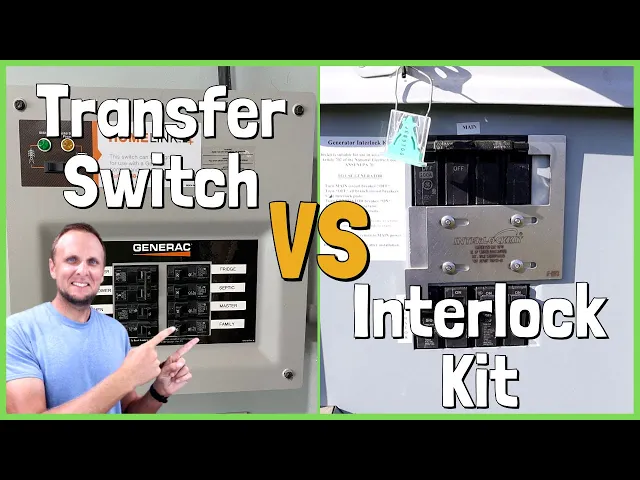
Explore how the manual transfer switch 100 amp powers your home, how it works with common generators, and why professional installation matters.
Date
Dec 8, 2025
Author
RC Admin
Read
7 min
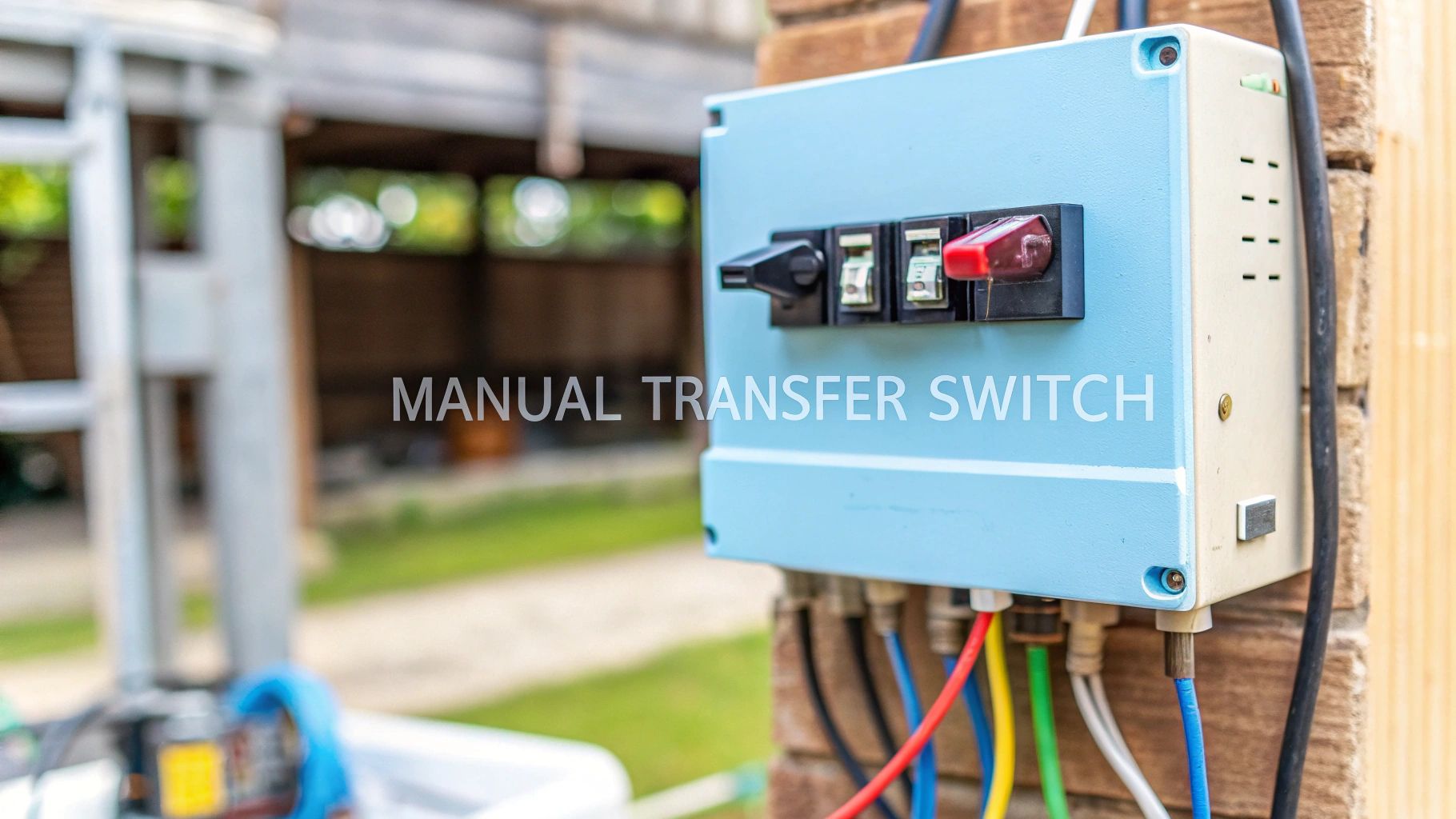
Think of a 100 amp manual transfer switch as the master control for your home's backup power system. It’s the critical piece of equipment that safely connects your Generac generator to your home’s electrical panel. During an outage, this switch lets you cleanly disconnect from the utility grid and flip over to generator power, all while preventing dangerous electrical backfeed. It’s a go-to solution for countless California homes facing power outages from fires, storms, or grid instability.
The Heart of Your Home Backup Power System
Let’s use a simple analogy. Imagine your home’s electrical system is a set of railway tracks. Normally, the "train" carrying power from the utility company runs smoothly along the main route to your house. When a power outage hits, you need to switch the tracks so a different train—your backup Generac generator—can safely pull into the station.
That’s exactly what a 100 amp manual transfer switch does. It’s the lever that safely changes the tracks.
Without it, connecting a generator straight to your panel is a recipe for disaster. It could send electricity flowing backward onto the grid, a deadly situation called "backfeeding" that can injure or kill utility workers trying to restore power. The transfer switch makes this impossible by ensuring only one power source—the grid or your generator—can feed your home at any given time. We dive deeper into how these devices work in our guide on what a transfer switch is.
Why Is This Device So Common?
There’s a good reason the 100-amp model is so popular. A huge number of homes, especially here in California, have a main electrical service of 100 or 150 amps. A 100-amp switch is sized perfectly to handle the most important circuits you need during an outage, like:
The refrigerator, to keep hundreds of dollars of food from spoiling.
Key lights for safety and comfort.
Your furnace fan or a small A/C unit.
Wi-Fi routers and home office gear so you can stay connected.
Critical medical devices that can’t afford to lose power.
The market backs this up. Switches rated between 100 to 200 amps account for roughly 60% of the global market's sales volume. Its widespread adoption proves just how practical and reliable it is for homeowners who want real peace of mind.
A manual transfer switch puts you in direct, hands-on control of your home’s power. It’s a straightforward, reliable, and budget-friendly way to make sure your family stays safe and comfortable when the grid fails.
At RC Generators, we’re experts in designing and installing complete home backup systems built around dependable Generac generators and professionally installed transfer switches. Contact us today for a free consultation and let's get your California home prepared.
How to Use a Manual Switch with Your Generac Generator
When a California power outage hits, knowing how to operate your manual transfer switch 100 amp turns a potential crisis into a simple checklist. The process is surprisingly straightforward and, best of all, it puts you in total control. The moment the lights go out, you’ll have a clear, safe plan of action instead of scrambling in the dark.
The very first step is always safety. Before you even think about starting your generator, head over to your main electrical panel. You'll want to shut down all the individual circuit breakers first, then flip the main breaker to the 'OFF' position. This crucial step completely isolates your home's electrical system, preventing any dangerous back-feeding when you introduce power from your Generac.
Think of the transfer switch as a traffic cop for electricity. It ensures power from the grid and power from your generator can never meet.
The Step-by-Step Process for Restoring Power
With your main panel breakers off, you can now safely fire up your Generac standby generator. Let it run for a minute to stabilize, then you’re ready for the main event at the transfer switch panel. This is where you manually take command of your home’s power.
Here’s the exact sequence to follow:
Flip the Main Switch: Look for the large main breaker on your transfer switch. It will be clearly labeled, usually with 'UTILITY' (or 'LINE') and 'GENERATOR' (or 'GEN'). With a firm motion, move the switch from the 'UTILITY' position over to the 'GENERATOR' position. This single action disconnects your home from the dead grid and connects it to your running generator.
Select Your Circuits: Now, look at the smaller circuit breakers on the transfer switch. These correspond to the essential circuits you and your electrician picked out during installation—things like your fridge, well pump, or specific outlets.
Power Up Gradually: Begin flipping these circuit breakers to the 'ON' position, one at a time. It’s a good practice to start with the circuits that power major appliances first, like the refrigerator, to handle their initial surge. Once those are on, you can bring on lights, your Wi-Fi router, and other smaller devices.
By manually flipping these switches, you have direct authority over what gets power. This prevents the generator from being overloaded and ensures your most critical appliances are prioritized, giving you total command during an emergency. For a detailed overview of the setup process, our Generac generator installation guide offers valuable insights.
When you get that welcome notification that utility power is back, you simply reverse the process. Turn off the individual circuits on the transfer switch, move the main switch back to 'UTILITY,' turn off your generator, and finally, flip your main panel breakers back on.
Feeling confident about managing your home's backup power is key. If you're a California homeowner looking to install a reliable Generac system with a manual transfer switch 100 amp, contact the experts at RC Generators for a free consultation today.
Choosing the Right Size for Your Home Backup Needs
Figuring out if a manual transfer switch 100 amp is the right choice for your home isn't about complex electrical math. It’s really about practicality—identifying what you absolutely need to keep running when the power goes out. A little planning now ensures your family stays safe and comfortable during the next California blackout.
The first step is simple: walk through your home and make a list. If the power went out this very second, what would be the non-negotiables? For most of us, that list boils down to the basics that protect our family and our property.
Identifying Your Essential Circuits
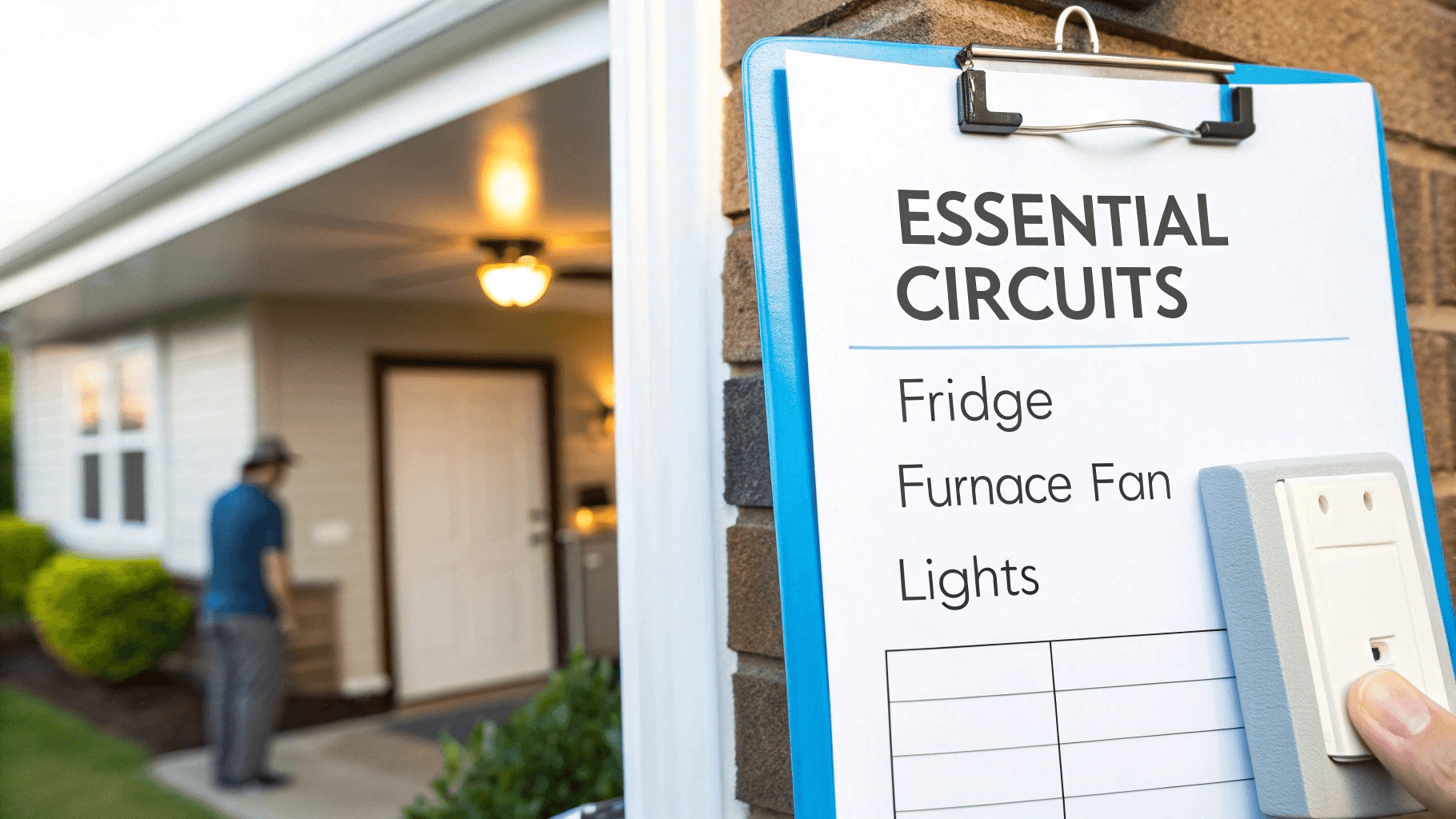
Before you can pick a switch, you need to know which circuits you want your Generac generator to power. The goal isn’t to run your entire house as if nothing happened; it's to create an "electrical lifeboat" to get you through the outage comfortably.
Most homeowners prioritize circuits like these:
Kitchen: The refrigerator and freezer are non-negotiable to prevent hundreds of dollars in food from spoiling.
Comfort & Safety: The furnace fan (to keep the heat on), a few lights in main living areas, and the garage door opener are critical.
Connectivity: Your internet modem and router are essential for staying informed and in touch with the outside world.
Medical Needs: Any medical equipment that requires constant, uninterrupted power is a top priority.
Once you have this list, a certified electrician can help you add up the total electrical load these circuits demand. This is the key to matching your needs with the right size Generac generator and transfer switch.
Why a 100 Amp Switch Is Often the Perfect Fit
For many California homes with a 100-amp or 150-amp main electrical service, the manual transfer switch 100 amp hits that perfect sweet spot. It gives you more than enough capacity to handle all the essential circuits we just listed, but without the much higher cost of a whole-home system.
Think of it as the ideal middle ground. You get robust, reliable backup for the things that matter most.
A 100-amp switch lets you intelligently manage your essential loads, providing plenty of power for your most important appliances. It’s a cost-effective solution that delivers serious peace of mind and resilience when the grid goes down.
Here’s a quick look at what some common appliances draw. This can give you a better feel for how a 100-amp system can easily handle the essentials.
Common Household Appliances and Their Power Needs
Appliance / Circuit | Typical Running Watts | Can it be backed up? |
|---|---|---|
Refrigerator/Freezer | 700 - 1,200 W | Yes, a top priority. |
Furnace Fan (Gas/Propane) | 300 - 800 W | Yes, essential for heat. |
Sump Pump | 800 - 1,500 W | Yes, critical for flood prevention. |
A Few LED Lights | 50 - 200 W | Yes, for basic safety and visibility. |
Internet Modem/Router | 10 - 20 W | Yes, for connectivity. |
Television | 100 - 400 W | Yes, easily handled. |
Central Air Conditioner | 3,000 - 5,000 W | No, typically requires a larger system. |
Electric Range / Oven | 2,000 - 5,000+ W | No, too high of a load for this setup. |
As you can see, a 100-amp switch and a properly sized Generac generator can easily manage the most important circuits, while leaving high-draw luxury items for when utility power returns.
By understanding your home’s specific needs, you can have a much more productive conversation with an electrician. You’ll go in knowing exactly what you want to accomplish, ensuring the final installation is perfectly suited to your family.
Manual vs Automatic Switches: Which Is Best for You?
Choosing between a manual and an automatic transfer switch is one of the biggest decisions you'll make when setting up a home backup system. There's no single right answer—it really comes down to your budget, your lifestyle, and how much involvement you want during a power outage.
Let's break down the differences to help you find the perfect match for your Generac generator and your family.
The Hands-On Approach: Manual Transfer Switches
A manual transfer switch 100 amp is the straightforward, budget-friendly workhorse of backup power. It puts you in direct control. When the lights go out, you physically go to the switch and move a lever from the 'UTILITY' position to the 'GENERATOR' position. It’s simple, effective, and incredibly reliable.
With a manual switch, you are the one calling the shots on which circuits get power. This control is a huge plus, as it lets you actively manage the load on your generator and prioritize what matters most in the moment. It’s a solid, no-fuss solution for homeowners who are usually home during an outage and don't mind the hands-on process.
A manual transfer switch offers a robust, cost-effective path to energy independence. It puts the power directly in your hands, ensuring you can manage your home’s essential circuits with confidence and precision.
It's no surprise that the market for these dependable devices is booming. Valued at USD 1.5 billion, the manual transfer switch market is on track to nearly double by 2033, a clear sign of the trust people place in this safe, controlled approach to backup power. You can see more on the manual transfer switch market growth on verifiedmarketreports.com.
The Set-It-and-Forget-It Solution: Automatic Systems
On the other side of the coin is the automatic transfer switch (ATS), which offers a completely hands-off experience. Think of it as your home's power guardian. It constantly monitors the utility feed, and the second it detects a problem, it springs into action—automatically starting your Generac generator and switching your home over.
This all happens in a matter of seconds, whether you're home, asleep, or hundreds of miles away on vacation.
The main draw here is pure convenience and uninterrupted protection. An ATS is the ideal choice for families with young children or elderly members, people who travel often, or anyone who simply wants the ultimate peace of mind knowing their home is always protected. For a closer look, check out our guide on what an automatic transfer switch is and how it works.
Manual vs. Automatic Transfer Switch Comparison
To make the choice even clearer, here's a side-by-side look at how these two systems stack up.
Feature | Manual Transfer Switch | Automatic Transfer Switch |
|---|---|---|
Operation | Requires you to physically flip a switch. | Fully automated; no user action needed. |
Cost | Lower initial cost for the switch and installation. | Higher upfront investment. |
Convenience | Less convenient; you must be home to activate it. | Maximum convenience; works 24/7, even when you're away. |
Speed | Power is restored after you manually start the generator. | Power is restored within seconds of an outage. |
Reliability | Very reliable due to its simple mechanical design. | Highly reliable, but has more complex electronic components. |
Best For | Budget-conscious homeowners who are typically home. | Those seeking total peace of mind and seamless protection. |
Ultimately, the best choice boils down to your personal priorities. Do you prefer the control and lower cost of a manual switch, or is the seamless convenience of an automatic system a better fit for your lifestyle?
Ready to figure out which option is the perfect fit for your California home? Contact RC Generators today for a free, no-obligation consultation. We'll help you design a backup system that keeps your family safe and comfortable during any outage.
Why Professional Installation Is Required in California
When you're dealing with a manual transfer switch 100 amp, going the DIY route isn't just a bad idea—it’s a dangerous and often illegal one here in California. This isn't like hanging a ceiling fan. You're working with your home's main power system and connecting it to a powerful Generac generator. One wrong move could have devastating consequences.
For the safety of your family, both California state law and the National Electrical Code (NEC) have strict rules for this kind of high-voltage work. Only a licensed and insured electrician is legally qualified to handle the installation. They have the training to make sure every connection is rock-solid, properly grounded, and up to the latest code standards, which are always being updated.
Navigating Codes and Permits
A huge part of a professional installation is managing the local permits. In counties like Los Angeles and Ventura, you can't just install a transfer switch; you need to pull an official permit and pass a final inspection. A licensed electrician takes care of all that paperwork for you.
Trying to skip this step can backfire in a big way:
Failed Inspections: If the city finds out about unpermitted electrical work, they can slap a "stop work" order on your home and force you to tear everything out.
Voided Warranties: Both your Generac generator and the transfer switch itself can have their warranties voided if they aren't installed by a certified pro.
Insurance Nightmares: If an electrical fire or equipment damage happens because of a shoddy installation, your homeowner's insurance might deny the claim, leaving you to cover the entire cost out of pocket.
Hiring a professional isn't just about following the rules. It's about protecting your home, your expensive equipment, and most importantly, your family. An expert installation is your guarantee that your backup power system will work safely and dependably the moment you need it.
The Value of Certified Expertise
There’s no denying how popular 100 amp manual transfer switches have become for homes. In fact, switches rated up to 400 amps make up roughly 45% of the industry’s total revenue, which shows just how vital they are in modern backup power systems. You can explore detailed transfer switch market insights on futuremarketinsights.com to see the trends for yourself. With so many people relying on them, getting the installation right is more critical than ever.
At RC Generators, our licensed electricians are true experts in setting up Generac backup systems all across California. We make absolutely sure that every single job is safe, fully compliant with local codes, and ready to protect your home.
Don't gamble with your safety. Contact RC Generators today for a professional consultation and an installation you can trust.
Take the Next Step: Build a Complete Home Backup System
A manual transfer switch 100 amp is the heart of a safe and effective backup power setup. Think of it as the traffic cop for your home's electricity—it ensures your generator power and the utility grid never cross paths. It’s the critical link that makes everything work safely.
But that switch, as important as it is, is just one piece of the puzzle. Real power security, especially with California's unpredictable grid and wildfire seasons, comes from a complete, integrated system. This means pairing that essential switch with a generator that’s powerful and reliable enough to carry your home through any outage.
Go Beyond the Switch with a Generac System
At RC Generators, we don't just install parts; we build bulletproof power solutions for your entire home. We see the transfer switch as the foundation, but the real fortress is built with an industry-leading Generac home standby generator. These units provide robust power the moment you need it, giving you a full-system backup.
We also have an eye on the future and can design advanced energy solutions that go beyond a traditional setup:
Modern Home Battery Backups: These systems store energy from the grid or solar panels, providing silent, instant power for your most critical devices.
Solar-Powered Generators: We can seamlessly integrate your Generac generator with a solar installation, creating a self-sufficient energy ecosystem that runs on sunshine and has a backup for the backup.
Solar-Free Home Backup: Not ready for solar? No problem. We design powerful systems combining a Generac generator and a battery to deliver unmatched reliability.
A complete home backup system is your ultimate defense against power disruptions. By integrating a generator, transfer switch, and potentially a battery backup, you create layers of protection that keep your family safe and your life uninterrupted.
Securing your home isn’t just about convenience; it's a crucial step toward true independence from the grid. The experts at RC Generators are here to walk you through every stage, from choosing the right Generac model to the final, code-compliant installation of your entire system.
Ready to protect your California home from the next blackout? Contact RC Generators today to schedule a free, no-obligation consultation. Let us help you design the perfect backup power system that brings you and your family total peace of mind.
Frequently Asked Questions About Transfer Switches
When California homeowners start thinking about backup power, a lot of questions come up. We get it. Let’s clear up some of the most common ones about getting a manual transfer switch 100 amp set up for your home.
Can I Install a Manual Transfer Switch Myself?
That’s a hard no. In California, installing a transfer switch is definitely not a DIY job. You’re dealing with your home's high-voltage electrical system, and a single mistake could cause a fire, fry your expensive appliances, or even lead to electrocution.
State and local laws require a licensed electrician to handle the installation. They’ll make sure everything is wired correctly and meets all National Electrical Code (NEC) safety standards, keeping your home and family safe.
How Many Circuits Can a 100 Amp Switch Power?
A 100 amp manual transfer switch is a real workhorse, typically designed to manage between 6 to 12 essential circuits. The exact number depends on the model you choose, but it's more than enough to cover the things that really matter during an outage.
Think about it—you can keep your refrigerator running, the furnace fan on, lights in the kitchen and bathrooms, and your internet router online. It's all about keeping your essentials powered up and maintaining a sense of normalcy.
Does a Manual Switch Work with a Generac Standby Generator?
Yes, you can absolutely pair a manual transfer switch with a Generac home standby generator. But, and this is a big but, you’ll have to manually start the generator and flip the switch yourself every time the power goes out.
Honestly, most homeowners who invest in a powerful, permanent standby unit like a Generac choose an automatic transfer switch instead. The whole point of a standby generator is that seamless, hands-free power restoration. It just makes sense to let the system do its job automatically.
The right transfer switch is the key to safely unlocking your generator's power. It’s a non-negotiable component for protecting your home, your family, and the utility workers on the grid.
Choosing the right components for your home backup system is crucial. From the Generac generator to the switch, every piece must work together perfectly to provide reliable power when you need it most.
Ready to build a backup power system you can count on? The experts at RC Generators and Electric are here to help design and install the perfect Generac generator and transfer switch for your California home.
Give us a call today for a free, no-obligation consultation. Let’s take the first step toward total peace of mind.