
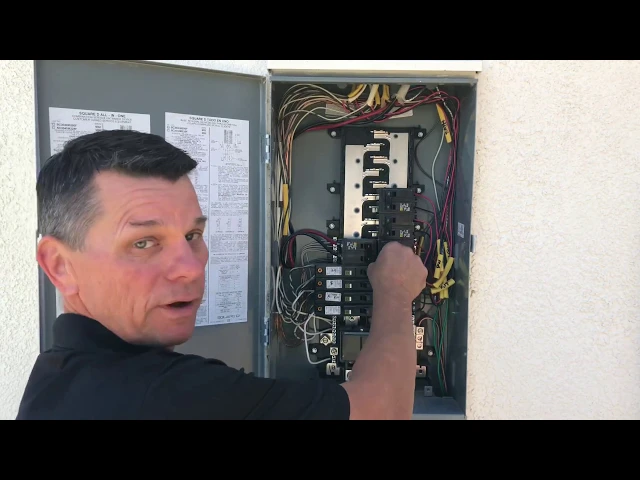
Discover the residential electrical inspection checklist and learn the 8 essential areas to inspect in California homes.
Date
Dec 27, 2025
Author
RC Admin
Read
12 min
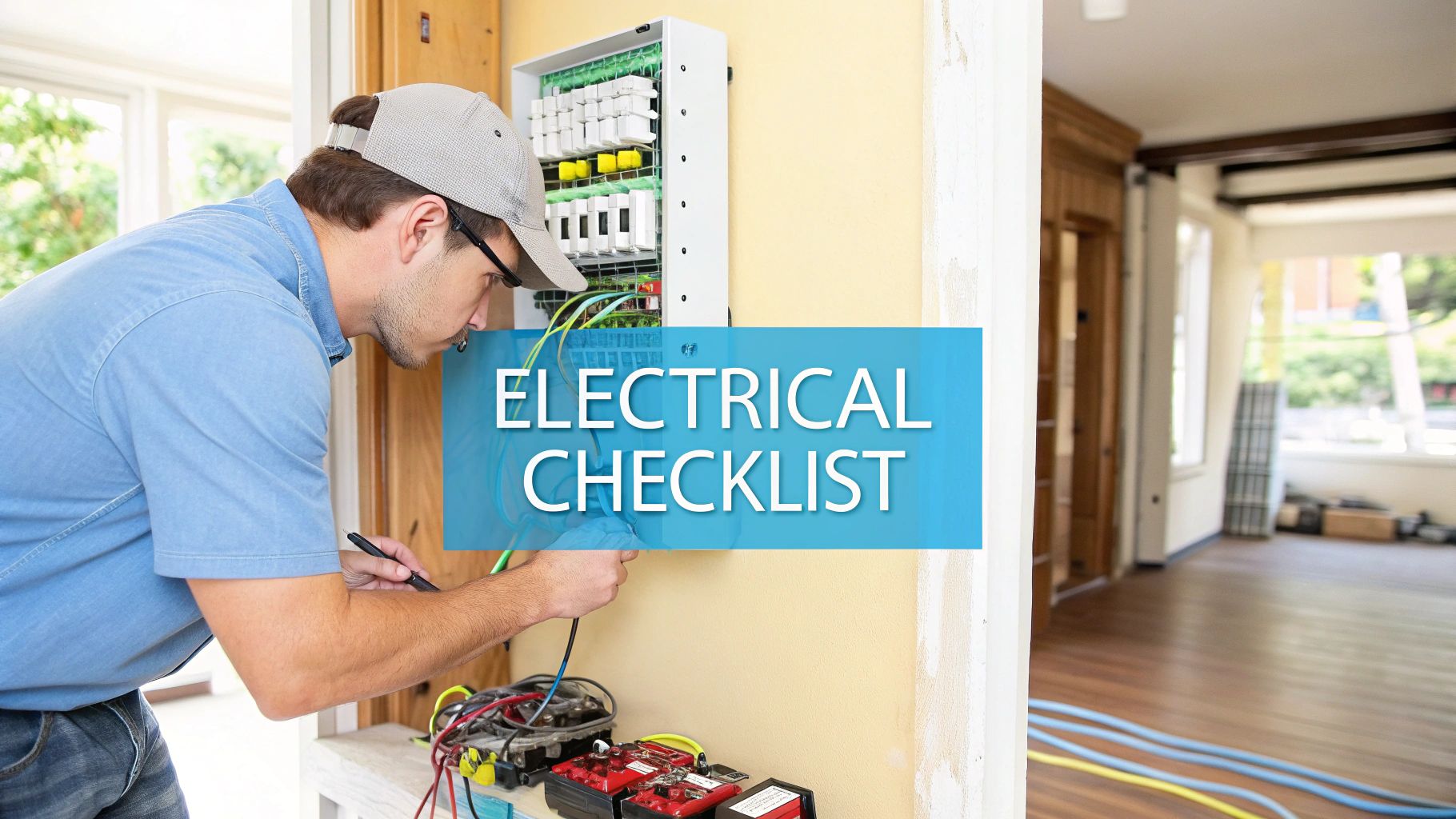
In California, where power outages from wildfires and grid strain are a constant concern, ensuring your home's electrical system is safe and robust is paramount. Before considering a modern upgrade like a Generac home backup generator, a solar-powered generator, or an EV charger, a thorough electrical inspection is the crucial first step. It's not just about ticking boxes; it's about safeguarding your family, protecting your investment, and ensuring your home can handle the demands of today’s technology. This comprehensive residential electrical inspection checklist breaks down the eight critical areas a licensed electrician will examine, providing you with the knowledge to understand your home's electrical health.
From the main service entrance to the individual outlets in your living room, each component plays a vital role in your home’s safety and functionality. Neglecting this system can lead to fire hazards, equipment damage, and system failures precisely when you need power the most. For anyone buying a new property, understanding the state of the electrical system is as critical as checking the foundation. To gain a comprehensive understanding of what to expect during this process, review these essential home inspection tips for buyers.
We'll explore why each checkpoint is vital, especially for homeowners in Los Angeles and Ventura County looking to achieve true energy independence and security. This guide will empower you to identify potential issues, understand the scope of a professional inspection, and make informed decisions about your home's electrical future, whether that includes installing a Generac generator or simply ensuring your current setup is code-compliant and safe for your family.
1. Main Electrical Panel and Service Entrance Inspection
The main electrical panel is the command center for your entire home's electrical system. It takes the power supplied by the utility and distributes it safely to every circuit, from your kitchen outlets to your bedroom lights. A thorough inspection of this area is the foundational first step in any comprehensive residential electrical inspection checklist, ensuring your home can safely handle its current electrical load and is prepared for future needs.
What to Check and Why
This inspection focuses on the heart of your electrical system, evaluating its capacity, safety, and condition. An electrician will verify the amperage of your service entrance, which is the amount of power your home can draw from the grid. Most modern homes require at least 100-200 amps to support today's appliances and technology.
Key inspection points include:
Service Capacity: Is the amperage sufficient for your needs? Older homes, especially in areas like Ventura County, might still have outdated 60-amp panels that are inadequate for modern living and cannot support systems like a Generac home backup generator.
Panel Condition: The inspector will look for signs of rust, corrosion, or water damage, which can compromise safety. They will also check for any buzzing sounds or burning smells, which are immediate red flags.
Breaker Labeling: Are all circuits clearly and accurately labeled? This is crucial for safety and for quickly identifying circuits during an emergency or repair.
Grounding and Bonding: Proper grounding is a critical safety feature that protects against electrical shock. The inspection ensures the system is correctly grounded according to National Electrical Code (NEC) standards.
Future-Proofing: An inspector will assess if there are enough open slots in the panel to add new circuits for future upgrades like an EV charger or a home battery backup system.
When is a Panel Upgrade Necessary?
Many homeowners in Los Angeles discover their panels are insufficient only when they decide to install a major new system. For example, adding a solar-free home backup system or a whole-home Generac generator often requires a main panel upgrade to handle the increased load and accommodate the new dedicated circuits. Upgrading from a 100-amp to a 200-amp service is a common project to support the clean, reliable power these systems provide, especially for homeowners preparing for power outages or looking to embrace energy independence.
If you are planning significant electrical additions, contact a licensed electrician to evaluate your panel first. A proactive inspection can save you from costly surprises and ensure your home is ready for the future.
2. Circuit Breakers and Overcurrent Protection
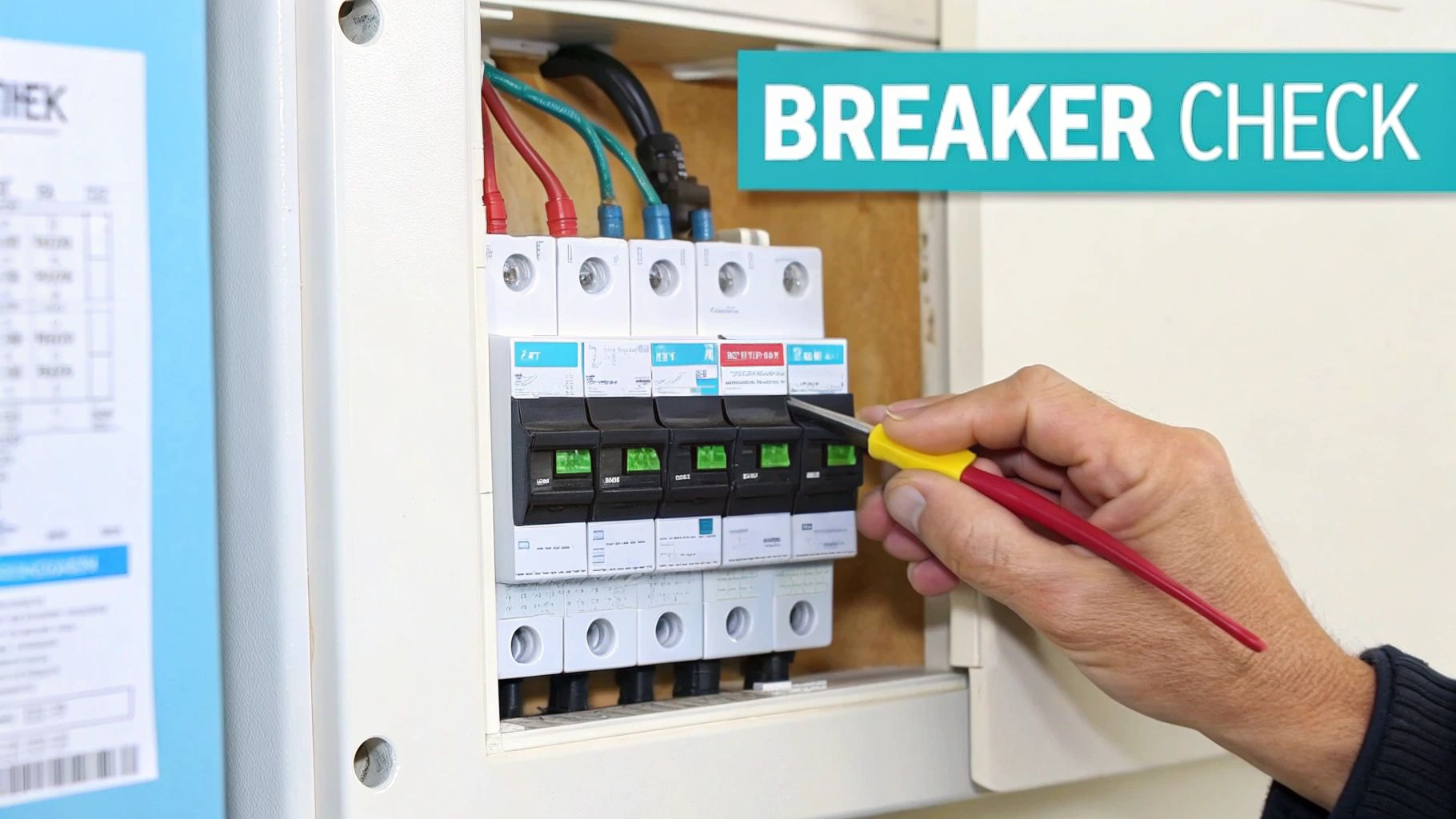
Circuit breakers are the silent sentinels of your electrical system. These essential safety devices are designed to automatically "trip" or shut off power to a circuit during an overload or a short circuit, preventing wires from overheating and creating a serious fire hazard. This part of a residential electrical inspection checklist ensures these protectors are working correctly, properly sized, and meet modern safety standards for every circuit in your home.
What to Check and Why
This inspection moves beyond a simple visual check, verifying the mechanical and electrical integrity of each breaker. An electrician will ensure that the breaker's amperage rating is correctly matched to the gauge of the wire it protects; a 20-amp breaker on a wire rated for only 15 amps is a significant fire risk. Ensuring proper circuit breakers and overcurrent protection is crucial for safeguarding against electrical hazards, and a key part of that is understanding Class C electrical fire safety, which directly involves energized equipment.
Key inspection points include:
Breaker Sizing: Does the breaker's amperage (e.g., 15A, 20A) match the circuit's wire size? Mismatched components are a common and dangerous code violation.
Proper Installation: The inspector will check for "double-tapped" or "piggybacked" breakers, where two wires are connected to a terminal designed for one. They'll also look for signs of overheating, like discoloration or melted plastic.
AFCI/GFCI Protection: Modern codes require Arc-Fault Circuit Interrupter (AFCI) and Ground-Fault Circuit Interrupter (GFCI) breakers in specific areas like bedrooms, kitchens, and bathrooms to protect against arcing faults and electrocution.
Functionality Test: An electrician may perform a manual test to ensure breakers trip smoothly and reset correctly. A breaker that feels stiff, loose, or fails to trip is a candidate for immediate replacement.
Dedicated Circuit Protection: High-demand systems require their own dedicated circuits with appropriately sized breakers. This is non-negotiable for reliable and safe operation.
When are Breaker Upgrades Necessary?
For homeowners in Los Angeles and Ventura County, a breaker inspection is often prompted by the installation of a new, power-hungry system. For instance, installing a Generac home backup generator requires adding new dedicated 30-amp or 50-amp breakers to the panel to handle the transfer of power. Similarly, integrating a solar-powered generator or an EV charger demands dedicated circuits with robust overcurrent protection that older systems simply cannot provide.
If you are planning to add any major electrical system, it's critical to have a licensed electrician evaluate your breakers first. This ensures your home can safely support the new technology and that your most important safety devices are up to the task of protecting your family and property.
3. Grounding and Bonding System Verification
The grounding and bonding system is a non-negotiable safety feature, acting as a critical pathway for dangerous electrical currents to be directed harmlessly into the earth. It's the silent protector of your home's electrical system, preventing shocks, fires, and equipment damage. This part of a residential electrical inspection checklist verifies that all components are correctly installed, connected, and meet stringent safety codes, ensuring your home and its occupants are protected from electrical faults.
What to Check and Why
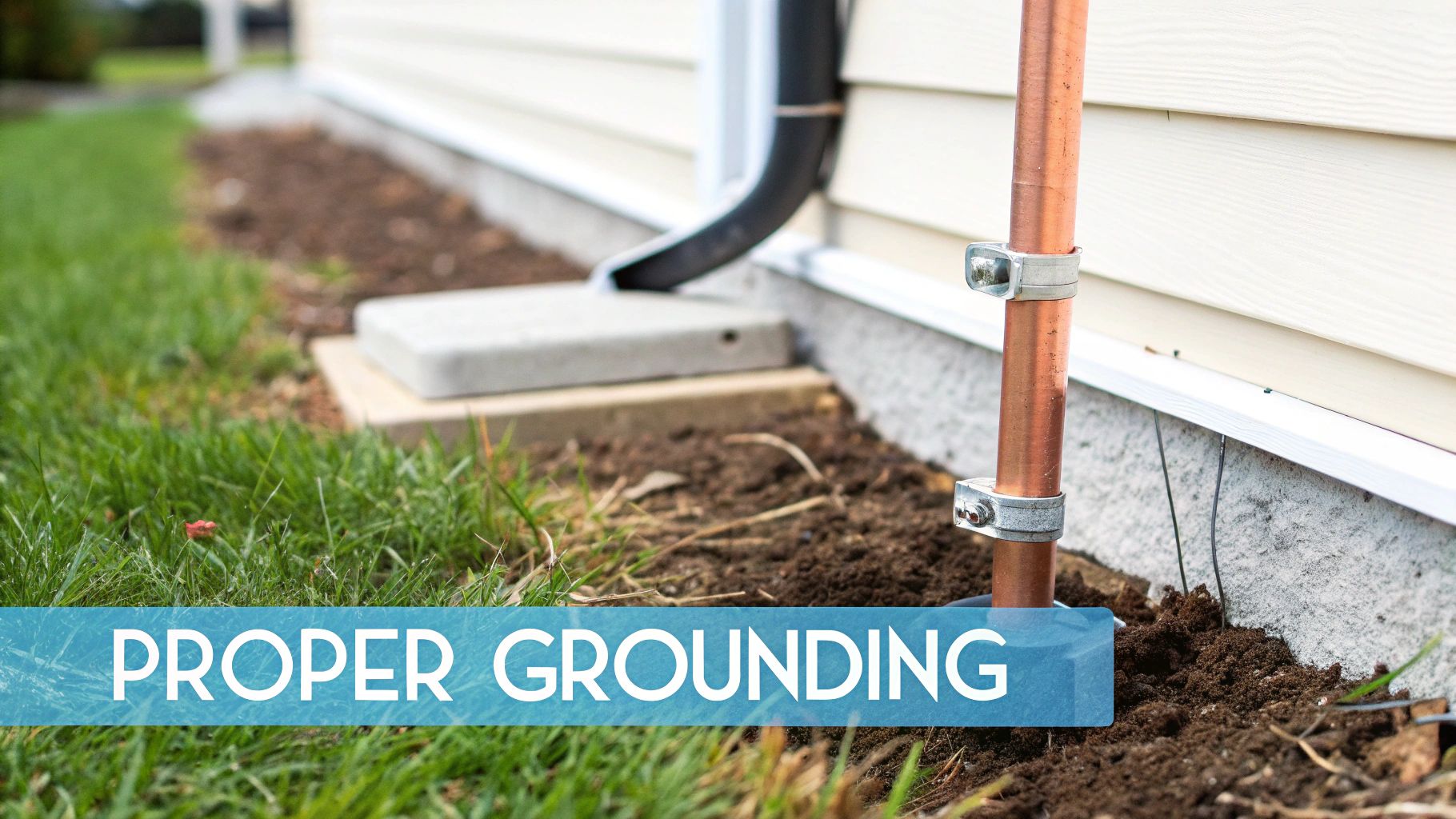
This inspection ensures a continuous and low-resistance path to the ground. An electrician will trace the system from the main panel to the grounding electrode, typically a copper rod driven into the earth. They will verify that this system can effectively handle a sudden surge of current, such as from a lightning strike or a major appliance malfunction, protecting both people and sensitive electronics.
Key inspection points include:
Ground Rod Condition: The inspector will locate the ground rod(s) and check for a secure, corrosion-free connection. In older Los Angeles homes, these connections can degrade over time, compromising the entire system.
Conductor Integrity: The grounding electrode conductor, the wire connecting your panel to the ground rod, must be appropriately sized and free of damage or splices.
System Bonding: All major metallic systems in your home, such as water pipes and gas lines, must be bonded together and to the grounding system. This prevents a difference in electrical potential that could cause a dangerous shock.
Code Compliance: The entire setup is checked against the latest National Electrical Code (NEC) standards to ensure it meets legal safety requirements.
Why Grounding is Crucial for Modern Upgrades
A robust grounding system is absolutely essential when installing modern power solutions. For instance, a Generac home backup generator installation requires a verified and often upgraded grounding system to operate safely and protect your home during a power outage. Similarly, installing a home battery backup to store solar energy relies on a proper ground to function correctly and protect its sophisticated internal electronics.
Many homeowners in Ventura County only discover inadequate grounding when they decide to install these advanced systems. A fault in an ungrounded system can send stray voltage through your generator or battery, causing catastrophic failure or creating a serious safety hazard. Verifying your grounding system is a foundational step before any major electrical project.
If you're considering a backup power system or EV charger, ensure your electrical inspection includes a thorough grounding assessment. Contact a qualified electrician to confirm your home's electrical foundation is safe and ready for the future.
4. Outlet and Switch Condition Assessment
Outlets and switches are the most frequently used components of your home's electrical system, acting as the direct interface between you and the power grid. Assessing their condition is a vital part of any residential electrical inspection checklist, as these seemingly small devices can pose significant safety risks if they are old, damaged, or improperly installed. This check ensures every point of use is functional, safe, and compliant with current codes.
What to Check and Why
This part of the inspection involves a hands-on evaluation of every receptacle and light switch in the home. An electrician will look for physical damage, ensure proper functionality, and test for critical safety features. This is crucial for protecting against electrical shock, preventing fires, and ensuring your system can safely power modern electronics.
Key inspection points include:
Grounding and Polarity: Using a specialized tester, an electrician verifies that each outlet is correctly wired and grounded. Many older homes in Los Angeles still have ungrounded two-prong outlets, which lack this essential safety feature and are a known fire hazard.
Physical Condition: The inspector will check for cracked faceplates, loose connections, or signs of overheating like discoloration or burn marks. A damaged outlet is an immediate red flag that requires replacement.
GFCI Protection: Ground Fault Circuit Interrupter (GFCI) outlets are required in "wet" locations like kitchens, bathrooms, and outdoor areas. This inspection confirms they are present where needed and tests their trip function to ensure they work correctly.
Switch Operation: All light switches are tested to confirm they operate smoothly and effectively. A switch that feels warm to the touch or makes a crackling sound indicates a dangerous internal issue.
Modern Load Capacity: The assessment also considers if the existing outlets are sufficient for modern needs. For instance, preparing for a Generac home backup generator or a solar-free backup system might involve upgrading outlets in key areas to support monitoring equipment or dedicated loads.
When are Outlet and Switch Upgrades Necessary?
An upgrade is often required when you find outdated or unsafe components during an inspection. For instance, discovering two-prong outlets throughout a home necessitates an upgrade to three-prong or GFCI-protected receptacles to meet modern safety standards. This is not just a recommendation; it's a critical step to protect your family and property.
Similarly, if you plan to install a high-draw appliance like an EV charger, the surrounding electrical infrastructure, including outlets, must be up to par. A certified electrician can identify weak points and recommend necessary upgrades to ensure your entire system operates safely and reliably. A comprehensive inspection ensures these small but essential components don't become the weak link in your home's electrical safety net.
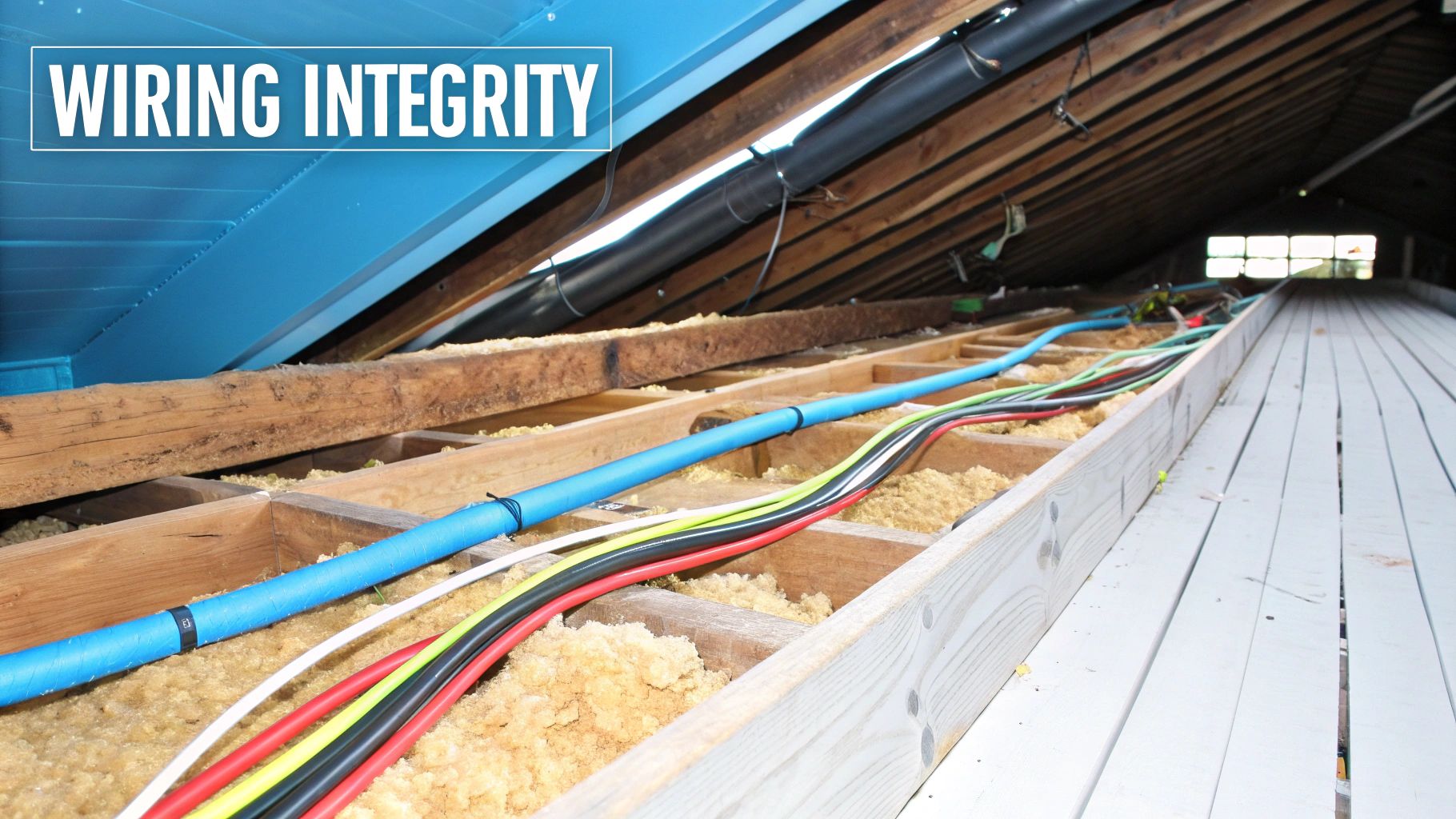
5. Wiring Integrity and Insulation Assessment
The wiring in your home is like the nervous system of your electrical setup, carrying power from the main panel to every outlet, switch, and appliance. A comprehensive wiring integrity and insulation assessment is a critical part of any residential electrical inspection checklist, as it verifies that these pathways are safe, intact, and capable of handling their intended loads. This inspection looks beyond what's immediately visible, delving into attics, crawl spaces, and behind walls to uncover hidden dangers.
What to Check and Why
An electrician will meticulously evaluate the condition of all accessible wiring, focusing on safety standards set by the National Electrical Code (NEC). They are trained to spot subtle signs of degradation that could lead to catastrophic failure, such as overheating, short circuits, or fires. This is especially important in older homes or properties where unpermitted work may have been performed.
Key inspection points include:
Insulation Condition: The inspector checks for cracked, brittle, or frayed wire insulation, which can expose live conductors and create a severe shock or fire hazard.
Physical Damage: They will search for signs of damage from rodents, which often chew on wires, or from errant nails and screws during past renovations. This is a common issue found in Ventura County homes with accessible attic or crawl spaces.
Wire Gauge and Type: The inspection confirms that the wire gauge (thickness) is appropriate for the circuit's amperage. Using an undersized wire is a major fire risk. They also check for outdated materials, like certain types of aluminum wiring prevalent in some older Los Angeles properties, which require special connections to be safe.
Proper Securing: Wiring must be properly supported and secured, not left dangling or making unsafe contact with other materials.
Junction Box Connections: All wire splices and connections must be made inside approved junction boxes with secure connectors to prevent loose, arcing wires.
When is a Wiring Upgrade Necessary?
Significant electrical upgrades almost always have implications for your home's wiring. For instance, installing a high-powered Generac home backup generator or a commercial-grade generator requires new, dedicated circuits with specific wire gauges to handle the high electrical demand safely. An inspection might reveal that the existing wiring is insufficient, necessitating a partial or complete rewiring project to support these modern systems.
If your home has outdated wiring or you're planning a major addition, it's crucial to get a professional assessment. A licensed electrician can determine if your current wiring can safely support your future plans and ensure your home's electrical system is not just functional, but fundamentally safe. Contact a professional for a thorough evaluation before starting any major electrical project.
6. Appliance and Equipment Connection Verification
Your major appliances, like the stove, water heater, and HVAC system, are the workhorses of your home. They also represent some of the largest electrical loads. This part of the residential electrical inspection checklist focuses on verifying that these powerful pieces of equipment are connected safely and correctly, with circuits appropriately sized to handle their energy demands. Improper connections are not just inefficient; they are a significant fire hazard and can cause premature failure of expensive appliances.
What to Check and Why
An electrician will meticulously examine the electrical connections for all major fixed appliances. This involves more than just seeing if they turn on; it's a deep dive into the safety and compliance of the dedicated circuits that power them. This is especially critical for homeowners in Los Angeles planning to install a whole-home backup system, as these connections are often re-evaluated and sometimes modified during the installation process.
Key inspection points include:
Dedicated Circuit Sizing: Does each appliance have its own circuit, and is the breaker sized correctly for the load? An electric range connected to an undersized circuit is a common issue that can lead to constant tripping and potential overheating.
Proper Receptacles and Wiring: The inspector will check for the correct type of outlet (e.g., a 4-prong dryer outlet for modern appliances) and ensure the wire gauge is sufficient for the amperage. Frayed or damaged cords are immediate red flags.
Disconnecting Means: Major equipment like an air conditioning unit must have a visible and accessible "disconnect" switch nearby. This allows for safe servicing and emergency shutdowns. An inspector will verify it's correctly installed, a crucial step before integrating a Generac home backup generator.
Grounding: Like the rest of your system, appliances must be properly grounded to protect against electrical shock. This is a non-negotiable safety check.
Manufacturer Compliance: The inspection confirms that the installation follows the specific electrical requirements laid out by the appliance manufacturer, ensuring both safety and warranty validity.
Integrating New Systems with Existing Appliances
Verifying appliance connections is fundamental when planning for a home battery or generator. For instance, installing a solar-powered generator or a Generac system requires a clear understanding of your home's major electrical loads. An electrician will assess these connections to determine how they will be managed by the new backup power system. Sometimes, circuits must be upgraded or reconfigured to ensure that essential appliances, like refrigerators and HVAC systems, receive seamless power during an outage.
If you're considering a backup power solution for your Ventura County home, a thorough inspection of your appliance connections is the first step. Contact a qualified electrician to ensure your current wiring is safe, compliant, and ready to support the reliability of a modern energy system.
7. Safety Switches and Protective Devices Installation
Modern electrical systems are designed with layers of protection that go far beyond simple fuses and circuit breakers. Devices like GFCIs, AFCIs, and surge protectors are the silent guardians of your home, actively monitoring for dangerous conditions and shutting off power in milliseconds to prevent electrocution, fires, and equipment damage. This part of the residential electrical inspection checklist ensures these critical safety devices are installed correctly and are fully functional, protecting both your family and your valuable electronics.
What to Check and Why
This inspection focuses on the active safety components mandated by modern electrical codes. An electrician will test each device to confirm it operates as designed. These devices are particularly crucial for protecting sensitive, high-value systems like a Generac home backup generator or a solar-free home backup system, which can be damaged by electrical surges or faults.
Key inspection points include:
GFCI Protection: Ground Fault Circuit Interrupters are required in areas with water, like kitchens, bathrooms, and outdoors. They prevent electric shock by detecting imbalances in current and shutting off power.
AFCI Protection: Arc Fault Circuit Interrupters detect dangerous electrical arcs, a common cause of house fires. An inspector will verify they are installed on circuits in required areas, such as bedrooms and living rooms, a common upgrade needed in older Ventura County homes.
Surge Protection: Is your home protected from voltage spikes from lightning or grid fluctuations? A whole-home surge protector installed at the main panel is the best defense for all your electronics.
Disconnect Switches: The main service disconnect must be clearly labeled and easily accessible for emergency shutoffs. Inspectors also check for proper disconnects for major appliances and systems like HVAC units.
When Are Protective Device Upgrades Necessary?
Many homeowners in Los Angeles only realize their protection is lacking when they install new technology. For example, installing an EV charger or a home battery backup system makes whole-home surge protection essential to safeguard the investment. Similarly, updating an older home to meet current NEC standards often involves adding AFCI breakers to the panel.
These upgrades are not just about compliance; they are about safety and reliability. If you are considering a major electrical installation like a Generac generator, it is the perfect time to evaluate and upgrade your home's safety devices. A qualified electrician can assess your needs and ensure your electrical system provides clean, protected power for all your modern appliances and backup systems.
8. Code Compliance and Load Calculation Review
This final, crucial checkpoint synthesizes the entire inspection, evaluating overall compliance with current electrical codes (like the National Electrical Code or NEC) and performing a load calculation. This calculation determines if your home's electrical system can safely handle its current and planned electrical demands. It's the step that confirms your home isn't just functional, but fundamentally safe and ready for the future.
What to Check and Why
A load calculation is more than just adding up appliance wattages; it's a detailed analysis that ensures your system isn't overburdened, which can lead to tripped breakers, overheating wires, and fire hazards. An inspector verifies that every aspect of your system, from wire gauges to breaker sizes, meets the stringent safety standards set by the latest NEC edition.
Key inspection points include:
Service Capacity vs. Actual Load: The electrician calculates your home's total electrical demand. This reveals if your existing service (e.g., 100 amps) is sufficient or dangerously close to its limit.
Code Violation Identification: The inspector methodically identifies and documents any code violations found during the inspection, providing a clear roadmap for necessary corrections to ensure safety and legality.
Future Load Planning: This is where your future plans matter. Are you adding a hot tub, an EV charger, or a home backup generator? These high-demand items must be factored into the load calculation.
Documentation for Upgrades: A professional load calculation is often required for permits when installing major systems. For instance, before installing a Generac home backup generator, the utility and local building department need proof that your electrical service can support it.
Why It's Critical for Modern Upgrades
Many homeowners in Los Angeles and Ventura County discover their electrical system's limitations only when planning a major upgrade. For example, a home with a 100-amp panel may already be near its capacity. Adding both a new EV charger and a whole-home Generac generator would easily push it over the edge, necessitating a service upgrade to 200 amps to handle the combined load safely.
Without a proper load calculation, you risk investing in powerful new technology that your home's infrastructure simply cannot support. This review ensures your plans are built on a solid and safe electrical foundation. If you're considering significant upgrades, a comprehensive inspection and load calculation from a licensed electrician should be your first step.
8-Point Residential Electrical Inspection Comparison
Item | Implementation Complexity 🔄 | Resource Requirements ⚡ | Expected Outcomes ⭐📊 | Ideal Use Cases 📊 | Key Advantages ⭐💡 |
|---|---|---|---|---|---|
Main Electrical Panel and Service Entrance Inspection | Medium–High — panel access, amp verification, possible utility coordination | Licensed electrician, panel tools, permit/coordination; upgrade costs if needed | Confirms service amperage, grounding, labeling, and upgrade needs | Homes adding generator, EV charger, battery backup or planning major service changes | Identifies capacity limits, prevents overloads, ensures code compliance |
Circuit Breakers and Overcurrent Protection | Low–Medium — breaker testing and selective replacements | Breaker tester, replacement breakers, electrician for AFCI/GFCI installs | Verifies trip operation, correct ratings, and protective devices present | Installing dedicated circuits for generators, EV chargers, new appliances | Reduces fire risk, protects equipment, quick detection of faulty breakers |
Grounding and Bonding System Verification | Medium–High — may require external testing or excavation | Ground tester, clamp tools, electrician; possible excavation/repairs | Confirms grounding electrode integrity, bonding continuity, and safety | Generator/battery/EV installs and lightning-prone areas | Protects electronics, reduces shock/lightning risk, enables safe generator operation |
Outlet and Switch Condition Assessment | Low — visual checks and receptacle testing | Outlet tester, basic tools, electrician for replacements/upgrades | Detects ungrounded/reversed outlets, missing GFCI protection, and damage | General safety inspection; pre-install EV charger location; kitchens/baths | Identifies fire/electrocution hazards and outdated receptacles quickly |
Wiring Integrity and Insulation Assessment | Medium–High — visible wiring inspection; hidden wiring may require invasive work | Inspection tools, attic/crawl access, possible rewiring contractors | Reveals damaged, undersized, or improper wiring and need for rewiring | Older homes, rodent/water-damaged properties, before high-load additions | Prevents fires, ensures circuit capacity, informs scope of rewiring work |
Appliance and Equipment Connection Verification | Medium — nameplate checks and disconnect verification | Appliance manuals, multimeter, electrician for circuit changes | Confirms proper circuit sizing, disconnects, and grounding for major appliances | Installing generators/backup systems or replacing major appliances | Prevents appliance damage, ensures safe servicing and compliance |
Safety Switches and Protective Devices Installation | Medium — install/upgrade AFCI/GFCI/surge devices and disconnects | Protective devices (AFCI/GFCI/surge), electrician, panel space | Provides arc-fault, ground-fault, and surge protection for circuits/equipment | Homes with sensitive electronics, code retrofits, battery/EV installs | Significantly reduces electrocution and arc-fault risks; protects electronics |
Code Compliance and Load Calculation Review | High — detailed calculations and possible major upgrades | Load-calculation software, licensed electrician, utility coordination, permits | Determines service adequacy, required upgrades, and code violations to fix | Pre-installation of generators, EV chargers, battery backups; resale inspections | Ensures safe load capacity, prevents overloads, supports permits and resale |
From Checklist to Confidence: Take the Next Step in Securing Your Home's Power
Navigating the intricacies of your home's electrical system can feel daunting, but the comprehensive residential electrical inspection checklist we've outlined provides a powerful roadmap. Moving from the service entrance to the individual outlets in each room, you are now equipped with the knowledge to identify potential hazards, understand the importance of modern safety devices, and recognize the signs of an aging or overloaded system. This is not just about ticking boxes; it's about gaining a profound understanding of the invisible network that powers your daily life and ensures your family's safety.
The key takeaways from this guide extend beyond simple component checks. We've highlighted the critical role of the main electrical panel as the heart of your home, the non-negotiable importance of proper grounding and bonding, and the life-saving function of GFCI and AFCI protection. Understanding these core concepts transforms you from a passive homeowner into an informed guardian of your property’s electrical well-being.
From Inspection to Action: Building a Safer, More Resilient Home
Completing a thorough inspection is the vital first step, but the true value lies in the action that follows. The findings from your checklist serve as a blueprint for necessary upgrades and future-proofing your home. This is especially crucial for homeowners in Los Angeles and Ventura County, where power outages from wildfires, heatwaves, or grid instability are a recurring reality. An updated, robust electrical system is the essential foundation for modern energy solutions.
Consider the most common and impactful next steps:
Addressing Hazards Immediately: Any identified issues like frayed wiring, buzzing sounds from the panel, or scorch marks on outlets demand immediate professional attention. These are not minor inconveniences; they are critical safety risks.
Planning for Upgrades: An older panel, insufficient circuits, or a lack of modern safety devices are clear indicators that an upgrade is necessary. This isn't just about code compliance; it's about enabling your home to handle today's electrical demands safely.
Preparing for Energy Independence: A properly inspected and certified electrical system is a prerequisite for installing advanced systems like an EV charger or a home battery backup. Most importantly, it's the gateway to installing a whole-home standby generator, such as a powerful and reliable Generac system.
Key Insight: A residential electrical inspection is more than a safety audit; it's the foundational assessment that determines your home's readiness for energy resilience solutions like standby generators and battery backups.
The Professional Bridge Between Knowledge and Security
While this guide empowers you with critical knowledge, it also illuminates the complexity and inherent danger of electrical work. Recognizing when to transition from DIY assessment to professional intervention is the most important safety decision you can make. Load calculations, panel upgrades, and integrating a Generac generator are not weekend projects; they require the precision, licensing, and experience of a qualified electrician.
A professional inspection guarantees that nothing is missed and that all work is performed to the highest safety and code standards. In areas like Southern California, where energy demands are high and the need for backup power is critical, professional expertise ensures your home is not just safe but truly prepared for anything. This process transforms your checklist from a simple guide into a professional action plan, giving you ultimate peace of mind and confidence in your home's power.
A thorough inspection is the first step toward true energy security. At RC Generators, we specialize in comprehensive electrical assessments that pave the way for seamless Generac generator installations, home battery backups, and other critical electrical upgrades across Los Angeles and Ventura County. Contact us today to schedule your professional inspection and ensure your home is safe, compliant, and ready for uninterrupted power when you need it most.