
Explore the average cost of whole house generator and what affects pricing. This guide covers installation fees, financing options, and total investment.
Date
Nov 26, 2025
Author
RC Admin
Read
6 min
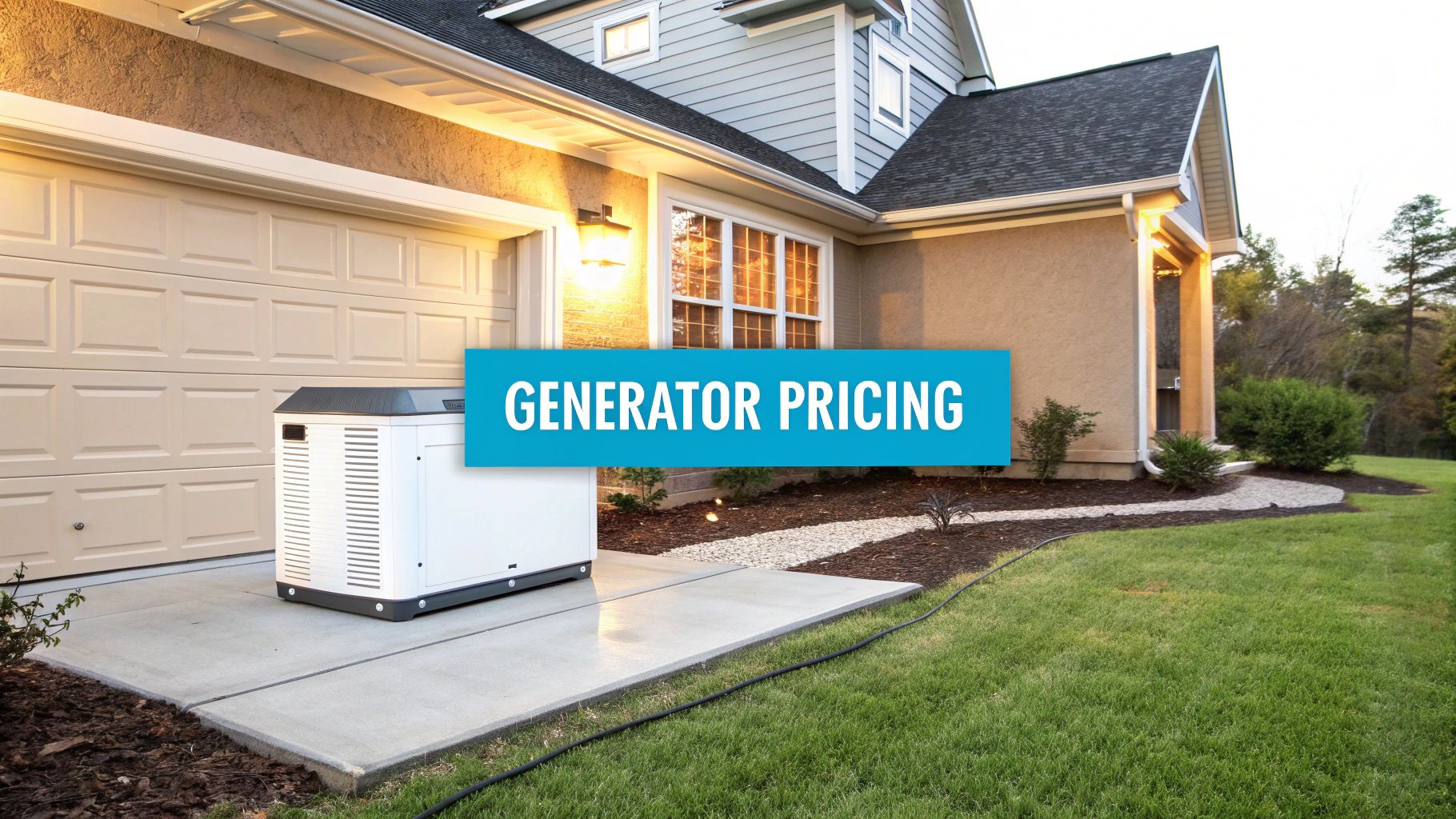
So, what's the bottom line? Let's get right to it. A whole house generator project, from start to finish, typically lands somewhere between $7,000 and $15,000.
That price isn't just for the machine sitting on a slab outside. It's a complete investment in keeping your lights on and life running smoothly during a power outage in California. This figure includes the generator itself (like a trusted Generac), the all-important automatic transfer switch, and the expert labor from a licensed electrician needed to get it all working together perfectly.
Understanding Your Total Generator Investment
When you decide to install a home backup generator, you’re not just buying a piece of equipment—you’re investing in a complete power security system. The final price tag is a sum of several critical parts that all have to work in harmony to protect your home. Thinking about the total cost from the get-go helps you set a realistic budget for peace of mind during fires or grid failures.
The journey starts with the generator unit, which is the heart of the system. But the costs quickly add up from there. Professional installation by a licensed electrician isn't just a good idea; it's non-negotiable for making sure your system is safe, up to code, and ready to perform when you actually need it. RC Generators and Electric focuses exclusively on these robust home standby systems to ensure your whole house has power.
Key Components of Your Generator's Cost
To really understand what goes into the total cost of a whole house generator, it’s best to break it down. Each piece of the puzzle is essential for a seamless, automatic switch to backup power when the grid goes down.
Generator Unit: This is the biggest line item. The price varies quite a bit depending on the brand (like Generac) and how much power your home needs.
Automatic Transfer Switch (ATS): This is the brain of the operation. It’s the device that detects an outage, tells the generator to fire up, and safely switches your home over to backup power.
Professional Installation & Labor: This covers the expertise of certified electricians who handle all the complex wiring, fuel line connections, and final system setup for a full-system backup.
Site Preparation & Permits: This can involve pouring a concrete pad for the generator, running gas lines, and pulling the necessary permits from your local city or county office in Los Angeles or Ventura.
Here’s a quick look at how those costs typically stack up.
Estimated Cost Breakdown for a Whole House Generator
This table offers a high-level summary of the typical expenses involved in a whole house generator project, from the equipment to professional installation.
Cost Component | Typical Price Range |
|---|---|
Generator Unit (10-22 kW) | $3,000 - $6,000 |
Automatic Transfer Switch | $800 - $2,000 |
Professional Installation Labor | $3,000 - $5,000 |
Site Prep, Permits & Materials | $500 - $2,000 |
Total Estimated Cost | $7,300 - $15,000 |
These numbers line up pretty well with the national average, which is a good starting point for what to expect. Keep in mind that every home is different, so your specific needs will determine the final price.
A whole house generator isn't just another appliance; it's genuine peace of mind. Investing in a properly installed system is the best way to protect your family's comfort and safety during those unexpected power outages from wildfires, storms, or grid failures.
As you budget for major home services, it’s always smart to get a feel for standard pricing. For instance, when considering home security, many people look into things like how much you should pay for security guard services to make sure they’re getting good value. The same principle applies here.
Ready to find out exactly what it would take to secure your California home’s power? Contact RC Generators and Electric for a personalized quote.
Deconstructing Your Generator Investment
Trying to understand the average cost of a whole house generator can feel a bit tricky. It’s not just a single price tag. A better way to think about it is like building a custom home theater—you’re not just buying the screen, but also the speakers, the wiring, and the professional setup that makes it all work perfectly. Every single piece plays a crucial role in giving you that seamless, automatic power you need.
The Generator Unit and Its Brain
Naturally, the biggest line item on your quote will be the generator unit itself. The cost here is mostly driven by its power output—measured in kilowatts (kW)—and the brand you go with. A smaller home in Ventura County might get by just fine with a 10 kW unit. But a larger Los Angeles property with a couple of air conditioners will need something beefier, like a 22 kW Generac system.
Just as critical is the Automatic Transfer Switch (ATS). This is the "brain" of your entire backup power system. It’s always watching the power coming from the grid. The second it detects an outage, it automatically disconnects your house from the utility line and tells the generator to fire up, switching you over to backup power in a matter of seconds.
The Automatic Transfer Switch is what makes a standby generator truly automatic. It eliminates the need to manually start a generator or run extension cords, ensuring your home is protected 24/7, even when you're not there.
The Cost of Professional Installation
The second major piece of the puzzle is the professional installation. This covers all the skilled labor and materials required to get the system integrated safely and correctly. This is absolutely not a DIY project; it requires licensed electricians and certified technicians to make sure everything is up to California's strict building codes.
Here’s what a professional installation usually involves:
Site Preparation: Before the generator even arrives, we need to create a stable, level surface for it. This often means pouring a concrete pad to meet local codes and the manufacturer’s specs, which protects your investment from ground moisture and vibration.
Electrical Wiring: A licensed electrician will connect the generator to the ATS and then wire the ATS into your home’s main electrical panel. This is complex stuff that ensures power is distributed safely to all your chosen circuits.
Fuel Line Connection: Whether you’re tapping into your natural gas line or using a large propane tank, a certified professional has to run and connect the fuel line. This step is non-negotiable for safety and reliable operation.
Permits and Inspections: Here in Los Angeles and Ventura counties, installing a standby generator requires permits and a final inspection. A professional installer like RC Generators and Electric handles this entire process, so you know your system is fully compliant.
The complexity of these steps is what really shapes the final price. For most U.S. homeowners, the installation cost averages around $5,168, but you can expect to budget an extra $2,200 or so for just the concrete pad and electrical work. You can discover more insights about installation costs on Angi.com to see how those numbers can change across the country.
By understanding what goes into each line item, you can look at a quote with confidence and see the real value in a professional, all-inclusive installation. It’s what ensures your system isn't just powerful, but also safe, reliable, and built to last.
Ready to see how these costs apply to your specific home? Contact RC Generators and Electric today for a transparent, no-obligation quote tailored to your needs.
What Drives Your Final Generator Price
Ever wonder why one homeowner in Los Angeles might pay $8,000 for a whole house generator, while their neighbor just down the road in Ventura gets a quote for $14,000? It's because the final cost is never a one-size-fits-all number. Several key factors come together to determine your total investment, and getting a handle on them is the first step toward an accurate, fair quote.
Think of it like buying a car. You don't just pay for the engine; the final price tag depends on the vehicle's size, its fuel source, the brand's reputation, and any custom features you add. A whole house generator is no different. The average cost of a whole house generator is a good starting point, but the specific details of your home and needs will truly shape the final price.
Generator Size: The Biggest Cost Factor
The single biggest driver of your generator's cost is its size, measured in kilowatts (kW). We're not talking about physical dimensions here, but about power output. The more electricity you need to run everything during an outage, the bigger—and more expensive—the generator will have to be.
A small, 1,200-square-foot home might only need a 10 kW unit to keep the essentials humming along, like the fridge, a few lights, and some outlets. On the other hand, a 3,500-square-foot home with central air, a pool pump, and multiple large appliances will need a much more robust 22 kW or 24 kW system to handle that heavy load. A more powerful generator simply has a larger engine, which naturally costs more.
Here’s a quick look at how home size generally correlates with generator capacity and total project costs.
Generator Size and Estimated Costs by Home Size
Home Size (Sq. Ft.) | Recommended Generator Size (kW) | Estimated Total Cost Range |
|---|---|---|
1,000 - 1,500 | 10 kW - 14 kW | $8,000 - $11,000 |
1,500 - 2,500 | 14 kW - 20 kW | $10,000 - $14,000 |
2,500 - 4,000 | 22 kW - 26 kW | $12,000 - $18,000 |
4,000+ | 26 kW+ | $16,000+ |
Getting this part right is absolutely crucial. A generator that’s too small will struggle under the load and could even damage your appliances. Go too big, and you’ve just paid a premium for power you’ll never actually use. That's why a professional load calculation is non-negotiable. If you want to dive deeper, our guide on how to size a home generator breaks down the entire process.
Fuel Type and System Choices
Your choice of fuel also plays a major role in the overall project cost, both upfront and over the long haul. Each option comes with its own set of benefits and installation needs that influence the final price.
Natural Gas: This is usually the most convenient and cost-effective route if your home already has a natural gas line. It gives you a continuous fuel supply, so you never have to think about refueling. The main installation cost here is having a licensed professional run a dedicated gas line to the generator's location.
Propane (LP): If natural gas isn't an option, propane is the next best choice. It burns clean and can be stored indefinitely without degrading. The catch? You'll need a large storage tank installed on your property, which adds to the initial setup cost.
Solar-Powered Generators: A modern and increasingly popular alternative is a solar-powered generator combined with a home battery backup. While the initial investment can be higher than a traditional generator, it offers totally silent operation and can be recharged for free with solar panels, wiping out any ongoing fuel costs. RC Generators and Electric specializes in these advanced home backup solutions, including solar-free options.
Installation Complexity and Your Property
No two installations are ever the same. The unique layout of your property can significantly move the needle on labor costs. A straightforward installation on a flat, easily accessible lot is always going to cost less than a complex one.
The location of the generator, your home's main electrical panel, and the gas meter all determine the amount of trenching, wiring, and piping required. More distance and more obstacles mean more labor and materials, which directly impacts your final price.
For example, a home where the generator pad, electrical panel, and gas meter are all conveniently close will have a much lower installation cost. Contrast that with a home where long trenches need to be dug across a beautifully landscaped yard or under a concrete driveway. Local codes here in California, especially in Los Angeles and Ventura counties, also have strict requirements for placement and wiring that only a professional installer will know how to navigate properly.
Finally, brand reputation matters. Established brands like Generac have a proven track record of reliability and support, and that's reflected in their price. You might pay a bit more upfront, but you're really investing in a system known for its durability and performance when you need it most.
Ready to see how these factors apply to your home? Contact RC Generators and Electric for a free, personalized consultation and quote.
Beyond the Sticker Price: Long-Term Ownership Costs
Thinking about the average cost of a whole house generator is a lot like buying a car. You see the sticker price, but every owner knows that's just the starting line. The real cost shows up over years of ownership—in fuel, tune-ups, and the occasional repair. The initial investment gets you the keys, but the Total Cost of Ownership (TCO) is what really tells you if it was a smart decision.
That same exact logic applies to your home's backup power system. A generator that looks like a bargain today might end up costing you a fortune over its lifespan because it guzzles fuel or needs constant service calls. Getting a handle on these ongoing expenses is key to making a smart investment in your family's safety, especially here in California where outages are becoming the new normal.
Annual Maintenance: A Non-Negotiable Expense
Just like your car needs regular oil changes to keep its engine humming, your standby generator needs professional maintenance every year. This isn’t a friendly suggestion; it’s absolutely essential for making sure your generator is ready to fire up the moment you lose power. Skipping this to save a few bucks is a gamble that could leave you sitting in the dark when you need power the most.
A typical professional maintenance plan for a whole-house generator in the Los Angeles area runs between $200 and $600 per year. This service usually covers:
Changing the oil and oil filter
Inspecting and cleaning the air filter
Checking the spark plugs and battery
Running a full diagnostic test under a real-world load
This kind of preventative care catches small issues before they snowball into major, expensive failures. It extends the life of your investment and guarantees it will be there for you when it counts.
The Ever-Present Cost of Fuel
Your single biggest ongoing expense will be fuel. During a long outage caused by wildfires or grid instability, your generator will be putting in some serious work, and that work requires a steady diet of energy. The cost to run it can add up fast, depending on the generator’s size, how many appliances you're running, and the type of fuel it uses.
Natural gas is usually the most convenient option since it provides a continuous supply right from your utility line. Propane is a solid alternative but requires a large storage tank on your property. To get a clear picture of what you might use, you can use our detailed guide to create a generator fuel consumption calculator for your specific setup. Knowing these numbers helps you budget for a multi-day outage without any surprises.
Factoring in Repairs and Brand Reliability
Over a 15 to 20-year lifespan, even the most bulletproof generator will probably need a few repairs. This is where choosing a trusted brand like Generac really pays off. While their units might have a higher upfront cost, their proven reliability and the wide availability of parts can lead to smaller repair bills and less downtime over the years.
The total cost of ownership is the most critical number. It shifts your focus from "what's the cheapest generator I can buy today?" to "what's the most cost-effective and reliable system for the next 15 years?"
Research shows that while major brands offer models from $2,800 to over $18,000, the five-year total cost of ownership—including fuel and maintenance—can climb to around $17,600. That averages out to about $3,520 annually. When you look beyond the sticker price, you start to see how much ongoing expenses contribute to the big picture.
Long-term costs are heavily influenced by maintenance, fuel, and—if you finance—the interest you pay. For businesses buying machinery, understanding competitive equipment loan rates is crucial to managing these expenses. For homeowners, choosing a quality system from an expert installer like RC Generators and Electric ensures you get a dependable unit with a lower TCO and true peace of mind.
Ready to invest in a system that offers both reliability and long-term value? Contact RC Generators and Electric for a free consultation and quote today.
Navigating Your Generator Installation in California
Understanding the costs is one thing, but what does the actual installation look like? For homeowners in Los Angeles and Ventura counties, putting in a standby generator is a serious project. It’s more than just dropping a box in your backyard—it's a construction job that permanently integrates a new power system into your home’s electrical system.
The path from deciding you need one to flipping the switch on a fully operational system is straightforward. Following this process ensures every connection is safe, every local code is met, and your generator is ready to perform flawlessly when the next wildfire or grid failure hits. Knowing what to expect makes the whole experience a lot less stressful for homeowners.
The Professional Installation Process Step by Step
Working with a licensed and insured pro like RC Generators and Electric isn't just a suggestion—it’s the only way to do it right. Our team of skilled electricians handles every last detail, turning what could be a headache into a smooth, hands-off process for you.
Here’s a breakdown of what that looks like:
Initial Consultation: It all starts with a conversation. We’ll talk about your specific power needs, whether you're set on a traditional Generac generator or are curious about options like a solar-powered generator or home battery backup.
On-Site Assessment: One of our certified technicians will visit your home to do a proper load calculation. They'll pinpoint the perfect spot for the generator and map out the most efficient routes for the electrical and fuel lines.
Permit Application: We take care of all the paperwork. We’ll submit the plans to your local building department in Los Angeles or Ventura County, which is a critical step to ensure everything is up to code and completely safe.
Installation Day: After the permits are approved, our crew gets to work. This usually starts with pouring a concrete pad for the generator to sit on. We then set the unit, and our licensed electricians connect everything—the automatic transfer switch, your home’s main panel, the works.
Final Inspection & Startup: Once we're done, a city or county inspector will come by to give the installation their official approval. We then run a full system startup test, faking a power outage to make sure your generator kicks on exactly as it should.
Why Permits and Codes Are So Important
California's building codes are notoriously strict, and for good reason—they exist to keep you and your family safe. Trying to install a generator without the right permits is a recipe for disaster. It can lead to massive fines, void your homeowner's insurance policy, and create very real electrical or fire hazards.
A professional installation isn't just about getting the job done. It's about giving you total peace of mind. By managing the permits and sticking to every local code, we guarantee your backup power system is not only reliable but fundamentally safe for your family.
The timeline for the whole process can vary, but it often takes a few weeks from that first phone call to the final startup. The permitting phase usually takes the longest, but it’s a non-negotiable step in the process. For a closer look at how we handle everything, you can learn more about our professional standby generator installation services.
Ready to get the ball rolling and secure your home’s power supply? Contact RC Generators and Electric for a free, no-obligation consultation today.
Secure Your Peace of Mind Today
We've covered a lot of ground, and the big takeaway is this: understanding the average cost of a whole house generator is about more than just the price tag. It’s an investment in your family's safety and comfort.
With the constant threat of wildfires and an aging power grid here in California, reliable electricity isn't a luxury anymore. It’s the key to making sure your lights stay on, your food stays fresh, and your life keeps moving forward when an outage hits.
For homeowners across Los Angeles and Ventura, a standby generator is your personal safeguard against uncertainty. It provides automatic, seamless protection 24/7. It’s the confidence of knowing that no matter what’s happening on the grid, your home will remain a secure, comfortable sanctuary.
Your Next Step to Energy Independence
Taking control of your home’s power has never been more straightforward. Whether you’re leaning toward a trusted Generac system, a solar-powered generator, or a home battery backup system, our licensed electricians are here to design a setup that fits your property and your budget.
We handle everything from the first site visit to the final inspection, making the whole process as simple and stress-free as possible.
Don’t wait for the next power outage to leave you in the dark. Investing in a home backup system is one of the most proactive steps you can take to protect your property and ensure your family’s well-being.
It’s time to move from planning to action. The peace of mind that comes from knowing you’re prepared is priceless.
Ready to secure your home? Contact RC Generators and Electric today for a free, no-obligation consultation. We’ll walk you through a personalized quote, answer all your questions, and help you find the perfect backup power solution for your Southern California home.
Common Questions About Generator Costs
Even after we've crunched the numbers, it's totally normal to have a few more questions pop up. A whole house generator is a major home upgrade, and feeling confident in your decision is what matters most. Here are some direct answers to the questions we hear all the time from homeowners in Los Angeles and Ventura.
We’re going to tackle the topics that come up again and again, helping you move forward with a really clear picture of the investment. From long-term value to other backup power solutions, these answers should fill in any remaining gaps.
Is a Whole House Generator a Good Investment in California?
Absolutely. For California homeowners, a standby generator isn't just a luxury anymore—it's a critical piece of your home preparedness plan. With Public Safety Power Shutoffs (PSPS) becoming a regular event during wildfire season and our grid showing its age, power outages are a real and growing concern.
A standby generator does more than just keep the lights on. It protects your home from expensive problems like hundreds of dollars of spoiled food and can even make your property more attractive to future buyers. But most importantly, it delivers priceless peace of mind, ensuring your family stays safe and comfortable no matter what’s happening with the grid.
How Long Does a Standby Generator Last?
A well-maintained whole house generator is built to go the distance. With professional annual maintenance, you can expect your system to last anywhere from 15 to 25 years.
Think of it like a car engine. You wouldn't skip oil changes or tune-ups and expect it to run forever. It's the same idea here. Consistent, professional servicing ensures your generator is ready to fire up reliably for decades to come.
Brands like Generac are known for their durability, which makes them a solid long-term investment in your home's security. Ultimately, the lifespan comes down to the quality of the unit, how often it has to run, and how well you take care of it.
What Is the Biggest Hidden Cost of a Generator?
The biggest ongoing cost that often catches homeowners by surprise is the fuel consumption during a long outage. While the initial average cost of a whole house generator is something you plan for, the fuel bill to get through a week-long outage can add up fast.
This is exactly why we also specialize in alternatives like solar-powered generators and home battery backup systems. These systems store free energy from the sun, which can dramatically lower or even eliminate those long-term fuel costs completely. It's just a different path to achieving energy independence.
Ready to take the next step toward securing your home's power? The licensed electricians at RC Generators and Electric are here to provide a free, no-obligation consultation. We’ll help you find the perfect backup system for your home’s unique needs. Contact us today at https://rcgeneratorsandelectric.com.