
Explore the best backup power systems for homes. Compare Generac generators and solar batteries to keep your California home safe during power outages.
Date
Dec 21, 2025
Author
RC Admin
Read
7 min
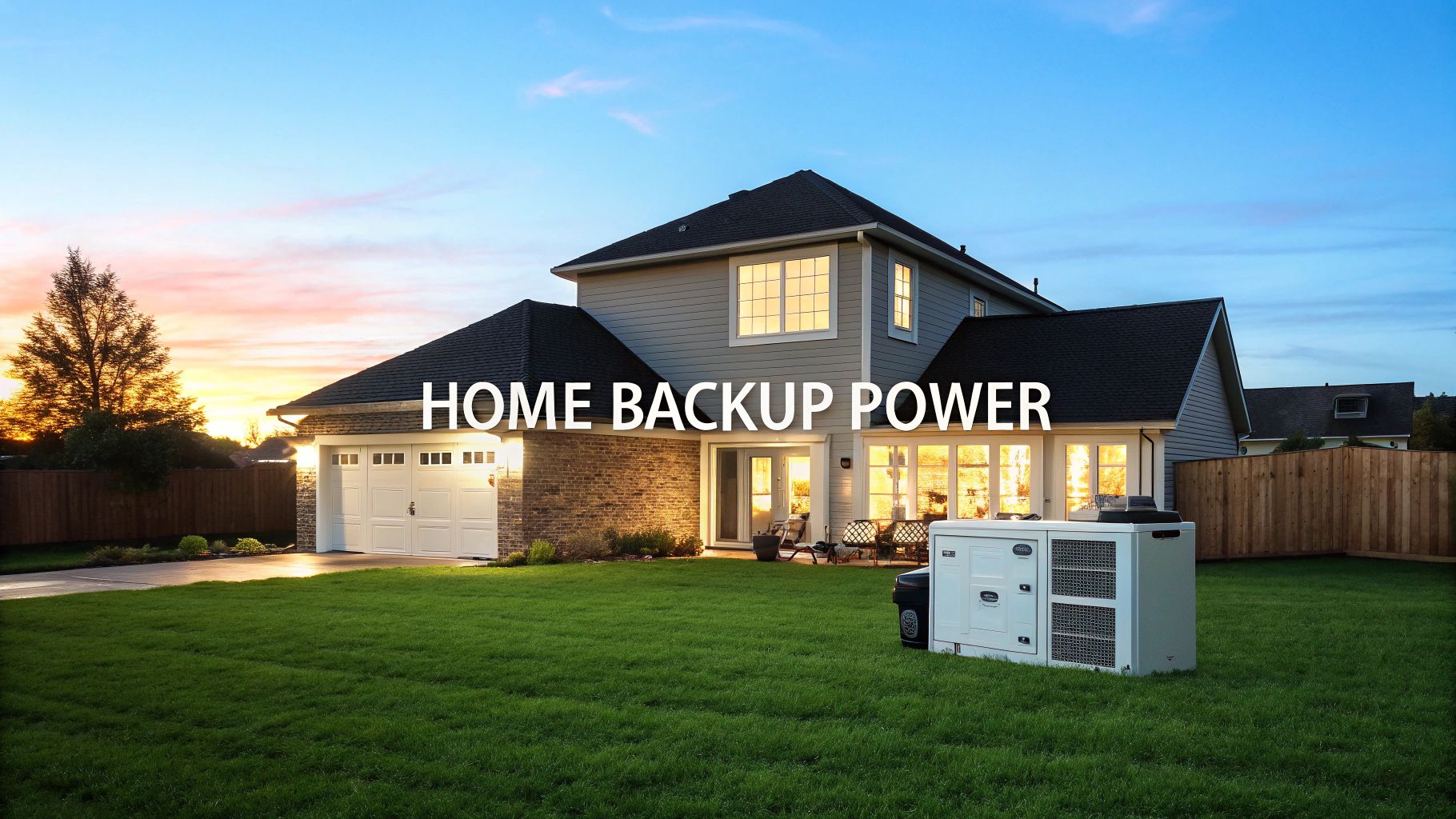
Let’s be honest: staring into the dark during another California power outage is a frustratingly familiar feeling. With wildfire threats on one side and an aging grid on the other, having a reliable backup power system has quickly gone from a nice-to-have luxury to a modern necessity.
The two best solutions on the market today are powerful standby generators, like those from Generac, and sleek home battery systems that store energy for when you need it most.
Why Backup Power Is No Longer a Luxury
The simple truth is our day-to-day lives are completely dependent on having consistent power. A long outage is far more than just an inconvenience—it can shut down your home office, compromise your family’s safety, and lead to expensive headaches like a fridge full of spoiled food.
Here in Los Angeles and Ventura County, the increasing frequency of Public Safety Power Shutoffs during fire season has turned this into a critical issue for homeowners. Investing in a solid backup power system brings invaluable peace of mind. It’s about knowing your family will stay comfortable and your essential appliances will keep humming along, no matter what’s happening with the grid.
The Growing Need for Home Energy Resilience
This push for energy independence isn't just happening in our backyards. Across the country, the demand for residential backup power is exploding, with the market projected to hit an incredible $28,500 million by 2025. A huge driver behind this surge is the rise in severe weather events that have left millions of Americans in the dark for days on end. You can read the full research on this growing market to see the data for yourself.
A reliable backup system is your personal insurance policy against grid failures. It ensures that when the utility company can't deliver, your home remains a safe, functional, and comfortable sanctuary for your family.
This guide will walk you through the most popular options available, from robust whole-home Generac generators to modern solar-powered battery solutions. We'll break down the pros and cons in simple terms to help you make a smart, informed decision for your home's unique needs.
Being prepared is the first step, and understanding your options is key to building a solid plan. For more tips, check out our guide on preparing for a power outage.
Ready to secure your home's power and protect your family from the next outage? Contact RC Generators and Electric today for a free consultation and let our experts design the perfect backup system for your needs.
Generac Generators Versus Home Battery Systems
When you're looking for a backup power system, the choice usually boils down to two heavy hitters. In one corner, you have the proven, muscle-bound strength of standby generators, with Generac leading the pack. In the other, you have the quiet, sleek technology of modern home battery systems.
Think of a Generac generator as your home's private, on-call power plant. It's connected right to your home’s natural gas or propane line and keeps a constant watch on the grid. The second an outage hits your California neighborhood, it comes to life and restores full power in just a few seconds.
The Power Plant Versus The Power Pack
Home battery systems take a totally different approach. Picture them as a giant, rechargeable power pack for your entire house. These systems spend their time storing up electricity—either from the grid when rates are low or from your solar panels all day—and just hold onto it. When the grid goes down, your home switches over to that stored battery power instantly.
This method has some really appealing perks. Batteries are completely silent and don't produce any emissions, making them a clean, neighbor-friendly choice. Generators, on the other hand, are incredibly reliable for the long haul but do make noise and produce exhaust.
The core difference lies in how they supply power. A generator creates electricity on demand from a fuel source, offering nearly unlimited runtime. A battery stores a finite amount of electricity and releases it when needed.
This flowchart can help you visualize the main decision points when you're weighing your options.
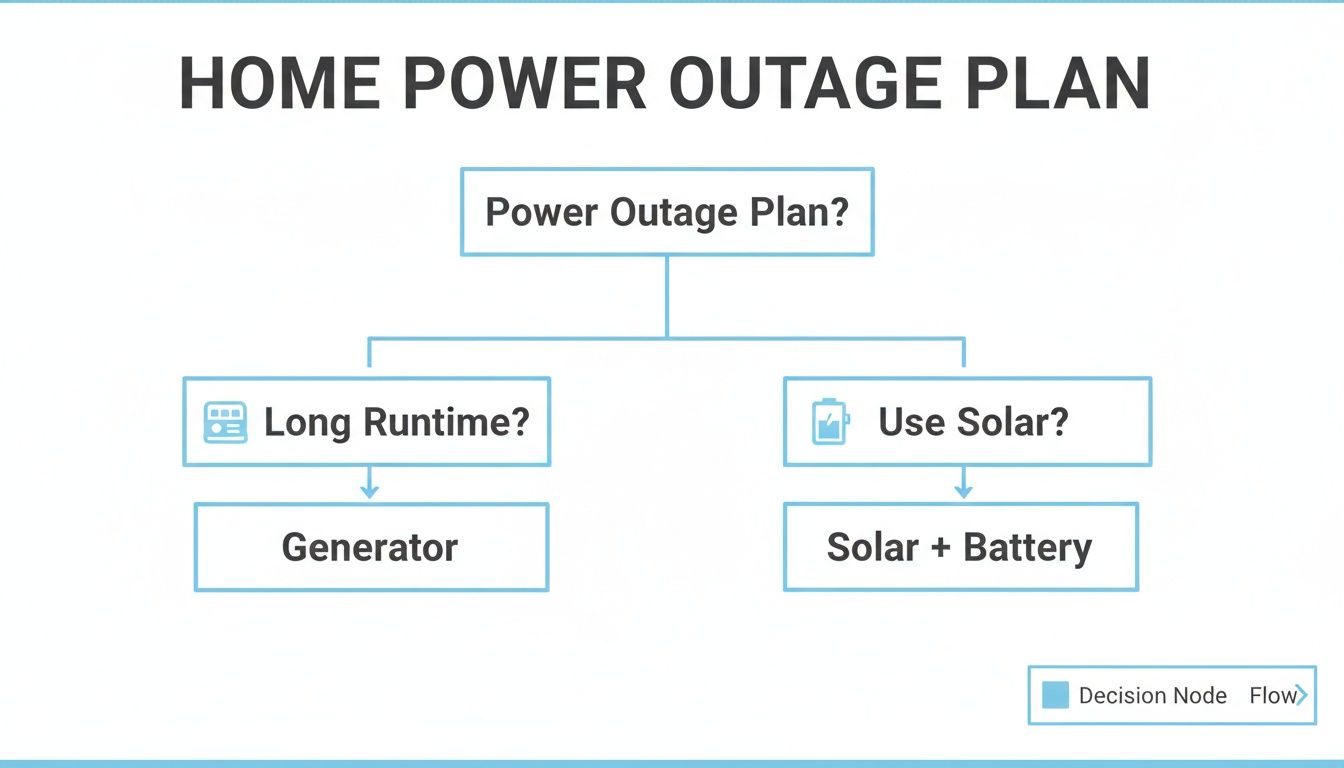
The key takeaway here is that what you prioritize—whether it's having power for weeks on end or pairing a system with your solar panels—is what will ultimately point you to the right solution.
Comparing Key Features and Tradeoffs
Picking the right system is about more than just the price tag. It’s about finding the technology that fits your lifestyle, your home's specific demands, and how you feel about being without power. As you explore alternatives to generators, it's a great idea to research the best home battery backup systems to get the full picture of what's out there.
Here’s how the two stack up on the most important points:
Runtime: This is where a generator really shines. As long as it's hooked up to a fuel line, a Generac can run for days or even weeks straight. A battery's runtime is capped by its storage capacity, which usually gets you anywhere from a few hours to a full day, depending on how much power you're using.
Response Time: Batteries win this round, hands down. The switch from grid power to battery power is so fast it's seamless—your lights won't even flicker. A generator has a short delay, usually about 5 to 10 seconds, while the engine starts and the transfer switch does its job.
Upfront Cost: For whole-home backup, standby generators often come with a lower initial price tag. High-capacity battery systems, especially ones big enough to handle power hogs like an air conditioner, can cost quite a bit more to install.
Maintenance: A generator is an engine, and just like your car, it needs regular tune-ups like oil and filter changes to stay ready for action. Home batteries are solid-state devices with no moving parts, so they are virtually maintenance-free.
The Best of Both Worlds: Hybrid Systems
For California homeowners who want the ultimate in reliability, there’s a third option: a hybrid system that combines both technologies. In this setup, the battery acts as the first line of defense, providing silent, instant power for those shorter outages.
But if the outage drags on and the battery starts to get low, the Generac generator automatically kicks on to recharge it while also powering the home.
This approach gives you the instant, clean power of a battery backed by the long-haul security of a generator. It's the bulletproof solution for making sure your home is protected from any kind of disruption, from a quick grid hiccup to a multi-day blackout during fire season.
Deciding between a generator, a battery, or a hybrid system all comes down to your unique situation. RC Generators and Electric specializes in designing and installing custom backup power systems for homes across Los Angeles and Ventura County. Contact us today for a free consultation!
Understanding Standby Generac Generators
For homeowners in California who need absolute, unwavering power during an outage, a standby generator is the gold standard. A whole-home system from a trusted brand like Generac is permanently installed, ready to power your entire house—air conditioning, refrigerator, medical equipment, home office, you name it.
This is what truly sets these backup power systems for homes apart. They create a seamless bridge from grid power to backup power, so your daily life continues without missing a beat. It’s less about convenience and more about total security.
How Standby Generators Provide Endless Power
One of the biggest wins for a Generac standby generator, especially during California’s unpredictable fire seasons and Public Safety Power Shutoffs, is its fuel source. These systems connect directly to your home's existing natural gas or propane line.
What does that mean for you? A virtually limitless supply of fuel. You’ll never have to worry about storing gasoline cans or making a frantic run to the gas station during an emergency. The generator just keeps pulling the fuel it needs to run for days, or even weeks if it has to. That kind of long-term reliability is exactly what you need when facing a multi-day outage.
The Magic of the Automatic Transfer Switch
The real genius behind a Generac system is the automatic transfer switch (ATS). Think of the ATS as the brain of your entire backup power operation. It's a smart device installed right next to your main electrical panel that does one job 24/7: it monitors the power coming from the utility grid.
The second it detects that power is gone, the ATS springs into action:
It safely disconnects your home from the utility line.
It signals the Generac generator to fire up its engine.
Once the generator is running smoothly, it transfers your home's electrical load over to the generator.
This all happens on its own in about 10 seconds. You might see the lights flicker for a moment, but that’s it. You don’t have to lift a finger. When grid power comes back on, the ATS intelligently switches you back, shuts down the generator, and puts it back into standby mode, ready for next time.
A standby generator isn't just an appliance; it's a fully automated power security system. The automatic transfer switch ensures that your home is protected 24/7, whether you are at home, at work, or on vacation.
Unmatched Reliability and Financial Sense
The data speaks for itself. Standby generators dominate the market, holding 72.73% of the market value, with systems that kick on automatically leading the charge. A properly sized 22kW standby generator can even pay for itself during a single major outage by preventing over $1,000 in losses from things like spoiled food. If you want to dive deeper, you can discover more insights about the residential backup power market.
The peace of mind that comes from knowing you have a powerful, long-term solution ready at a moment's notice is invaluable. To learn more about how these systems can benefit your property, explore our detailed article on the benefits of a Generac standby generator.
Ready to secure your home with a reliable Generac system? RC Generators and Electric provides expert installation services across Los Angeles and Ventura County. Contact us today for a free, no-obligation consultation.
Exploring Solar and Home Battery Storage
For the modern, eco-conscious California homeowner, the conversation around backup power is definitely shifting. While generators provide incredible long-term staying power, a home battery system is a clean, quiet, and increasingly popular alternative. Think of it like a massive, rechargeable power pack for your entire house, giving you a whole new level of energy independence.
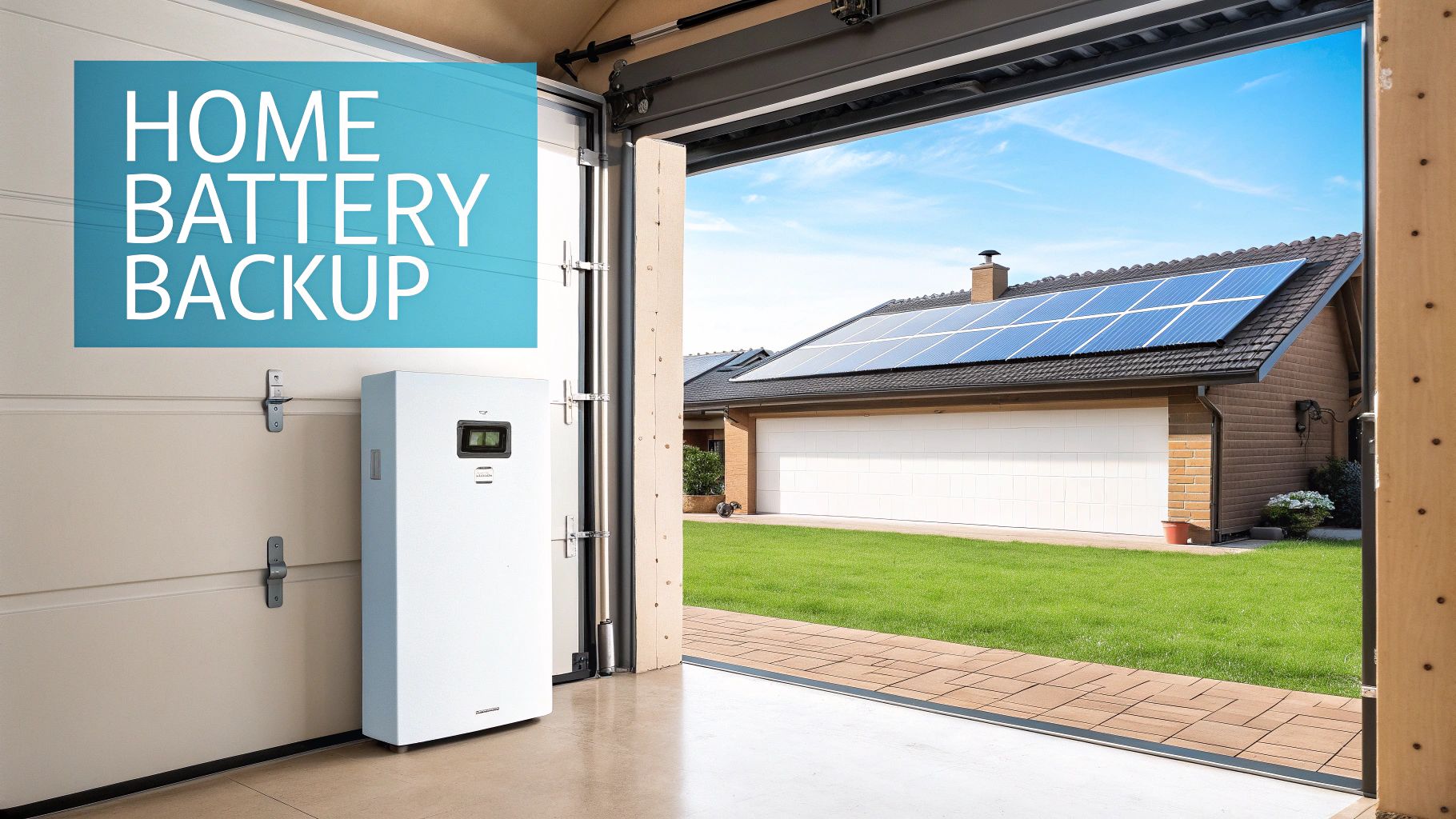
Systems like the Generac PWRcell are built to connect seamlessly with your home's existing electrical setup. When you pair them with solar panels, they spend all day storing the clean energy your system produces. Instead of selling that valuable power back to the grid for pennies, you bank it to use at night—or more importantly, during an outage.
The Silent Guardian During an Outage
One of the best, most immediate perks of a home battery is how it operates. Unlike a generator, a battery is totally silent. No engine, no exhaust, and zero emissions. When the grid fails, your home flips over to battery power so smoothly you probably won't even notice anything happened.
This quiet operation is a huge deal, especially in the tightly packed neighborhoods of Los Angeles and Ventura County where noise can be a real issue. You get reliable power without bothering yourself or your neighbors, keeping your home the peaceful sanctuary it should be.
Solar-Free Home Battery Solutions
It's a common myth that you need solar panels to get a home battery. That’s just not true. RC Generators and Electric can install a standalone battery system that charges straight from the electrical grid.
This setup gives you two powerful advantages:
Cost Savings: You can set the battery to charge during "off-peak" hours when electricity rates are dirt cheap. Then, during the expensive "peak" hours in the afternoon, your home runs on that cheaper, stored energy, slicing your utility bills.
Reliable Backup: The battery stays topped off and ready to deliver instant, quiet power the moment the grid goes down. It’s a fantastic solar-free option for homeowners who are purely focused on outage protection.
Home battery systems are no longer a niche product; they are a mainstream solution for energy resilience. They offer a unique combination of backup security, potential daily cost savings, and a commitment to cleaner energy for your home.
The Rise of Home Energy Storage
The demand for these systems is absolutely exploding. Home energy storage is more popular than ever, with units in the 10–20 kWh range making up 40% of the market. Just one 13.5 kWh battery can often power a home's essential appliances for 12-24 hours.
Plus, recent incentives like the Inflation Reduction Act's 30% tax credit have poured fuel on the fire. Installations jumped by 50% as homeowners look to cut their peak electricity bills and keep the lights on during blackouts.
When you're digging into battery options, it helps to understand the different technologies out there. Reading up on guides for things like the best RV battery for boondocking can give you great insight into durability and efficiency. Whether you're eyeing a Generac PWRcell or another brand, knowing the basics helps you make a smarter decision. You can also explore our guide on the best home battery backup systems to compare today's leading models.
Ready to explore a clean, quiet, and powerful battery backup solution for your home? Contact RC Generators and Electric today for a free consultation and let our experts design the perfect system for your energy needs.
The Installation Process in Southern California
Getting a professional backup power system for your home isn’t like buying a new appliance off the shelf. It’s a serious home upgrade, one that demands expert hands to ensure it’s done right—especially here in Southern California, where local codes are no joke.
The whole journey, from the first thought of "what if the power goes out?" to having a fully protected home, follows a clear, professional roadmap. It all starts with a thorough consultation and site check to make sure every single detail is covered before a wrench is ever turned. This first step is what separates a smooth, successful project from one that’s full of headaches and surprise costs.
Starting with a Professional Site Assessment
The very first thing a qualified installer will do is come to your home for a site assessment. This isn’t just a quick glance around. An expert from a team like RC Generators and Electric will carefully evaluate your property's layout, check out your existing electrical panel, and look at your gas meter to find the safest and most effective spot for a standby generator or home battery.
This is also where they perform a critical load calculation. Think of it as a detailed energy audit for your house. The electrician will sit down with you and figure out exactly which appliances and circuits you absolutely need running during an outage—from the refrigerator and A/C to your home office setup or essential medical devices. By adding up the power demands of these "critical loads," they can recommend a Generac generator or battery system that’s perfectly sized to handle the job without breaking a sweat.
Navigating Local Permits in LA and Ventura County
Let's be clear: installing a permanent backup power system, like a Generac standby generator, requires permits. This is a non-negotiable step designed to make sure the whole setup is safe and up to local building and electrical codes. In places like Los Angeles and Ventura County, these codes can be a real maze.
Trying to tackle this paperwork jungle on your own is a recipe for frustration. A licensed and experienced installer handles all of it for you. They know exactly what the city needs, how to draw up the plans correctly, and how to schedule the necessary inspections.
Partnering with a licensed installer is your best strategy for a hassle-free process. They act as your expert guide through the maze of local regulations, ensuring every aspect of the job meets strict safety standards and passes inspection the first time.
This professional oversight protects you, your family, and your investment. It’s the guarantee that every electrical and gas line connection is done by the book, wiping out potential risks and ensuring your system will run safely for years.
The Importance of Ongoing Maintenance
Once your system is installed, permitted, and ready to go, there's one last piece to the puzzle: maintenance. A Generac generator is a powerful engine, and just like your car, it needs regular check-ups to stay in prime condition.
Most professional installers, including RC Generators and Electric, offer maintenance plans to keep your system on standby. This usually includes things like:
Regularly scheduled inspections to check for any wear and tear.
Oil and filter changes to keep the engine humming.
Battery checks and system tests to make sure it fires up the second it's needed.
This kind of proactive care is what ensures that when the next power outage hits, your backup power system for your home will kick in seamlessly, delivering the reliable protection you paid for.
Ready to secure your home's power? Contact RC Generators and Electric today for a free, no-obligation site assessment and let our experts design the perfect backup power solution for your Southern California home.
Choosing the Right Backup Power Installer
A top-tier Generac generator or home battery system is a huge investment in your family's safety and comfort. But here’s the thing: that powerful equipment is only as good as the person who installs it. Choosing the right installer isn't just about getting wires connected; it's about finding a true partner who ensures your backup power system for your home is safe, compliant, and ready to perform flawlessly when you need it most.
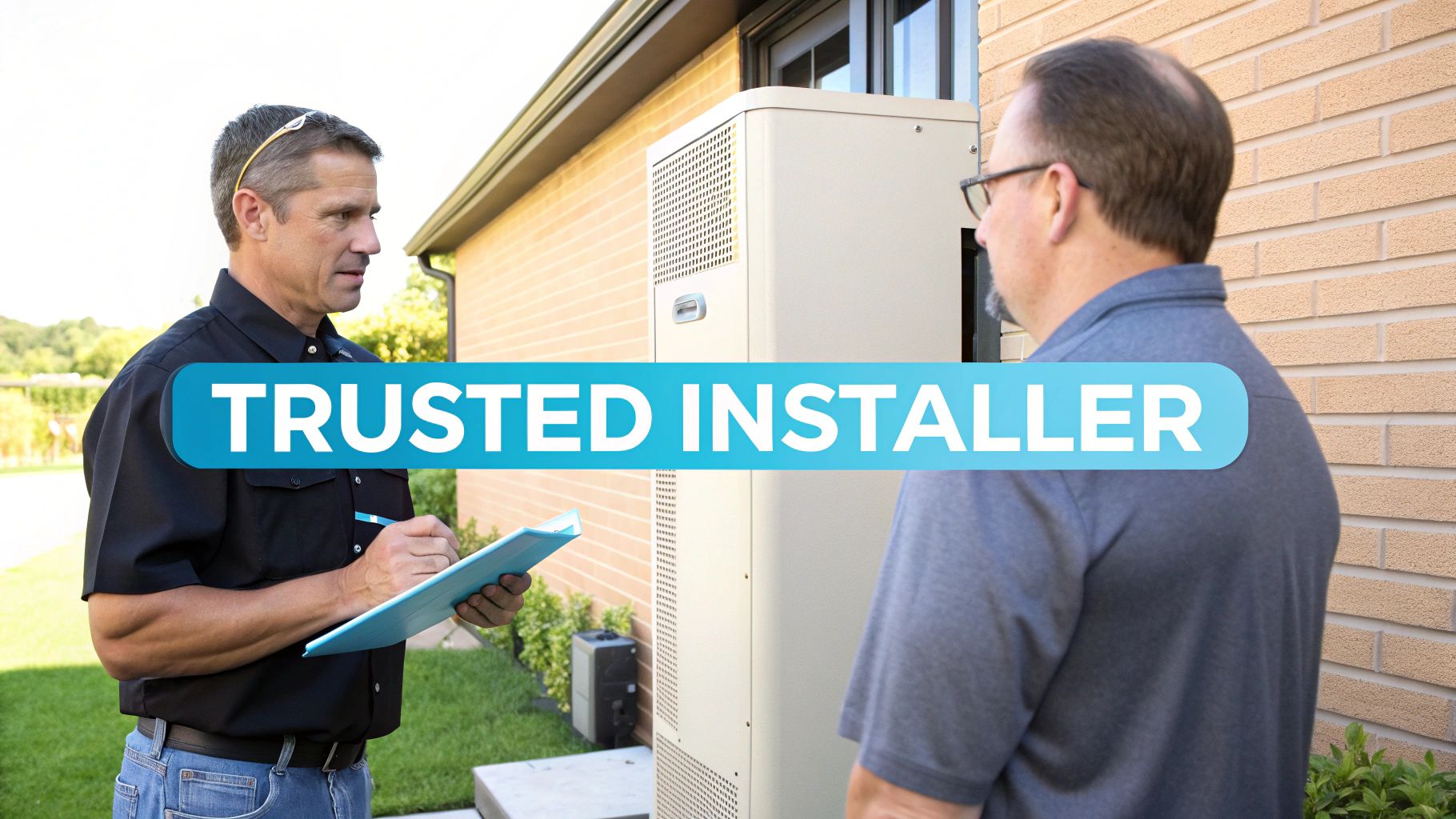
A great installer doesn’t just sell you a box and walk away. They’re with you from the first conversation and site evaluation all the way through a perfect installation and the ongoing service needed to protect your investment. Here’s what you should be looking for when vetting an installer in Los Angeles or Ventura County.
Verifying Licenses and Insurance
This is the absolute first checkpoint, and it’s non-negotiable. Your installer must be a licensed electrical contractor in California. A valid license is proof they have the training and experience to handle complex electrical and gas line work safely, all while meeting our strict local building codes.
Just as important is confirming they carry full liability and workers' compensation insurance. This protects you, the homeowner, from any financial fallout if an accident happens on your property during the project. Don’t feel awkward asking for copies of these documents. A professional, trustworthy company will have them ready and will be happy to provide them.
Confirming Certified Experience
Not all electricians are generator specialists. You’re looking for a team with specific, certified experience installing the exact kind of system you’re buying, whether that's a Generac standby generator or a solar-free home battery.
Look for installers who are official, certified partners with major brands like Generac. This certification isn't just a badge; it means the technicians have completed factory-level training. They know the equipment inside and out. An experienced electrical contractor like RC Generators and Electric brings this specialized expertise to every job, ensuring your system is installed to the manufacturer’s exact specifications—which is critical for performance and keeping your warranty intact.
Choosing an installer is like choosing a pilot for a flight. You don't just want someone who can fly; you want an expert who knows your specific aircraft and has a proven track record of landing safely every time.
Checking Local Reviews and Reputation
After you’ve checked the technical qualifications, see what your neighbors are saying. Dig into recent reviews from homeowners right here in your area. A company with a solid reputation will have a consistent history of positive feedback that highlights their professionalism, clear communication, and high-quality work.
Before you make a final decision, use this checklist to make sure you're covering all your bases.
Installer Evaluation Checklist
Qualification | What to Look For | Why It Matters |
|---|---|---|
State Licensing | A valid California C-10 Electrical Contractor license. | Confirms they meet state requirements for safe electrical work. |
Insurance | Proof of general liability and workers' compensation. | Protects you from financial risk in case of accidents. |
Brand Certifications | Factory-certified for brands like Generac. | Ensures they know the equipment and won't void your warranty. |
Local Experience | A long history of installations in your city or county. | They'll be familiar with local codes and permitting processes. |
Positive Reviews | Consistent 4- and 5-star reviews on Google, Yelp, etc. | Shows a track record of happy customers and quality work. |
Full-Service Offerings | Handles everything from permits to maintenance. | Provides a seamless, stress-free experience from start to finish. |
Professionalism | Clear communication, detailed quotes, and responsive service. | Indicates they respect you and your time. |
A truly professional installer offers a seamless experience. They handle the headache of the permitting process, perform a clean and efficient installation, and provide solid maintenance plans to keep your system in peak condition for years. This all-in-one approach is the hallmark of a company that’s serious about getting the job done right.
Ready to partner with a trusted, certified expert for your home backup power needs? Contact RC Generators and Electric today for a free consultation and experience the peace of mind that comes with professional installation.
A Few Common Questions We Hear
Diving into the world of backup power can bring up a lot of questions. It's a big decision, and as a California homeowner, you want clear, straightforward answers to feel confident. We've put together some of the most common questions our team gets to help you iron out the final details.
What's the Real Cost of a Whole-Home Generator System?
This is usually the first question on everyone's mind, and the honest answer is: it depends. The final cost for a whole-home Generac system is shaped by a few key things—the size of the generator you need, how complex the installation will be, and local permit fees here in Los Angeles and Ventura County.
As a general ballpark, you can expect the total investment, including professional installation, to land somewhere between $10,000 and $20,000 or more for a system that can power your entire house. The only way to get a firm, accurate number is to have an expert out to your property, which is why we offer a free, no-obligation site assessment.
How Long Can a Generac Generator Actually Run?
This is where a standby generator really shines. Since a Generac system connects directly to your home's natural gas or propane line, it has what is essentially a limitless fuel supply. As long as your gas utility is operational, your generator can run continuously for days—or even weeks—if a major outage occurs.
It's engineered specifically for that kind of long-haul reliability, which is a game-changer during California's unpredictable fire season.
Can I Get a Home Battery Without Going Solar?
Absolutely. While home batteries and solar panels are a fantastic pair, you don't need one to have the other. A battery can work perfectly as a standalone backup power system, and it's a solution we specialize in here at RC Generators and Electric.
We call them solar-free home backup systems. The battery simply charges up from the grid, often during off-peak hours when electricity is cheaper. It then holds that power in reserve, ready to kick in the moment you need it. You get silent, emission-free backup without having to install a single solar panel.
What Kind of Maintenance Does a Standby Generator Need?
Think of your standby generator like the engine in your car. To make sure it’s ready to fire up at a moment's notice, it needs a little routine care. We typically recommend an annual service check to keep it in prime condition.
This usually involves:
Changing the oil and oil filter.
Swapping out the air filter and spark plugs.
Inspecting the battery and topping off any fluids.
Running a full diagnostic test to make sure every component is functioning perfectly.
A simple maintenance schedule is the single best way to protect your investment and ensure your generator is ready to go when the next blackout hits.
Ready to make power outages a thing of the past? The experts at RC Generators and Electric are here to design and install the perfect backup power solution for your home in Los Angeles and Ventura County. Contact us today for a free consultation!