
Explore battery backup systems for homes. This guide covers how they work with solar and Generac generators to provide reliable power for your California home.
Date
Dec 24, 2025
Author
RC Admin
Read
7 min
When the power goes out again, that familiar feeling of frustration is something California homeowners know all too well. Staring into a dark house, you’re suddenly cut off from everything. But what if the moment the grid failed, your lights, Wi-Fi, and essential appliances kept running without a flicker?
That’s the promise of a home battery backup system. Think of it as your own personal power reserve, silently standing guard to protect your family’s comfort and safety.
Keeping Your California Home Powered Through Any Outage
For homeowners everywhere from Los Angeles to Ventura County, it’s not a question of if the power will go out, but when. Between unpredictable storms, wildfire-related shutoffs, and a strained electrical grid, outages have become an unwelcome part of life. This guide is designed to give you a clear path toward energy independence—moving you from uncertainty to complete control.
The answer isn't just a portable generator anymore. Modern battery backup systems offer a quiet, seamless, and sophisticated alternative. And when you pair a battery with a trusted home standby generator from a brand like Generac, you build a truly resilient power solution that keeps your home a safe haven through any emergency.
The Growing Need for Reliable Home Power
The shift to home energy storage isn't just a local trend; it's a nationwide movement born from necessity. North America is on track to dominate the global market, capturing up to 45% of the industry by 2025—an $8.56 billion valuation for our region alone.
What’s driving this? Grid failures are becoming more common and severe. From the Texas freezes that left millions in the dark to California's own wildfire seasons causing over 1,000 outages a year, the grid is showing its age. In response, U.S. homeowners installed more than 200,000 residential battery systems in 2023, a 50% jump from the year before. The demand for reliable power has never been clearer.
This guide will demystify how these systems work, showing you exactly how to:
Gain Peace of Mind: Know your refrigerator, medical devices, and security system will stay on.
Maintain Comfort and Connectivity: Keep the lights on, the Wi-Fi running, and your family connected.
Achieve Energy Independence: Cut your reliance on an unstable grid and take control of your home’s power.
A home battery backup system isn't just hardware; it's an investment in your family's security and comfort. It ensures life continues uninterrupted, even when the world outside is in crisis.
At RC Generators and Electric, our specialty is creating these robust backup solutions, both with and without solar. Whether you need a powerful Generac home backup generator or a seamless battery installation, our goal is to deliver a system that doesn't just restore power, but brings you lasting peace of mind.
Ready to secure your home against the next outage? Contact RC Generators and Electric today for a personalized consultation and discover the right backup system for your California home.
How a Home Battery Backup System Works
Let’s pull back the curtain on how battery backup systems for homes actually work. Forget the complex electrical jargon. The easiest way to think about it is as a giant, incredibly smart power bank built specifically for your house. It’s a silent guardian, always on standby to make sure your life goes on, even when the grid gives out.
Under normal conditions, the system is quietly topping off its high-capacity batteries. It can pull power from the electrical grid—usually during off-peak hours when rates are lowest—or it can store the clean energy your solar panels generate all day. That power just sits there, fully charged and ready for the exact moment you need it.
The Instant Switch to Backup Power
The real magic happens the second a power outage hits. Your system’s built-in automatic transfer switch senses the loss of grid power in a fraction of a second. Without missing a beat, it disconnects your home from the utility line and tells the battery to step in and take over.
The transition is so fast and smooth, you probably won’t even realize it happened. The lights stay on, the Wi-Fi keeps humming, and your refrigerator continues running without so much as a flicker. This is a world away from portable generators that need to be manually started and constantly refueled. A battery backup delivers clean, silent, hands-off protection.
This visual shows exactly why so many California homeowners are making the switch. From wildfires to overloaded grids, our power is more vulnerable than ever.
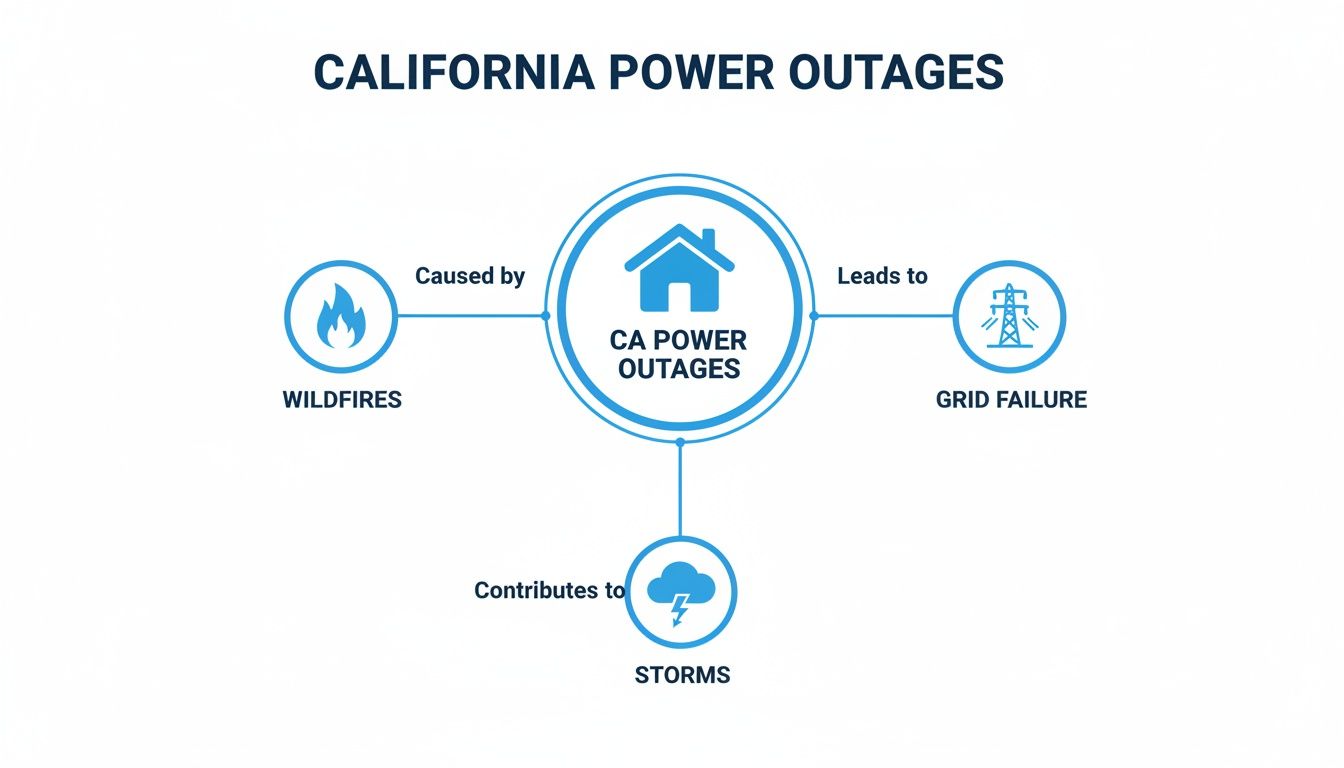
The takeaway here is simple: power disruptions in our state aren't a matter of if, but when. Having a reliable backup plan is becoming essential.
The Key Components Working Together
So, what makes this all possible? Three main components work in perfect sync to deliver that reliable power. Knowing what they do makes it easy to understand how the whole system keeps your home protected.
The Battery: This is the heart of the system—it’s where all the energy is stored. Modern systems use advanced lithium-ion batteries, the same technology found in electric vehicles, which are famous for their long lifespan and ability to pack a lot of power into a small space.
The Inverter: Your home’s lights and appliances run on alternating current (AC) power, but batteries store energy as direct current (DC). The inverter’s job is to seamlessly convert the battery’s DC power into the usable AC power your home needs.
The Automatic Transfer Switch (ATS): Think of this as the brain of the operation. The ATS is the smart device that detects a grid failure and manages the switch from utility power to battery power, ensuring the transition is both instant and safe.
A home battery backup isn't just about storing electricity; it's about providing automated, instantaneous power security. It intelligently manages your home's energy so you don't have to think about it.
Once the utility company restores power, the process simply reverses. The ATS detects a stable grid connection, switches your home back to utility power, and signals the battery to start recharging so it’s ready for the next time. This automated cycle means you are always prepared. You can find a deeper breakdown of these parts in our guide on energy storage systems for homes.
For homeowners across Los Angeles and Ventura County, this technology is the ultimate solution to our frequent grid instability. At RC Generators and Electric, we specialize in designing and installing these systems, including hybrid setups that pair perfectly with a Generac home standby generator for rock-solid, long-term power security.
Choosing the Right Backup Power Solution for Your Home
So, you're ready to explore backup power. The first question our team asks homeowners is simple: what do you absolutely need to keep running when the power goes out?
Your answer is the key to everything. It helps us pinpoint the right battery backup systems for homes, making sure you get the protection your family needs without paying for extra capacity you'll never use.
Generally, this decision boils down to two paths: backing up just the essentials or powering your entire home as if nothing happened. Each has its pros and cons, and the best fit really depends on your lifestyle and priorities.
Backing Up Your Critical Loads
A critical load backup is easily the most popular and budget-friendly approach. In this setup, we wire your battery system to power only a handful of your most important circuits. Think about what you truly can't live without for a day or two.
Refrigeration: Keeping hundreds of dollars' worth of food from spoiling is always at the top of the list.
Connectivity: Your modem and router are essential for staying connected to work, news, and family.
Lighting: A few lights in the kitchen, a main hallway, and a bathroom make a huge difference.
Medical Devices: For anyone with powered medical equipment, this isn't a luxury—it's a necessity.
This strategy is incredibly efficient. It allows a smaller, more affordable battery to keep your essentials running for a surprisingly long time because it isn't wasting energy on things you don't need.
Powering Your Entire Home
For homeowners who want zero interruptions, a whole-home backup is the gold standard. This system is designed to power every single circuit in your house—from the central air conditioner and oven down to the last light switch and outlet.
Life just continues as normal, whether the grid is up or down.
Of course, this requires a much larger battery bank and a more powerful inverter to handle the massive electrical demands of things like your HVAC. If you have significant power draws like high-power 22kW EV home chargers, that needs to be factored in, too. This desire for total energy independence is why the residential sector now makes up over 65% of all battery installations.
Backup Options At a Glance
To make the choice clearer, here’s a simple breakdown of the two main battery backup strategies.
Feature | Critical Load Backup | Whole-Home Backup |
|---|---|---|
Coverage | Powers essential circuits only (e.g., fridge, Wi-Fi, lights). | Powers every circuit and appliance in your home. |
Cost | More affordable initial investment. | Higher upfront cost due to larger batteries. |
Runtime | Longer runtime from a smaller battery. | Shorter runtime unless paired with a massive battery bank. |
Best For | Homeowners focused on emergency preparedness and budget. | Homeowners who want zero disruption to their lifestyle. |
Ultimately, the right choice comes down to what "peace of mind" means to you. Is it knowing the basics are covered, or is it not even noticing the power is out?
The Ultimate Hybrid Solution: A Battery Paired with a Generac Generator
What if you didn't have to choose? What if you could have the silent, instantaneous power of a battery and the long-term, heavy-duty muscle of a generator? That's exactly what a hybrid system delivers.
Pairing a home battery with a whole-home Generac generator creates the most resilient and reliable power solution you can get. Period.
Here’s how it works in the real world:
Instant Battery Power: The moment the grid goes down, your battery takes over silently and instantly. You won't even see the lights flicker.
Long-Term Generator Support: If the outage drags on or you need to fire up the central AC, the Generac generator automatically starts.
Smart Power Management: The generator handles all the heavy lifting, powering your entire home and—here's the brilliant part—recharging your battery. This ensures you always have a full battery reserve ready for the next event.
This hybrid approach eliminates every compromise. You get the seamless, silent switchover of a battery with the virtually unlimited runtime of a Generac generator, giving you complete energy security for days or even weeks on end.
This combination is a game-changer for California homeowners who face prolonged outages from wildfires or Public Safety Power Shutoffs. You have immediate, clean power for short blackouts and unwavering reliability for the long haul.
At RC Generators and Electric, we specialize in designing and installing these custom power solutions. Whether you need a critical load battery, a whole-home backup, or the ultimate hybrid Generac setup, our team of expert electricians is here to help you find the perfect fit for your home.
Integrating Solar and Generac Generators for True Energy Independence
A home battery is a fantastic tool on its own, but its real power is unleashed when you pair it with a way to generate your own electricity. This is how California homeowners can achieve genuine energy independence—by creating a self-sustaining ecosystem that keeps the lights on indefinitely, no matter what’s happening with the grid.
The two best ways to do this are by integrating your battery with solar panels or with a whole-home standby generator from a trusted brand like Generac. Each adds a unique layer of security, but combining all three? That's the ultimate power solution.
Harnessing the Sun with a Solar-Plus-Battery System
For most of us here in sunny Southern California, pairing a battery with solar panels feels like the most natural step toward energy freedom. During the day, your solar panels do more than just power your home; they generate extra, clean energy that would normally get sent back to the grid.
A battery system captures and stores this surplus energy. Then, when the sun goes down or an outage hits, your home seamlessly switches over to run on that stored solar power. This cycle lets you generate, store, and use your own electricity, dramatically cutting your dependence on the utility company.
This setup has one huge advantage during a long outage: your power source is renewable. As long as the sun is shining, you can recharge your batteries day after day, keeping your home powered for far longer than a standalone battery ever could. Of course, to make this work reliably, you need to understand the various factors affecting solar efficiency to ensure you’re getting consistent power.
The Hybrid Powerhouse: Combining Battery, Solar, and a Generac Generator
A solar-plus-battery system is a great solution, but what happens during a prolonged storm when solar production drops? For the absolute highest level of reliability, nothing beats a hybrid system that adds a Generac standby generator into the mix.
This multi-layered approach creates a nearly foolproof power hierarchy, guaranteeing you will never be left in the dark. It’s the ultimate safety net for California homeowners who face the dual threats of grid failures and unpredictable weather.
Here’s how this powerful trio works together:
First Line of Defense (The Battery): The second an outage hits, your battery provides instant, silent power. For short blackouts, this might be all you ever need.
Renewable Recharging (Solar): During the day, your solar panels get to work replenishing the battery, keeping your system topped off with free, clean energy.
The Ultimate Backup (Generac Generator): If the outage stretches for days and cloudy weather limits solar charging, the Generac generator automatically kicks in. It takes over the heavy loads, powers your entire home, and recharges your battery, making sure you always have a full power reserve.
This integrated system offers the best of all worlds: the silent, immediate response of a battery, the free, renewable energy of solar, and the unwavering, long-term power of a Generac generator. It’s the definition of energy security.
This is the system we recommend for homeowners in Los Angeles and Ventura County who want complete peace of mind. To learn more about the specifics of setting up a generator, you can explore our detailed Generac generator installation guide.
Understanding the Costs and California Incentives
Let’s talk numbers. Investing in a battery backup system for your home is a big decision, and the cost is usually the first thing on everyone's mind. The initial price tag might seem high, but a perfect storm of falling battery prices and powerful California incentives is making energy independence more affordable than ever.
The final cost really depends on the size and type of system you choose, but our goal is always the same: find a solution that gives you security without draining your bank account.
The best news for homeowners is that the technology is getting cheaper every single year. Crashing battery costs have opened the door for millions of families to get backup power. To put it in perspective, the price of lithium-ion batteries dropped to just $115/kWh in 2024. That’s an incredible 84% drop since 2015.
This price drop has slashed the cost of a typical 10-15 kWh home system by as much as 60%. It's no wonder the market is projected to hit $22.8 billion by 2032, with homes like yours making up over 65% of all installations. It's clear that battery backup is becoming the new standard for home power.
Federal and State Incentives That Lower Your Cost
Here in California, the sticker price is rarely the final price you pay. A handful of powerful tax credits and rebates can take a huge chunk out of your total investment.
The Federal Investment Tax Credit (ITC): This is the big one. The ITC lets you claim a tax credit for 30% of the total cost of a new solar-plus-battery system. It covers both the gear and the installation, giving you a massive dollar-for-dollar reduction on what you owe in taxes.
The Self-Generation Incentive Program (SGIP): This is a California-specific program offering some very generous rebates for installing battery storage. SGIP was created to encourage homeowners to add batteries that can help support the grid when demand is high. The rebate amounts change, but they often cover a huge portion of the battery’s cost, especially if you live in a high fire-threat district.
By layering federal and state incentives, California homeowners can often knock thousands of dollars off the final cost of a battery backup system. It turns a smart investment into an incredibly affordable one.
Navigating Rebates in Los Angeles and Ventura County
If you live in Los Angeles or Ventura counties, you’re in a great spot to take advantage of these programs. Many areas within these counties are officially designated as high fire-threat zones, which often means you qualify for even higher SGIP rebate amounts. On top of that, local utility companies sometimes offer their own incentives for systems that help keep the local grid stable.
Trying to figure all this out can feel like a full-time job, but you don’t have to do it alone. At RC Generators and Electric, we handle the entire process for our clients. We keep up with every new incentive and make sure you get every single credit and rebate you’re entitled to. It’s all about maximizing your savings and making your path to energy independence as simple as possible.
Ready to see how affordable a home battery backup system can be for your California home? Contact RC Generators and Electric today for a free consultation. We’ll give you a clear, transparent quote and show you exactly how much you can save.
Your Path to Uninterrupted Power with a Trusted Partner
Taking control of your home's power is a big step—one that ensures your family stays safe and comfortable, no matter what’s happening with the grid. While the technology behind battery backup systems for homes can feel a bit intimidating, the installation process is actually pretty straightforward with the right partner guiding you.
This is where having an expert who knows both battery systems and standby generators really makes a difference. An installer who understands both can design a truly bulletproof system. They know how to pair the instant, silent power of a battery with the long-haul reliability of a Generac generator, creating a seamless, multi-layered defense against any outage. For California homeowners, that integrated approach is the gold standard for total energy security.
Why Professional Installation Is Key
Honestly, choosing the right installer is just as important as picking the right equipment. A professional installation guarantees every component works together perfectly, meets all local electrical codes, and is dialed in for your home's specific energy needs.
An experienced team will:
Assess Your Needs: They'll look at your actual power usage to recommend the right-sized battery and figure out if a hybrid generator setup makes sense for you.
Handle Permitting: They’ll navigate the complex maze of permits in Los Angeles and Ventura County, making sure your installation is 100% compliant and safe.
Ensure Seamless Integration: They know exactly how to connect the battery, inverter, and transfer switch to your home’s electrical panel for a reliable, fully automated system.
Provide Ongoing Support: A good partner offers maintenance and support to keep your system running at peak performance for years to come.
Partnering with a certified electrician who specializes in both Generac generators and battery backups eliminates the guesswork. It guarantees a safe, effective, and code-compliant system designed to protect your home.
Your First Step Toward Energy Independence
Securing your home against California's frequent power outages is more than just a home improvement project; it's an investment in your family's well-being. From annoying blackouts to multi-day shutoffs, having a reliable power source means life goes on without a hitch. Our job is to make getting that peace of mind simple.
Whether you're thinking about a standalone battery, a powerful Generac generator, or the ultimate hybrid system, our team is here to help you figure it out. For a full look at our services, you can learn more about our professional whole-home battery backup installation and what the process involves.
Ready to take the first step? Schedule a no-obligation consultation with RC Generators and Electric today. We’ll provide a custom quote tailored to your California home and show you just how easy it is to achieve complete energy independence.
Frequently Asked Questions About Home Battery Backup Systems
Investing in a home battery is a big decision, so it's only natural to have a few questions. To help you feel confident, we've put together some straightforward answers to the questions we hear most often from homeowners in Los Angeles, Ventura County, and across California.
How Long Will a Home Battery Backup Last During an Outage?
This really comes down to two things: the battery's total capacity (measured in kWh) and what you're actually running in your home. A typical system can easily power the essentials—like your fridge, Wi-Fi, and some lights—for 8 to 12 hours, sometimes longer.
But the real game-changer is how you pair it. When your battery is connected to solar panels, it can recharge with sunlight every single day. For the ultimate peace of mind, combining it with a Generac standby generator means your home can stay powered indefinitely, no matter how long the grid is out.
Can I Add a Battery System to My Existing Solar Panels?
Absolutely. Adding a battery to an existing solar setup is one of the most common and smartest electrical upgrades we do. This process, often called a "retrofit," finally lets you capture and store all that extra solar energy your panels generate during the day.
Instead of sending that valuable power back to the grid for pennies, you can save it for yourself to use at night. More importantly, you'll have a fully charged backup ready to go for the next power outage. It's the best way to get the most out of the solar investment you've already made.
What Is the Difference Between a Battery Backup and a Generator?
Think of it this way: they're two different tools for two different jobs, and they happen to work best as a team.
A battery provides instant, silent power from the energy it has stored, making it the perfect first responder for a power outage. A Generac standby generator, on the other hand, burns natural gas or propane to create new electricity, giving it the endurance to run for days or even weeks.
The battery is the sprinter—it kicks in so fast you won't even notice the lights flicker. The generator is the marathon runner, ready to provide the heavy-duty, long-term power needed for an extended blackout. That's why a hybrid system with both gives you the most complete and reliable power solution you can get.
Is a Home Battery Backup System Noisy?
Not at all. In fact, one of the biggest perks of battery backup systems for homes is that they are virtually silent. They operate without the constant hum or loud roar you get from traditional portable or even standby generators.
This makes them a perfect, non-disruptive solution for quiet neighborhoods where noise is a real concern. You get all the security and power without any of the racket.
Ready to protect your home from the next outage with a reliable battery backup system, a powerful Generac generator, or the ultimate hybrid solution? The expert electricians at RC Generators and Electric can design and install the perfect system for your California home. Contact us today for a personalized consultation and take the first step toward complete energy independence.
Get Your Free Consultation and Custom Quote from RC Generators and Electric