
Discover the real electrical panel cost in California. This guide breaks down prices for upgrades, replacements, and future-proofing your home.
Date
Nov 30, 2025
Author
RC Admin
Read
8 min
The cost to replace an electrical panel in California usually falls somewhere between $2,000 and $6,000. Of course, that price tag can shift depending on your home’s specific needs, the panel’s amperage, and what local electricians are charging.
Your Guide to Electrical Panel Costs in California
Thinking about your home's electrical panel is a lot like thinking about its foundation—you don't see it every day, but it supports everything. When it's time for an upgrade, the first question on every homeowner's mind is, "What's this going to cost me?"
Getting a handle on the financial side is the first step toward making a confident decision for your home.
This guide is designed to give you a clear, straightforward look at electrical panel costs in California, breaking down the numbers without the confusing technical jargon. We'll explore the typical price ranges for the most common upgrades and dig into what drives those costs up or down.
A First Look at the Numbers
So, what's a realistic starting point? National data for 2025 suggests that the panel itself can run from $1,283 to $1,556—but that's just for the box. This estimate often doesn't include the circuit breakers, complex labor, permits, or the contractor overhead you'll find in places like Los Angeles and Ventura County.
You can dive deeper into these national cost averages to see how those baseline figures are calculated, but remember they're just part of the story.
Your electrical panel is the heart of your home's power system. An upgrade isn't just a repair—it's a critical investment in safety, reliability, and future-proofing your home for modern demands like EV chargers and home backup generators.
The total price tag is shaped by several key factors, which we’ll cover in detail. This investment ensures your home can safely handle everything from your refrigerator to a future solar and generator setup. To get it done right, it's crucial to work with licensed pros who know California's local codes inside and out.
Ready to get a precise quote for your home? The team at RC Generators is here to help. We provide expert electrical panel installations and upgrades across Los Angeles and Ventura County, making sure your home is powered safely for years to come. Give us a call today for a personalized consultation.
Why Your Electrical Panel Is So Important
Before we get into the nitty-gritty of replacement costs, let’s talk about why that metal box on your wall is so important. Think of your electrical panel as the mission control center for your entire home. It takes the massive amount of power coming in from the street and safely channels it to every light, outlet, and appliance you depend on.
This central hub, often called a breaker box or load center, is also your home’s first line of defense against electrical issues. Every one of those little switches inside—the circuit breakers—is a dedicated bodyguard for a specific part of your house. If it senses an overload (like your toaster, microwave, and coffee maker all running on one circuit) or a dangerous short, it instantly trips, cutting the power to prevent a fire. It’s a simple but brilliant safety system.
The problem is, an older panel was designed for a much simpler time. It just wasn't built to handle today’s world of big-screen TVs, multiple computers, smart home gadgets, and high-powered kitchen appliances all humming along at once.
Telltale Signs of a Failing Panel
So, how can you tell if your home's mission control is getting overwhelmed? There are a few classic warning signs that your panel is struggling to keep up. Catching them early can save you a world of trouble.
Keep an eye out for these red flags:
Breakers Trip All the Time: If you’re constantly walking out to the garage to flip a breaker back on, that’s your panel screaming for help. Your circuits are overloaded.
Lights Flicker or Dim: Notice the lights dip whenever the AC or microwave kicks on? That’s a classic sign your panel is straining under the load.
A Burning Smell or Scorch Marks: This is a serious one. Any weird smells, buzzing sounds, or visible browning around the breakers means you should call a professional immediately.
It’s Actually a Fuse Box: If your home still has an old screw-in fuse box, it’s long past its expiration date. Upgrading to a modern breaker panel isn't just a suggestion; it's a critical safety improvement.
Putting money into a new panel isn’t just another home expense—it’s a foundational upgrade that impacts your home's safety and everyday usability. A modern panel gives you the capacity you need for today and the peace of mind you deserve.
Preparing Your Home for the Future
Thinking beyond just fixing current problems, a panel upgrade is your ticket to a more modern home. It's the non-negotiable first step if you’re planning to install a home standby generator, add solar panels, or finally get that EV charger you’ve been wanting. None of those powerful additions are possible without a robust electrical panel to support them.
Ready to bring your home’s electrical core into the 21st century? Our team at RC Generators specializes in panel upgrades built for modern California living, making sure you have all the power you need for today and tomorrow. Reach out to us for a professional consultation and a clear, no-nonsense quote.
Decoding the Key Factors in Your Final Quote
Ever get a few quotes for an electrical panel upgrade and wonder why the numbers are all over the map? Your neighbor might have paid $2,000 for theirs, while your first estimate comes in closer to $5,000. The truth is, the final cost isn't just one number—it's a combination of several critical parts, all depending on your home’s specific needs and local codes.
Getting a handle on these components is the key to understanding any electrician's quote. It lets you see exactly where your money is going and why one project can be much more complex than another. From the size of the panel itself to the fine print on a city permit, every detail helps shape that final price tag.
Core Cost Components: The Panel and The Professional
Look at any quote, and you'll see two major line items that form the foundation of the price: the materials and the professional labor.
First up is the panel itself. The biggest cost driver here is amperage—basically, how much electrical current the panel can safely handle. A standard 100-amp panel is cheaper, but a 200-amp panel has become the new normal for most California homes, especially if you have central air or you’re thinking about adding an EV charger.
Of course, the materials list goes beyond just the panel box. It also includes all the circuit breakers, wiring, conduit, and connectors needed for a safe, complete installation. The quality of these parts matters, too. Premium brands might cost a bit more upfront but often deliver better durability and peace of mind.
Then there's the labor. This isn't just about the time an electrician spends at your house. It’s a reflection of their experience, licensing, and insurance—all things you absolutely can’t skip on a job this critical. Labor rates vary across Southern California, but a trusted electrician’s expertise is priceless when it comes to getting the job done safely and up to code.
Location and Home Age: A Tale of Two Timelines
Where you live and how old your home is can have a huge impact on the project’s complexity and, you guessed it, the cost. An older home often comes with unique challenges that a newer build just doesn't have.
For example, homes built before the 1980s might have old wiring that won't play nice with a modern panel. This can trigger extra work, like installing a whole new grounding system, which is a must-have for safety. In fact, research shows these kinds of necessary updates can tack on an extra $400 to $1,200 to the total project. You can dive deeper into how regional factors and home age affect pricing by exploring these detailed cost analyses.
The physical location of your panel also plays a big role. Is it tucked away in a hard-to-reach closet? Does it need to be moved to meet current codes? If so, the labor hours will climb. Moving a panel means rerouting the main service line and all your home’s circuits, which quickly turns a simple swap into a much bigger project.
The Hidden Costs: Permits and Repairs
Beyond the panel and the wiring, a few "hidden" factors can add to your final bill. Think of these as the essential steps that guarantee your project is safe, compliant, and finished correctly.
Navigating the permitting process in counties like Los Angeles and Ventura is a crucial part of any panel upgrade. This step guarantees that a third-party inspector verifies the work, providing an essential layer of safety and quality control for you as a homeowner.
Here’s a quick rundown of what often gets overlooked:
Permitting Fees: In California, you can't upgrade a panel without a permit from your local building department. The fee varies by city, but a licensed electrician will handle the entire process for you, from application to scheduling the inspection.
Code-Required Upgrades: During the inspection, the city official might spot other things in your electrical system that need to be brought up to today's standards. This could mean installing new smoke detectors or adding GFCI outlets in certain areas.
Drywall and Stucco Repair: Cutting into a wall is often necessary to replace or move a panel. The cost to patch and repaint the drywall or exterior stucco is sometimes rolled into the quote, but not always. It’s a good idea to clarify this with your electrician.
Utility Company Coordination: Sometimes, the utility company has to get involved, especially if the main service line from the street to your house needs an upgrade. This can add another layer of scheduling and potential cost to the project.
Understanding every factor that goes into your electrical panel cost helps you make a smart, informed decision. At RC Generators, we believe in transparent, detailed quotes that break down every part of the job. If you’re ready to get your home's electrical system safe, modern, and ready for the future, contact our team for a professional consultation today.
Future-Proofing Your Home for Modern Power Needs
Think of a panel upgrade as more than just a simple fix—it’s a strategic investment in your home’s future. Sure, it solves immediate annoyances like flickering lights or breakers that won't stop tripping, but its real value is in prepping your home for the power-hungry technology that's already here. It’s like turning a two-lane country road into a six-lane highway before the city grows up around it.
This upgrade is the critical first step toward building a home that's resilient and energy-independent. An undersized or ancient panel is the number one thing holding homeowners back from installing modern energy solutions. Without enough capacity, your plans for a more secure and efficient home are dead in the water.
The Gateway to Energy Independence
Here in California, homeowners are constantly looking for ways to take back control of their power, especially with the constant threat of wildfires and an unstable grid. A home standby generator, a solar-powered generator, or a home battery backup system like a Tesla Powerwall are the ultimate answers, but they all have one thing in common: they need a modern electrical panel that can handle the job.
An electrical panel upgrade isn't just another line item on a quote. It's the enabling investment that unlocks true energy security, letting you add powerful systems like a Generac home backup generator or a full solar array.
Trying to hook up a powerful Generac generator to an old 100-amp panel is like trying to fill a swimming pool with a garden hose. It’s just not built for that kind of demand. Your panel needs dedicated space and enough amperage to safely manage these heavy-duty systems.
Planning Ahead Saves You Money
One of the smartest moves you can make is to think about your future needs before you start the panel replacement. It’s always cheaper to bundle projects than to do them one by one. If you know an EV charger is on the horizon or you're dreaming of a solar-powered generator down the road, planning for it now will save you thousands.
Here’s how thinking ahead pays off:
Avoids Double Labor Costs: Your electrician is already there, and the walls might already be open. Running the wiring for a future EV charger or a generator transfer switch at the same time is far less expensive than calling them out for a whole separate project later.
Prevents a Second Upgrade: Installing a 200-amp panel today—even if you technically only need 150 amps right now—ensures you won’t have to pay for another major upgrade when you finally add that home battery system.
Simplifies the Permit Process: Bundling multiple electrical jobs can often be handled under a single permit, which streamlines the whole process with your local Los Angeles or Ventura County building department and cuts down on administrative fees.
For example, adding a pre-wired circuit for a future EV charger while you’re installing a 200-amp panel might add a few hundred dollars to your initial cost. But installing that same EV charger as a standalone project a year from now could easily cost $1,500 or more once you factor in new permits, separate labor, and potentially opening up walls again.
Building a Resilient California Home
The modern California lifestyle needs more power than ever. Between home offices, entertainment systems, and the absolute necessity of backup power during outages, our electrical systems are being pushed to their limits. A robust electrical panel is the heart of a home that’s ready for these challenges.
It’s the foundation for essential upgrades that give you real peace of mind:
Home Standby Generators: A system like a Generac generator must be wired directly into a panel with enough capacity to carry your entire home when the grid goes down.
Solar-Powered Generators & Batteries: To actually store the clean energy you produce, your panel has to be able to manage electricity flowing both in and out from solar arrays and home batteries.
EV Charging Stations: A Level 2 EV charger requires a dedicated 240-volt circuit, something older panels often can't support without a serious overhaul.
Upgrading your panel is the first and most important move. It changes your home from a place that just consumes power to one that can manage, store, and even generate its own. It’s the critical step that makes true energy resilience a reality.
Choosing the Right Panel Size for Your Home
Picking the right electrical panel isn't just a technical choice—it's about making sure your home's power capacity can keep up with your family’s life. Think of it like an engine. You wouldn't put a tiny four-cylinder in a heavy-duty truck, right? The same logic applies to your home's electrical system.
An undersized panel creates all sorts of headaches, from breakers that trip every time you run the microwave to serious safety risks. More than that, it’s a roadblock to modernizing your home. Getting this decision right now means your home will be safe, functional, and ready for whatever comes next.
This is especially true when you start thinking about bigger energy upgrades.
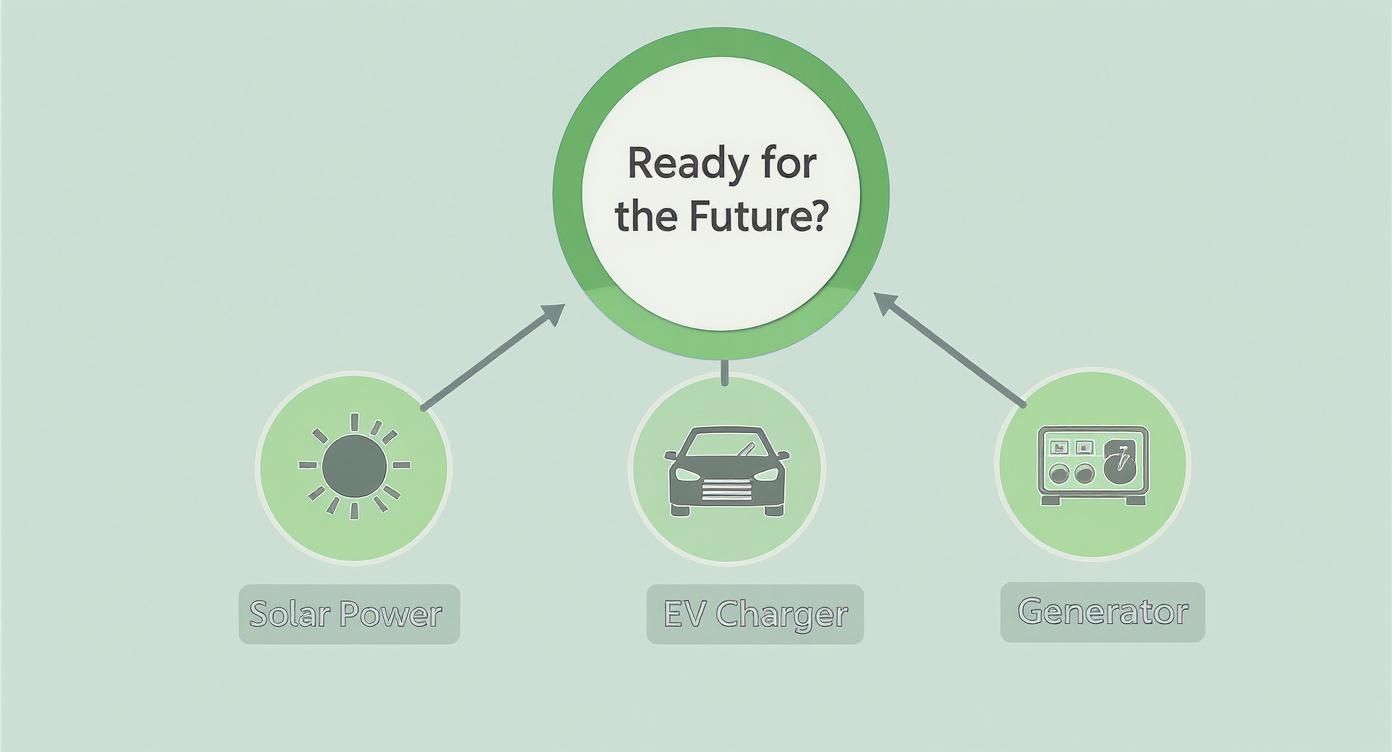
As you can see, whether you're adding solar panels, an EV charger, or a home backup generator, it all starts with having an electrical panel that can handle the load.
Which Panel Amperage Do You Need?
Choosing the correct amperage can feel complicated, but it really boils down to your current and future needs. This table breaks down the common panel sizes to help you figure out where your home fits.
Panel Size | Ideal Home Profile | Supports Future Upgrades Like |
|---|---|---|
100 Amp | Smaller homes (under 1,500 sq. ft.) with mostly gas appliances and no central A/C. Limited capacity. | Very few; not suitable for most modern energy additions. |
200 Amp | The modern standard for most homes. Powers central A/C, electric appliances, and moderate energy use. | EV chargers, home standby generators, solar panels, and battery storage systems. |
400 Amp | Large luxury homes (over 3,500 sq. ft.) with multiple HVAC systems, pools, hot tubs, or multiple EV chargers. | All major energy systems running simultaneously, plus extensive smart home and outdoor features. |
Ultimately, the goal is to install a panel that not only meets your needs today but also gives you the flexibility to grow without needing another expensive upgrade down the road.
The Old Standard: 100-Amp Panels
For a long time, the 100-amp panel was the workhorse of American homes. It was plenty for a time when the biggest power hogs were a refrigerator and a TV. Those days are long gone.
Today, a 100-amp service is barely enough. It might get the job done in a small California home (under 1,500 sq. ft.) that uses gas for the stove and water heater. But if you're even thinking about adding an EV charger or a standby generator, a 100-amp panel is a non-starter.
The electrical panel cost for a basic 100-amp replacement can run from $1,200 to $1,800, but it's an investment with a very short shelf life. For more on what this system involves, check out our guide on what size wire for a 100-amp service.
The New Gold Standard: 200-Amp Panels
There's a reason the 200-amp panel is the new standard. It delivers the power a modern California family actually needs, easily handling central air conditioning, an electric range, and all your devices and appliances running at once.
For the vast majority of homeowners, a 200-amp panel is the sweet spot. It gives you more than enough power for today and leaves plenty of room for tomorrow's upgrades, like a Generac home generator or a solar battery system.
If you have an EV charger, a home battery, or a standby generator on your wish list, a 200-amp service isn't just a good idea—it's a must. The cost to upgrade to a 200-amp panel usually lands between $1,800 and $4,500, a price that reflects its superior capacity and the more involved installation.
The Powerhouse: 400-Amp Panels
For very large homes (over 3,500 sq. ft.) or properties with some serious power demands, the 400-amp service is the answer. We typically see these in custom homes with multiple HVAC units, pool and spa heaters, extensive outdoor lighting, and maybe a workshop or two EV chargers.
This beast of a panel ensures that even the most demanding electrical systems can run at the same time without causing a single light to flicker. Because of the heavy-duty equipment and complexity involved, the cost for a 400-amp upgrade can range from $8,000 to $12,000 or more.
Making the right choice comes down to being realistic about your current usage and your future plans. At RC Generators, we help homeowners across Los Angeles and Ventura County map out their needs to find the perfect solution. Give us a call, and we'll make sure your home is powered for life.
Finding a Trusted Electrician for Your Project
Let's be perfectly clear: upgrading your electrical panel is not a DIY job. This is the heart of your home's power system, and a single mistake can create serious safety hazards, from electrical fires to shock risks. This is why the most important part of managing your electrical panel cost isn't just about the price tag—it’s about finding a licensed, insured, and reputable professional to handle the work.
When you're looking for the right electrician, you have to look beyond the bottom-line price on the quote. A great electrician doesn’t just provide a service; they provide peace of mind. They’re the ones who make sure every connection is tight, every wire meets code, and your home is safe for years to come.
Your Vetting Checklist
To help you make a confident choice, here’s a quick checklist of questions to ask any electrician you’re considering. Their answers will tell you a lot about their experience, professionalism, and commitment to doing things right.
Licensing and Insurance: "Are you licensed to work in California, and can you provide proof of liability insurance and workers' compensation?" This is non-negotiable. It’s what protects you from being on the hook for accidents.
Local Experience: "How familiar are you with the specific codes and permitting processes in Los Angeles or Ventura County?" Local knowledge is a game-changer for getting a project to pass inspection smoothly.
Project Scope: "Does your quote include all necessary materials, labor, permit fees, and potential drywall or stucco repair?" A truly transparent quote prevents those nasty surprise costs down the road.
Future-Proofing: "Can you install a panel that supports a future Generac generator or EV charger installation?" This question reveals if they're thinking about your long-term needs, not just the immediate job.
By the way, if you're curious about how electricians utilize SEO to reach customers, it can give you some insight into how the best pros make themselves visible online.
A cheap quote can be the most expensive one in the long run if it leads to failed inspections, safety issues, or the need for future rework. Investing in a qualified, experienced professional is the best way to protect your home and your family.
Choosing the right electrician is an investment in quality materials and expert workmanship that will stand the test of time. It ensures your home’s electrical system isn't just functional, but also safe, modern, and ready for whatever you throw at it next.
Ready to connect with a team you can trust? RC Generators offers professional, code-compliant panel upgrades across Los Angeles and Ventura County. We specialize in future-proofing homes for systems like Generac generators and home battery backups. Contact us today for a professional consultation and a clear, comprehensive quote.
Common Questions About Electrical Panel Costs
Even with a detailed breakdown, it's natural to have a few more questions rattling around. Deciding on an electrical panel upgrade is a big deal, and we want you to feel completely confident about it. To help clear things up, here are some straightforward answers to the questions we hear most often from California homeowners.
How Long Does It Take to Replace a Panel?
For most homes, a standard panel swap is a one-day job. You can expect our crew to be there for 8 to 10 hours, from start to finish. We'll need to shut off your home's power for safety during that time, so it's a good idea to make plans to be out of the house or have your laptops and power banks fully charged.
The process is pretty methodical:
First, we disconnect and pull out the old, outdated panel.
Next, we mount the new, modern panel box securely.
Then comes the careful work of connecting the main service line and all your individual home circuits.
We install and clearly label every single new circuit breaker—no more guessing games for you.
Finally, we restore power and run a full system test to make sure everything is working flawlessly.
If your project is a bit more involved—like if we need to move the panel to a new spot or tackle some old, problematic wiring—it might stretch into a second day. But don't worry, we'll give you a crystal-clear timeline upfront based on what your home needs.
Will a Panel Upgrade Increase My Home Value?
Absolutely. Upgrading your electrical panel is one of those smart, practical investments that can genuinely boost your home's value and appeal to buyers. A new, modern panel is a huge selling point. It signals that the home is safe, up-to-date, and ready for all the tech we rely on today.
Put yourself in a buyer's shoes for a minute. A house with an old 100-amp panel screams "future project." They know they'll have to sink money into an upgrade, especially if they want an EV charger or a hot tub. On the other hand, a home with a shiny new 200-amp panel is future-proof and move-in ready. That kind of peace of mind can make your property stand out and justify a higher asking price.
Is a Permit Always Required in California?
In almost every single case, yes. Here in California, replacing or upgrading a main electrical panel is a major project, and the law requires a permit from your local city or county building department. That goes for both Los Angeles and Ventura counties.
This isn't just about paperwork; it's a critical safety step. The permit process triggers an inspection from a qualified city or county official who verifies the work meets the latest National Electrical Code (NEC) and all local safety standards. It's a vital, third-party stamp of approval on the quality and safety of the job.
Any reputable, licensed electrician will handle the entire permitting process for you—it’s just part of doing the job right. Trying to sidestep a permit is a bad move. It can lead to serious safety risks, steep fines, and major headaches when it's time to sell your home.
Ready to ensure your home's electrical system is safe, modern, and ready for whatever comes next? At RC Generators, we specialize in professional panel upgrades and home backup generator installations across Los Angeles and Ventura County. Our licensed electricians are here to provide a clear, comprehensive quote and expert service you can trust.