
What's the real electrical panels cost in LA and Ventura? Our guide demystifies upgrade prices, labor costs, and how to future-proof your home's power.
Date
Dec 27, 2025
Author
RC Admin
Read
9 min
When it's time to upgrade your electrical panel, one of the first questions is always about cost. On average, homeowners can expect to invest between $1,300 and $4,000 for a full panel replacement, with a typical project landing around $2,150. The final number really depends on the size of the panel you need and the specifics of the job. For California homeowners, this isn't just an expense—it's a critical investment in your home's safety and future.
Your Quick Guide to Electrical Panel Upgrade Costs
Think of your home's electrical panel as its central nervous system. It’s the main hub that takes power from the grid and safely distributes it to every light, outlet, and appliance in your house. The problem is, older panels were never built to handle the demands of a modern California home, especially one with power-hungry appliances, an EV charger, or a home backup system like a Generac generator.
An upgrade isn't just a simple repair. It's an essential step to make sure your home can safely and efficiently handle today's energy needs. If you're constantly dealing with tripped breakers, flickering lights, or worse, an outdated panel could be putting you at risk of a serious electrical fire.
Understanding Costs by Amperage
The biggest factor driving the cost of an electrical panel upgrade is its amperage—a term that simply measures the total amount of electricity the panel can manage at one time. Today, most homes need at least a 200-amp service to comfortably power everything from central air conditioners to home battery systems.
100-Amp Panels: These are usually fine for smaller homes or condos that have gas appliances and don't have a lot of high-draw electronics.
200-Amp Panels: This is the new standard for most single-family homes. It gives you plenty of power for major appliances, an EV charger, and a standby generator like those from Generac.
400-Amp Panels: Reserved for large, luxury homes with complex electrical systems, such as those with multiple EV chargers, pool heaters, or other high-power demands.
For a quick reference, here’s a look at what you can expect for the total cost, including both the panel itself and the professional labor to get it installed.
Average Electrical Panel Upgrade Costs By Amperage
Panel Amperage | Ideal For | Estimated Cost Range (National Average) |
|---|---|---|
100 Amps | Smaller homes (<1,500 sq ft) with gas appliances | $800 – $1,500 |
200 Amps | Standard single-family homes (1,500-3,000 sq ft) with modern appliances | $1,300 – $3,000 |
400 Amps | Large homes (>3,000 sq ft) with high-demand systems like pools or multiple EVs | $2,500 – $4,000+ |
These figures give you a solid baseline, but keep in mind that every home is different, and final costs can vary based on the complexity of the installation.
This chart gives you a quick visual breakdown of what California homeowners might pay for different panel sizes.
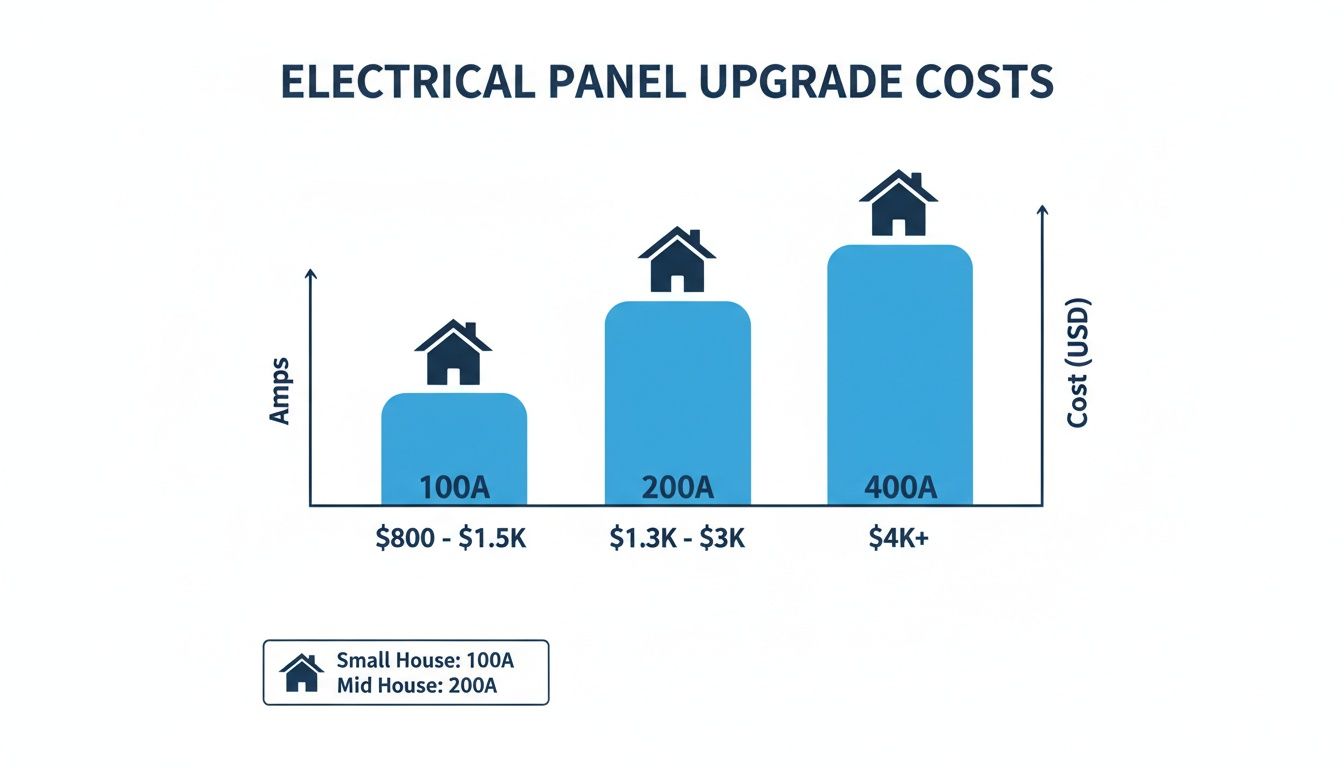
As you can see, the price climbs with the amperage. This reflects not only the higher cost of the equipment but also the more intensive labor required for a safe and code-compliant installation.
Looking ahead to 2025, a basic 100-amp panel swap might run from $800 to $1,500. But the most common project we see in the Los Angeles and Ventura areas—upgrading to a 200-amp service—is typically in the $1,300 to $3,000 range. This is the sweet spot for homes adding a Generac generator or solar-powered backup. For those larger properties needing a full 400-amp service, the price can easily top $4,000 because of the more expensive materials and complex wiring involved. If you want to dive deeper, you can learn more about the detailed 2025 electrical panel cost breakdown from industry experts.
Ready to make sure your home’s electrical system is safe, reliable, and ready for whatever you throw at it? Contact RC Generators and Electric today for a straightforward consultation and a transparent quote on your panel upgrade.
Demystifying Your Quote and Where Your Money Goes
Ever looked at a contractor's quote and felt like you were trying to read a foreign language? When it comes to the cost of an electrical panel upgrade, understanding exactly what you’re paying for brings some much-needed peace of mind.
A quote from a reputable company like RC Generators and Electric isn't just one big number. It’s a transparent breakdown of three core components that ensure your home is safe, compliant, and ready for the future. Let’s pull back the curtain and explain each part of the estimate in simple terms.
The Price of Materials
The first major line item on any quote is for the physical equipment. This is way more than just the main panel box; it includes all the essential hardware that makes your electrical system work safely and efficiently.
The Electrical Panel (Load Center): This is the metal box that acts as the command center for all your circuit breakers. Its cost depends heavily on the amperage rating (like 200 amps) and the brand we choose.
Circuit Breakers: Think of each breaker as a tiny, automatic safety switch for different circuits in your home. Quality breakers are absolutely crucial for preventing overloads and electrical fires.
Wiring and Conduit: Depending on the job, we often need to run new, thicker wiring to connect the panel to your utility meter and properly ground the system. This wiring is always housed in a protective casing called a conduit.
These materials are the very foundation of your home's power grid. Skimping here isn't an option, as a single faulty component can lead to catastrophic failure.
The Value of Professional Labor
The largest chunk of your electrical panel cost will almost always be the labor. You aren't just paying someone to connect a few wires; you're investing in expertise, safety, and a job done right the very first time.
The work of a licensed and insured electrician is non-negotiable. An experienced professional from RC Generators and Electric doesn't just swap out a box. They assess your home's entire electrical load, make sure the new system is perfectly balanced, and guarantee every connection is rock-solid. This meticulous work, often taking a full day or more, is what protects your home from the very real dangers of electrical faults.
Hiring an unlicensed handyman to save a few hundred dollars might seem tempting, but it can lead to dangerous code violations, void your homeowner's insurance, and create severe fire hazards. The cost of professional labor is your best insurance policy against all of it.
Navigating Permits and Inspections
Finally, a legitimate quote will always include the costs for local permits and inspections. In places like Los Angeles and Ventura County, these aren't optional steps—they are legally required to ensure the work meets strict safety codes.
The process is straightforward:
Pulling the Permit: Your electrician files the plans with the city or county before any work begins.
Performing the Work: The panel is installed according to the approved plan and all local electrical codes.
Scheduling the Inspection: A city or county inspector comes to your home to verify that the installation is safe, correct, and fully compliant.
The permit fees and the time your electrician spends managing this whole process get factored into your total cost. While it adds to the price, this final sign-off is your official proof that the job was done to the highest safety standards required in California. It ensures your home, your family, and your investment are protected.
Ready to see a transparent, no-surprises quote for your home? Contact RC Generators and Electric today for a professional assessment in the Los Angeles or Ventura County area.
Key Factors That Influence Your Final Panel Cost
No two homes are the same, and neither are their electrical panel upgrades. While the average costs we’ve discussed are a great starting point, your final quote can shift based on a handful of key variables unique to your property. Knowing what these are helps you understand exactly why a custom quote is so important for an accurate price.
The final electrical panel cost really boils down to the specifics of your project. Think of it like this: swapping out an existing 150-amp panel for a new one is a pretty straightforward job. But upgrading from a tiny, ancient 60-amp panel to a modern 200-amp service? That’s a much bigger and more involved project.
This kind of major jump often requires more than just a new box on the wall. It can involve replacing the main service line from the utility pole, upgrading the meter socket, and even installing a whole new grounding system to meet today's strict safety codes. Each of these necessary additions will be reflected in the final cost.
Your Home's Age And Existing Wiring
Older homes, especially those built before the 1980s here in California, often come with their own set of electrical quirks. What might seem like a simple panel upgrade can sometimes uncover underlying issues that absolutely must be addressed for safety and code compliance.
These kinds of surprises are common in older properties and can definitely add to the project's scope. For example, an electrician might find:
Outdated Knob-and-Tube or Aluminum Wiring: These wiring types are considered hazardous by modern standards. Depending on the situation, they may need to be replaced in certain areas before a new panel can be safely installed.
Insufficient Grounding: Modern electrical codes demand a robust grounding system to protect your home and family from electrical surges and shocks. Many older homes just don't have this, requiring the installation of new grounding rods and wiring.
Subpanel Complications: If your home has secondary subpanels—which are common in homes with additions, detached garages, or workshops—they also need to be compatible with the new main panel. Sometimes, this means they'll need their own upgrades, too.
Fixing these pre-existing conditions is non-negotiable for the safety of your home, but it will naturally increase the overall project cost. When looking at quotes for any home service, it's helpful to understand how professionals build their pricing, much like learning how security guard services determine a bill rate and cost factors.
Service Upgrades And Power Needs
A huge factor in your electrical panel cost is the size of the "service" you need, which is just the total amperage your home requires. If you're planning to add a Generac home backup generator, install an EV charger, or convert to all-electric appliances, you'll almost certainly need a service upgrade.
The most common upgrade we perform is from a 100-amp or 125-amp service to a 200-amp service. This is the modern standard and provides enough power for most homes to comfortably run everything from central AC to a home battery system without tripping breakers.
Figuring out your exact power needs is a critical first step. You can get a much better handle on your home's requirements by learning how to calculate your electrical load in our detailed guide. An accurate load calculation ensures you install a panel that will serve your family well for decades.
Location And Accessibility
Believe it or not, where your electrical panel is located can also play a role in the final price. A panel that’s easy to get to in a garage or on an exterior wall is typically a simpler and less expensive replacement job.
However, if your panel is tucked away in a hard-to-reach spot—like a cramped closet or behind a finished wall—the labor costs will be higher. The electrician will need more time to work safely in that space and then restore the area afterward, which all gets factored into the quote. Likewise, if the main utility line needs to be moved or re-routed to the new panel location, that will add complexity and cost to the job.
Why Los Angeles and Ventura County Costs Are Unique
A national average for an electrical panel upgrade is a decent starting point, but it doesn't paint the full picture for Southern California homeowners. The electrical panels cost you see online often misses the unique factors driving prices right here in Los Angeles and Ventura County. It’s not just about paying more; it's about understanding what goes into a safe, compliant, and reliable installation in our specific region.
This regional difference is significant. Recent data shows that urban areas like Greater Los Angeles can see prices 20-40% above national averages. While a standard panel replacement might run between $1,100 and $2,500 nationally, complex jobs in high-cost metro areas often push the total to between $2,000 and $6,000—a range far more common in our local market. Things like urban access challenges and higher labor costs directly inflate the final price.
Higher Regional Labor and Material Costs
One of the biggest factors in your final quote is simply the cost of doing business in Southern California. Skilled, licensed electricians are in high demand, and their labor rates reflect the expertise needed to work in this market.
On top of that, supply chain logistics and the price of high-quality materials—from the panel box itself to the copper wiring inside—are just plain higher here. This baseline cost difference is a fundamental part of any local electrician’s pricing.
Navigating Complex Local Permitting
Every city and county has its own rulebook, and Los Angeles and Ventura are no exception. The permit process here can be a real headache, requiring a deep understanding of municipal codes that can change from one zip code to the next.
A professional electrician doesn't just install your panel; they manage the entire bureaucratic maze. This includes submitting detailed plans, coordinating with city inspectors, and making sure every part of the job passes a tough final inspection. This service alone is invaluable for preventing costly delays and compliance headaches.
This specialized knowledge is exactly why local expertise matters. A contractor who knows the specific requirements for homeowners in Ventura County, for instance, can get your project through the system smoothly without getting bogged down in red tape.
Stringent Building and Seismic Codes
California’s building codes are some of the strictest in the country, and for good reason. Safety comes first, especially with electrical systems. These codes dictate everything from the type of wiring required to the precise way a panel must be grounded.
What’s more, our region has unique seismic safety requirements. An electrical panel, especially one connected to a heavy system like a Generac home backup generator, has to be securely mounted and braced to withstand an earthquake. This isn't a suggestion; it’s a mandatory safety measure that requires specific hardware and installation methods, adding another layer of cost and complexity to local projects.
When you partner with RC Generators and Electric, you’re not just buying a panel. You're investing in local expertise that guarantees your installation is safe, efficient, and built to last in Southern California. Ready for a quote that actually reflects our unique local needs? Contact us today.
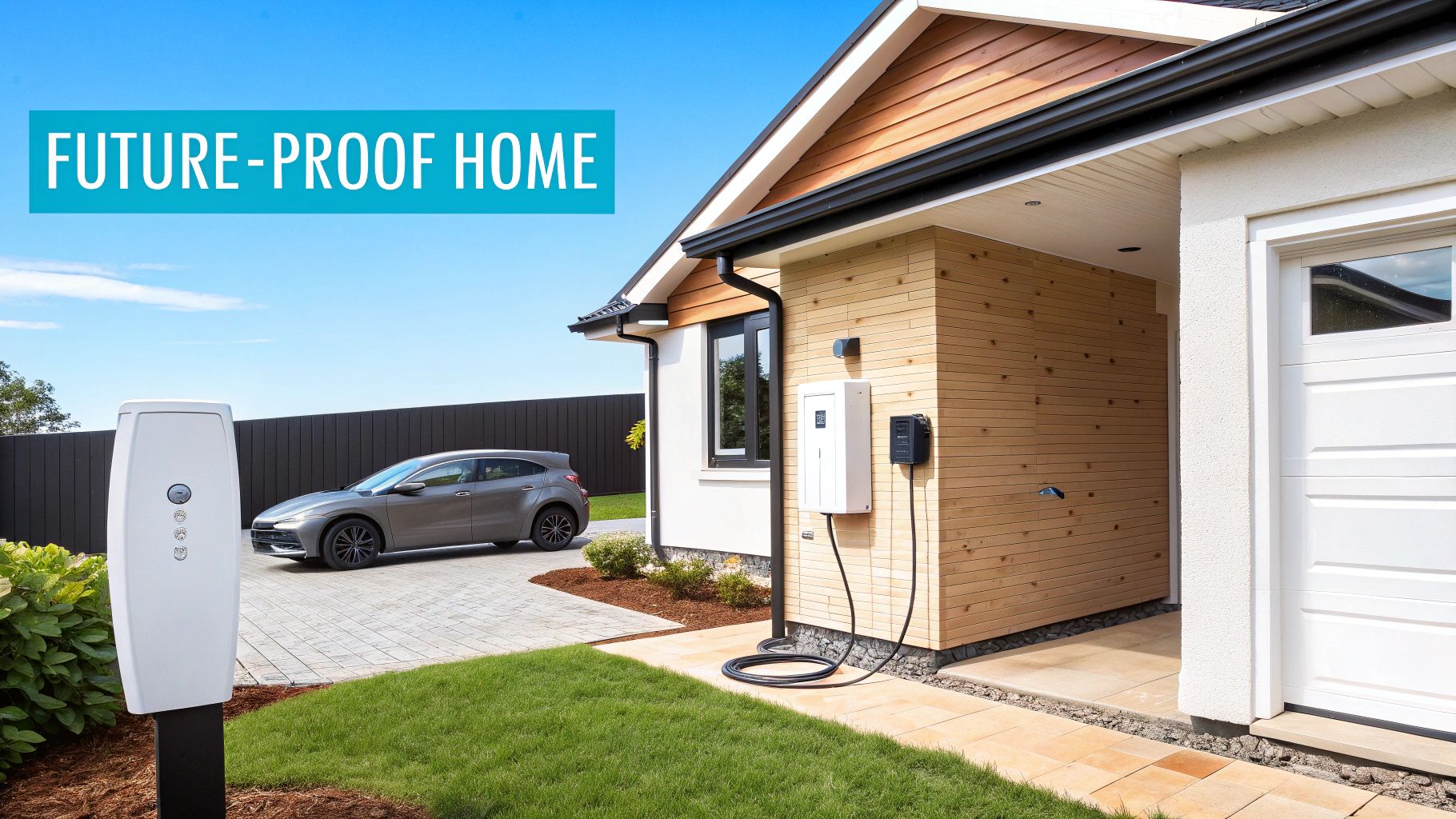
Future-Proofing Your Home for Modern Energy Needs
Thinking about your electrical panel as just another repair cost is a huge mistake. A modern panel upgrade is one of the smartest investments you can make for your home—it’s the foundation for everything that comes next. It's the critical first step that unlocks the power, safety, and convenience of today’s most valuable energy solutions.
Frankly, without a robust panel, your home just isn't ready for the modern world.
This investment becomes even clearer when you look at the numbers. With the surge in EV chargers and renewable energy, the demand for high-capacity systems is skyrocketing. We're now seeing 2025 electrical panel upgrades average between $1,313 and $2,150 nationally. That's a significant 15-20% jump from just a few years ago. Upgrading isn't just about adding new toys; it's about managing risk and boosting your home's long-term value.
The Gateway to Energy Independence and Resilience
A high-capacity panel, usually 200 amps or more, is the key that unlocks the services we specialize in here at RC Generators and Electric. It gives you the electrical muscle needed to handle high-demand systems that keep your family safe and comfortable, especially during California’s unpredictable power outages and fire seasons.
Imagine a home that’s truly prepared for anything. That's what a modern electrical system delivers:
Whole-Home Generac Backup Generators: When the grid fails, a powerful Generac generator automatically kicks in, restoring power to your entire home in seconds. That kind of power draw requires significant electrical capacity that older panels simply can't handle.
Home Battery Backup Systems: If you're looking for real energy independence, a home battery stores excess power from the grid or your solar panels. This lets you power your home during outages or even avoid expensive peak-rate hours. You can learn more about our process for a whole home battery backup installation and how it all ties into your panel.
High-Speed EV Chargers: Electric vehicles are the future, but they're power-hungry. A modern panel ensures you can install a Level 2 charger to quickly and safely juice up your car overnight without overloading your home’s entire electrical system.
Building a Modern, Electrified Home
The push toward all-electric homes is here to stay. More and more homeowners are ditching gas appliances for efficient electric heat pumps, induction cooktops, and tankless water heaters. Every one of these upgrades adds to your home’s electrical load, making a panel upgrade less of a "nice-to-have" and more of a necessity.
A modern electrical panel isn’t just an upgrade; it's the central hub of a resilient, self-sufficient home. It empowers you to embrace a sustainable lifestyle while ensuring your family remains safe and comfortable, no matter what happens with the public power grid.
By investing in your electrical system today, you're actively boosting your property's value. A home that's already wired and ready for a Generac generator, an EV charger, and a home battery is a huge draw for future buyers who get it. And while you're thinking about the panel, check out these essential home energy efficiency tips to help lower your overall energy use and future costs.
Ready for Your Custom Panel Upgrade Plan?
You've done the research. You know the typical costs for an electrical panel upgrade, what factors can shift the price, and just how critical this investment is for your home’s safety and future. The next step is simple: moving from understanding the "why" to seeing the "how" for your specific home.
At RC Generators and Electric, we skip the guesswork. When you schedule a consultation with us, you won’t get a vague estimate or a confusing quote packed with hidden fees. Instead, you'll get a straightforward, comprehensive proposal that clearly breaks down where every dollar of your investment goes. We want you to feel confident and fully informed from start to finish.
Our Straightforward Consultation Process
We designed our process to be as efficient and respectful of your time as possible. No jargon, no runaround—just the answers you need, fast.
Initial Contact: Just give us a call or reach out through our website. We'll ask a few quick questions about your home and what you're hoping to achieve with your electrical system.
On-Site Assessment: One of our licensed electricians will come to your home to take a look at your current panel, inspect the wiring, and talk with you about your future plans, whether that includes a Generac generator, an EV charger, or just more capacity.
Customized Plan and Quote: We’ll put together a solution tailored specifically for you and provide a detailed quote breaking down all the material and labor costs. We’ll walk you through it and answer every single question you have.
This is your chance to work directly with a team that has spent years serving homeowners across Los Angeles and Ventura County. We know the local codes inside and out, understand the unique challenges of homes in our area, and know how to build a system that will last.
Upgrading your home's electrical system is one of the most important decisions you can make. It’s the backbone of your family’s safety, the gateway to modern energy solutions, and a direct investment in your property's value. Don't leave it to chance.
Ready to secure your home’s electrical future? Whether you just need a straightforward panel upgrade to handle your family’s growing power needs or you’re planning a complete system with a Generac home backup generator, our team is here to help. We’re ready to design a powerful, reliable, and safe electrical system that will serve you for decades to come.
If you're a homeowner in Los Angeles or Ventura County, the time to get this done is now. Contact RC Generators and Electric today to schedule your no-obligation consultation and get your custom panel upgrade plan.
Common Questions About Electrical Panel Costs
Once you start digging into the details of an electrical panel upgrade, a few practical questions always come up. We hear them all the time from homeowners across California, so we've gathered the most common ones here to give you clear, straightforward answers.
How Do I Know if I Need a Panel Upgrade?
You don't have to be an electrician to spot the warning signs of an overloaded or outdated electrical panel. Your home will often give you clues that it’s struggling to keep up with your modern power demands. If you notice any of these issues, it’s a strong signal that you should get a professional assessment.
Pay attention to these common red flags:
Breakers Tripping Constantly: If you can't run your microwave and toaster at the same time without something tripping, your panel is overloaded. It's that simple.
Flickering or Dimming Lights: Ever notice the lights dim when a big appliance like your AC unit kicks on? That's a classic sign your electrical system is strained.
Weird Noises from the Panel: Any buzzing, crackling, or humming sounds coming from your electrical panel are serious. That’s not normal, and it needs immediate attention.
You Still Have an Old Fuse Box: If your home uses an old-fashioned fuse box instead of modern circuit breakers, an upgrade isn't just a good idea—it's essential for safety.
How Long Does a Panel Replacement Take?
A standard electrical panel replacement is usually a one-day job. For most projects, our licensed electricians can get the entire installation done in about 8 to 10 hours. This covers everything from shutting off the power and removing the old panel to installing the new one, connecting all the circuits, and labeling it all clearly.
Of course, the timeline can stretch. If your project involves a major service upgrade, needs significant rewiring, or requires structural modifications to fit the new panel, it might roll into a second day. We always give you a clear and realistic timeline before we start any work, so you know exactly what to expect and can plan for the brief power outage.
Is a 200-Amp Panel Enough for an EV and a Generac Generator?
Yes, in almost all cases, a 200-amp panel is the perfect size to comfortably handle both an electric vehicle (EV) charger and a whole-home Generac backup generator. This amperage has become the modern standard for a reason—it provides the robust capacity you need for high-demand systems without overstressing your home’s electrical infrastructure.
A 200-amp service acts as the reliable power hub for a fully electrified and resilient home. It ensures you can charge your car, run your daily appliances, and have a powerful Generac generator ready to take over during an outage, all without a hitch.
Properly planning your electrical load is key, but a 200-amp panel provides plenty of power. It gives you the freedom to enjoy modern technology and the peace of mind that comes with being prepared for anything.
Ready to ensure your home’s electrical system is safe, reliable, and ready for the future? The expert team at RC Generators and Electric is here to provide a transparent, no-obligation consultation for your panel upgrade. Contact us today to get started!