
Use this generator maintenance checklist to prevent outages, extend your generator life, and cut costly repairs with clear, actionable steps.
Date
Dec 2, 2025
Author
RC Admin
Read
7 min
In California, particularly across Los Angeles and Ventura Counties, unpredictable power outages are a reality. Whether caused by wildfires, heatwaves, or rolling blackouts, losing power can disrupt everything from keeping the lights on to powering essential medical equipment and home offices. Your home standby generator, like a Generac system, is the ultimate safeguard against this uncertainty, providing seamless power to maintain normalcy and security. However, this powerful investment is only reliable if it's meticulously maintained. A generator that sits idle for months can develop a host of problems, from a dead battery to clogged fuel lines, that will only reveal themselves when you need power the most.
This is where a proactive approach makes all the difference. Think of regular upkeep not as a chore, but as a critical part of your home's emergency preparedness. For businesses, ensuring your generator is always ready is a key component of a robust business continuity planning strategy, protecting assets and operations. This guide provides a comprehensive yet easy-to-understand generator maintenance checklist tailored for homeowners with standby systems. We will demystify the process, breaking down ten essential checks without the confusing technical jargon. From oil changes and battery tests to transfer switch inspections, you'll gain the confidence to perform basic upkeep and know exactly when to call a professional electrician. Following this checklist ensures your generator will start without fail, protecting your family and your peace of mind the moment an outage hits.
1. Essential Task #1: Verifying Your Automatic Transfer Switch (ATS) is Ready
The Automatic Transfer Switch (ATS) is the brain of your home backup system. It’s the critical component that detects a power outage from the utility grid, signals your generator to start, and then seamlessly transfers your home’s electrical load to the generator. Without a functioning ATS, your standby generator is just an expensive machine in the yard, unable to do its job when you need it most.
This check is #1 on any comprehensive generator maintenance checklist because it ensures your entire system is ready to operate automatically and safely. For homeowners in areas like Malibu or throughout Ventura County, who face Public Safety Power Shutoffs during fire season, verifying the ATS is a non-negotiable step for readiness. A failed switch means no automatic power restoration, leaving your home vulnerable.
How to Check Your ATS
While a deep internal inspection requires a professional, you can perform routine visual and auditory checks to catch potential issues early.
Monthly Visual Inspection: Look at the exterior of the ATS enclosure. Check for physical damage from landscaping, pests, or weather. Ensure the seals are intact and there are no signs of water intrusion, like rust stains or condensation.
Listen During Self-Tests: Most Generac systems run a weekly self-test. During this brief exercise, listen for any unusual buzzing, humming, or clicking sounds from the ATS. A clean, crisp switching sound is normal; a prolonged buzz could indicate a problem.
Keep the Area Clear: The space around your ATS should be free of obstructions. Trim back vegetation, remove stored items, and ensure it has at least three feet of clearance for proper ventilation and service access.
Pro-Tip: A homeowner in a storm-prone area noticed a loose connection on their ATS during a routine check by a licensed electrician. This simple fix prevented a total system failure during the next major outage, highlighting the value of professional oversight.
For a complete and safe inspection, schedule an annual service with a certified technician. A professional from a company like RC Generators & Electric can perform a simulated outage test, check and tighten internal wiring, and verify your ATS complies with all local Los Angeles and Ventura County electrical codes, ensuring it will perform flawlessly when it matters most.
2. Spark Plug Inspection and Replacement
The spark plug is the heart of your generator's ignition system. It’s a small but mighty component responsible for creating the high-voltage spark that ignites the fuel-air mixture in the engine cylinder, allowing it to start and run. If the spark plug is fouled, damaged, or worn out, your generator may fail to start, run rough, or burn excessive fuel, rendering it unreliable when you need power most.
This task is a critical part of any generator maintenance checklist because a healthy spark plug ensures efficient combustion and dependable starting. For a homeowner with a Generac system in Ventura County relying on their unit during a Public Safety Power Shutoff, a simple five-dollar spark plug can be the difference between having lights and air conditioning or being left in the dark. A fouled plug is often the culprit behind a generator that cranks but won’t start.
How to Inspect and Replace Your Spark Plug
While it’s a simple component, proper inspection requires attention to detail. This check should be performed annually or as recommended by your manufacturer.
Clean and Inspect: Before removing the plug, clean the area around it to prevent dirt from falling into the engine cylinder. Once removed, check the ceramic insulator for cracks and the electrodes for signs of heavy carbon buildup, oil fouling, or excessive wear.
Check the Gap: The distance between the two electrodes, known as the "gap," is crucial. Use a spark plug gap tool to measure it and ensure it matches the specifications in your Generac or other brand’s owner's manual. An incorrect gap leads to poor performance.
Replace When in Doubt: Spark plugs are inexpensive. If it looks worn, fouled, or you're unsure of its condition, it's always best to replace it. A fresh plug is cheap insurance against a no-start situation during an emergency.
Pro-Tip: A homeowner in a fire-prone Los Angeles neighborhood found their generator wouldn't start during its weekly exercise. A technician from RC Generators & Electric identified a fouled spark plug caused by excessive short test cycles. Replacing the plug and adjusting the exercise duration solved the problem instantly.
Regularly replacing the spark plug is a key part of your annual professional service. A certified technician can ensure the correct plug is installed, properly torqued, and that the ignition system is functioning optimally, guaranteeing your home backup system is ready to perform flawlessly when the grid goes down.
3. Essential Task #3: Air Filter Cleaning and Replacement
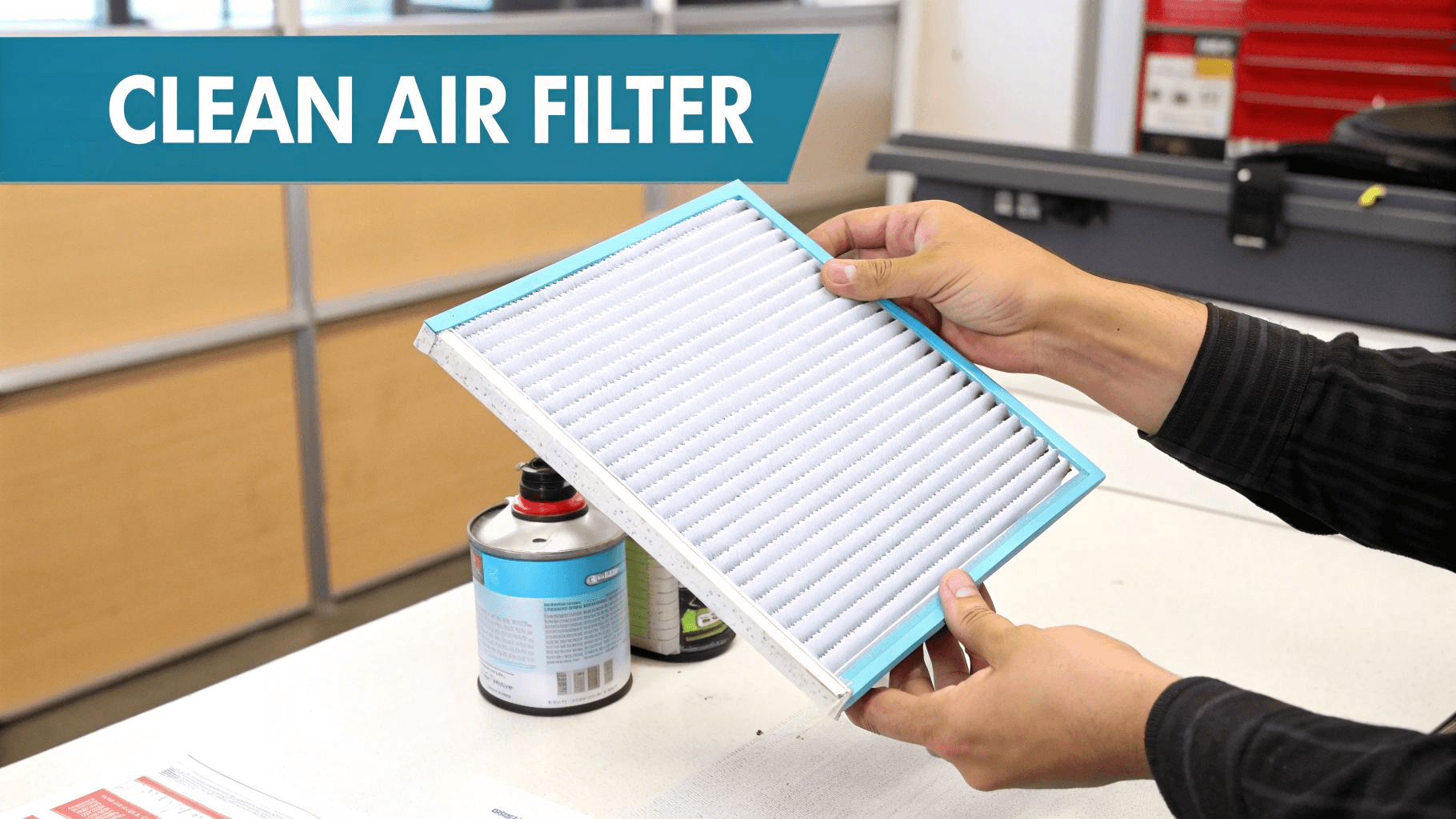
The air filter is your generator's first line of defense, preventing dirt, dust, and airborne debris from entering the engine's sensitive combustion chamber. A clogged filter starves the engine of oxygen, forcing it to burn more fuel to produce less power. This inefficient "rich" fuel mixture leads to reduced performance, increased fuel consumption, and can even cause black smoke to pour from the exhaust.
A clean air filter is a fundamental part of any effective generator maintenance checklist because it directly impacts engine health and fuel efficiency. For homeowners with standby generators near dusty environments, like construction zones in growing Los Angeles neighborhoods or agricultural areas in Ventura County, a dirty filter can quickly compromise a system's reliability, causing it to struggle or fail during a critical power outage.
How to Check Your Air Filter
Inspecting your generator’s air filter is a simple yet crucial task. The frequency of this check depends heavily on your local environment and the generator's usage.
Routine Visual Inspection: For a residential standby generator in a typical suburban setting, checking the filter every three months is a good practice. Carefully remove the filter housing cover and take out the filter. Hold it up to a light source; if you cannot see light passing through it, it’s time for a cleaning or replacement.
Cleaning a Paper Filter: If the filter is only lightly soiled, you can gently tap it on a hard surface to dislodge loose dirt. For more stubborn dust, use compressed air at a low pressure (under 30 psi) and blow from the inside out to push debris away from the clean side.
When to Replace: Never attempt to wash a paper air filter with water or solvents, as this will destroy it. Replace the filter annually or as soon as it appears damaged, oily, or remains dirty after a proper cleaning. A fresh filter is an inexpensive investment in your generator’s long-term performance.
Pro-Tip: During a seasonal service, a technician in a high-pollen area of Ventura County found a brand-new generator's air filter was already completely clogged. This prevented the unit from starting during its weekly test cycle, proving that even new systems require regular checks based on environmental factors.
While homeowners can handle basic filter checks, it’s best to have this component inspected during a professional service appointment. A certified technician from RC Generators & Electric will use the correct OEM replacement parts for your Generac system and ensure the entire air intake system is clean and secure, guaranteeing your generator can breathe easy and perform at peak efficiency when you need it most.
4. Fuel System Maintenance and Stabilization
Your standby generator's engine is like any other high-performance machine: it's only as reliable as the fuel you put in it. Old, untreated fuel is a primary cause of generator failure. Over time, gasoline and diesel degrade, forming gummy deposits and varnish that can clog fuel lines, filters, and carburetors, effectively starving the engine and preventing it from starting during an emergency.
This step is a crucial part of any generator maintenance checklist because a pristine engine is useless without a clean fuel supply. For residents in Ventura County and Malibu, where a generator must be ready to run for days during a Public Safety Power Shutoff, fuel-related startup failures are not an option. Proper fuel maintenance ensures your system can perform reliably for extended durations when utility power is out.
How to Maintain Your Fuel System
Proactive fuel care is simple and prevents the vast majority of engine-related problems. It involves treating your fuel and keeping the system clean.
Use a Fuel Stabilizer: The most important step is to add a quality fuel stabilizer to the tank, especially if the generator isn't used frequently. A stabilizer prevents fuel from breaking down and oxidizing for 12 months or more, keeping it fresh and ready. Always add it to a full tank to minimize air exposure and condensation.
Run the Generator Monthly: Your generator’s weekly self-test is great, but running it under a load for 15-20 minutes each month serves a dual purpose. It circulates the stabilized fuel through the entire system, preventing varnish from forming in the lines and carburetor.
Schedule Professional Servicing: An annual professional tune-up is vital. A technician will inspect and replace the fuel filter, check fuel lines for cracks or brittleness, and clean critical components to ensure unrestricted fuel flow.
Pro-Tip: A homeowner in a high-risk fire zone always keeps their generator's fuel tank full and treated with a stabilizer. During a multi-day outage, their Generac unit ran flawlessly, while a neighbor's generator failed to start due to a clogged fuel filter from old, untreated gasoline.
For homeowners looking to understand how long their system can run, it's essential to grasp its fuel needs. You can get a better sense of your generator's needs by exploring a generator fuel consumption calculator. To ensure your system is perfectly maintained, trust a certified professional from RC Generators & Electric to perform comprehensive fuel system checks and servicing, keeping your generator ready for any outage in the Los Angeles area.
5. Battery Maintenance and Testing
The battery is the heart of your generator's starting system. Similar to a car, your standby generator relies on a dependable battery to crank the engine to life when an outage is detected. If the battery is weak, corroded, or dead, your generator's sophisticated engine and electronics are useless, and it will fail to start, leaving your home in the dark.
This task is a cornerstone of any effective generator maintenance checklist because a failed battery is one of the most common reasons a standby system fails to activate. For homeowners in Ventura County or Los Angeles, where a reliable startup during a power shutoff is critical, neglecting the battery is a significant risk. A simple battery check ensures the first step of the power restoration process happens without a hitch.
How to Maintain and Test Your Battery
Routine checks are essential for battery longevity and can be performed safely by most homeowners. These simple steps can prevent a startup failure when you need power the most.
Monthly Visual Inspection: Open the generator enclosure and inspect the battery terminals. Look for any signs of corrosion, which often appears as a white or greenish powdery substance. Check that the cables are tightly secured to the terminals.
Clean the Terminals: If you see corrosion, disconnect the battery cables (negative first, then positive) and clean the terminals and cable clamps with a wire brush and a solution of baking soda and water. A clean connection ensures maximum power transfer.
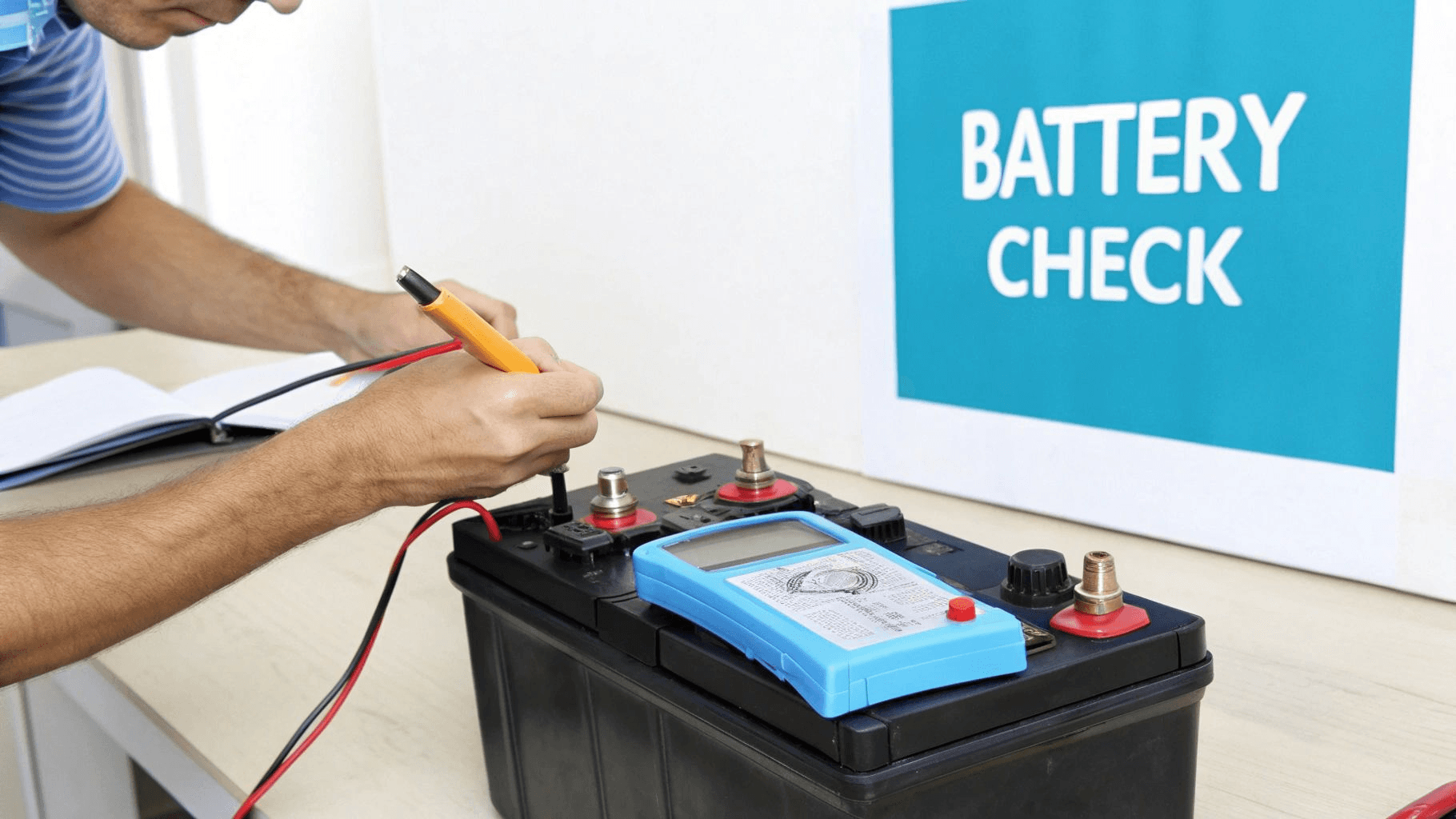
Check the Voltage: Use a multimeter to test the battery's voltage monthly. A healthy, fully charged 12-volt battery should read around 12.6 volts or slightly higher. A reading below 12.4 volts indicates it needs charging, and a consistent drop below 12 volts likely means the battery needs replacement.
Pro-Tip: A homeowner in a high fire-risk area of Los Angeles discovered their generator battery was slowly losing its charge due to a faulty internal charger. Catching this during a monthly voltage check allowed them to get it professionally repaired before the next PSPS event, ensuring their home backup was ready.
While these checks are crucial, an annual load test by a certified technician is the only way to truly verify a battery's health. The team at RC Generators & Electric can perform comprehensive battery diagnostics, ensuring it can deliver the necessary cranking amps under load and replacing it with a high-quality unit if needed, providing peace of mind for any emergency.
6. Coolant Level and Radiator Inspection
Just like a car's engine, many larger standby generators rely on a liquid cooling system to maintain optimal operating temperature and prevent overheating. The radiator, coolant, and hoses are vital components that dissipate the intense heat generated during operation. If coolant levels are low or the fluid has degraded, the engine can overheat, leading to severe damage and an abrupt shutdown exactly when you need it most.
This step is a crucial part of any generator maintenance checklist, especially for the more powerful liquid-cooled standby units often found protecting larger homes in Los Angeles or commercial properties in Ventura County. Ignoring the cooling system is a surefire way to shorten your generator's lifespan and risk catastrophic failure. Proper coolant management ensures the engine runs efficiently and reliably under the heavy load of a prolonged power outage.
How to Check Your Cooling System
A regular visual inspection is simple and can prevent major issues. Always ensure the generator is turned off and the engine is completely cool before performing any checks to avoid serious burns from hot fluid or moving parts.
Monthly Level Check: Locate the coolant reservoir (usually a translucent plastic tank) and check that the fluid level is between the "MIN" and "MAX" lines. If it's low, top it off with the manufacturer-recommended coolant mixture.
Quarterly Hose Inspection: Carefully examine all radiator hoses for signs of wear and tear. Look for cracks, bulges, soft spots, or leaks, especially around the connections. Any compromised hose should be replaced immediately.
Keep the Radiator Clear: The radiator fins must be clean to dissipate heat effectively. Gently remove any leaves, dirt, or debris that may have accumulated on the exterior of the radiator, ensuring air can flow through it freely.
Pro-Tip: A commercial client with a large diesel generator scheduled routine coolant flushes every two years. During one service, the technician discovered a deteriorating hose that was about to fail. Replacing it proactively prevented a catastrophic coolant leak and engine seizure during the next extended outage.
For a comprehensive cooling system service, such as a full coolant flush and pressure test, it's best to call a professional. A certified technician from RC Generators & Electric has the proper tools and expertise to safely drain, flush, and refill the system with the correct type of coolant, ensuring your generator is protected from both overheating and internal corrosion for years to come.
7. Essential Task #7: Performing Load Bank Testing and Exercise
Just like a performance car needs to be driven hard occasionally to keep its engine in peak condition, your generator needs to be exercised under a significant load. Load bank testing is a process where an artificial electrical load is applied to the generator, forcing it to run at its rated capacity. This simulates a real-world power outage and proves the generator can handle the demand without overheating or failing.
This task is a cornerstone of any professional generator maintenance checklist because it prevents a common issue in standby systems called "wet stacking." When a generator only runs for short periods with no load (like during its weekly self-test), unburnt fuel and carbon can build up in the exhaust system. Over time, this buildup reduces efficiency and can cause serious damage. For homes in Ventura County and Los Angeles that depend on their generator to power critical systems like well pumps or medical equipment during an outage, ensuring it can perform under pressure is not just a recommendation; it's a necessity.
How to Perform Load Bank Testing
While a full-scale load bank test is a job for a qualified technician with specialized equipment, running your generator under a planned, heavy household load provides similar benefits.
Simulate an Outage: On a designated day each quarter, manually start your generator and transfer the load. Run major appliances like your central air conditioner, electric dryer, and oven simultaneously for at least 30-45 minutes. This forces the engine to work, heating it up enough to burn off accumulated deposits.
Monitor Performance: During the exercise, listen to the engine. It should run smoothly and consistently. Watch for any signs of struggle, excessive smoke from the exhaust, or flickering lights inside your home, as these could indicate underlying problems.
Document the Test: Keep a log of each exercise session. Note the date, duration, and which major appliances you ran. This record is valuable for troubleshooting and provides a performance history for your service technician.
Pro-Tip: A data center manager noticed their backup generator's frequency wavering during a quarterly load test. A technician from RC Generators & Electric diagnosed a failing voltage regulator, a fix that prevented a catastrophic server shutdown during a subsequent utility failure.
For a true confirmation of your system's capabilities, an annual load bank test by a certified professional is essential. A technician can use a dedicated load bank to safely push your generator to its maximum rated output, verifying that every component, from the engine to the alternator, is ready to perform flawlessly when you need it most. This professional verification is the ultimate peace of mind.
8. Essential Task #8: Exhaust System Inspection and Cleaning
The exhaust system is responsible for safely venting dangerous combustion gases like carbon monoxide away from the generator and your home. Over time, this system can suffer from carbon buildup, corrosion, or physical damage, which can restrict airflow, reduce engine performance, and create a serious safety hazard. A compromised exhaust can lead to overheating or, worse, leak deadly fumes.
This inspection is a critical safety component of any generator maintenance checklist. For homeowners in densely populated areas of Los Angeles, ensuring the exhaust is functioning correctly and pointing away from any windows, doors, or neighboring properties is a vital step in responsible generator ownership. A blocked or leaky exhaust system not only damages the engine but poses a silent threat to your family's health.
How to Check Your Exhaust System
While the engine must be cool to perform this check, it’s a simple but essential visual inspection you can do regularly.
Monthly Visual Inspection: With the generator off and completely cool, carefully examine the entire exhaust system. Look for signs of rust, cracks, holes, or loose bolts, particularly where the pipe connects to the engine and the muffler.
Check for Blockages: Ensure the exhaust outlet is completely clear of debris. Nests from pests, overgrown vegetation, or accumulated leaves can create a dangerous blockage, causing exhaust backpressure that can damage the engine.
Clean the Spark Arrestor: In high-fire-risk zones like Ventura County, the spark arrestor screen is a crucial component. This small screen prevents hot embers from exiting the exhaust. It needs to be cleaned regularly to prevent clogs that hinder performance.
Pro-Tip: If you ever see black smoke coming from your generator during operation, shut the unit down immediately once it's safe to do so. This is often a sign of a significant problem within the fuel or exhaust system that requires immediate professional attention.
Never touch any part of the exhaust system while the generator is running or has been recently turned off, as it reaches extremely high temperatures and can cause severe burns. For a thorough and safe inspection, a certified technician from a company like RC Generators & Electric can assess the internal condition of the muffler and ensure all components are securely fastened and free of leaks, protecting both your investment and your family.
9. Voltage Regulator and Electrical System Testing
The voltage regulator is the guardian of your home's sensitive electronics. Its job is to ensure your standby generator delivers a consistent and stable electrical output, typically 120/240 volts, regardless of how many appliances are running. A failing regulator can cause voltage to spike or dip, which can fry computers, damage smart home devices, and even harm major appliances. This is why testing it is a crucial part of any generator maintenance checklist.
For homeowners in tech-heavy areas of Los Angeles, where everything from security systems to medical equipment relies on clean power, unstable voltage is not an option. Verifying that your generator’s electrical system is producing safe, reliable power protects your valuable investments and ensures your home functions as intended during an outage. Without this check, your backup power could be more damaging than no power at all.
How to Check Your Electrical System
While precise electrical measurements are best left to professionals, you can monitor your system for signs of trouble. A certified technician should perform the actual tests with calibrated equipment.
Observe During Operation: When your generator runs its weekly self-test or during an actual outage, notice if lights flicker excessively or if appliances seem to run erratically. These are classic signs of voltage instability.
Look for Physical Clues: During your visual inspection of the generator, look for any burnt-smelling odors near the control panel or signs of melted or discolored wiring, which could indicate severe electrical issues.
Professional Voltage and Frequency Test: An electrician will use a multimeter and frequency meter to test the output. They will check the voltage under no-load and full-load conditions to ensure it remains within a safe ±5% range and confirm the frequency is stable at 60 Hz.
Pro-Tip: A Ventura County business owner experienced frequent computer crashes when running on their commercial generator. A technician discovered the voltage regulator was out of calibration, causing intermittent power surges. Adjusting it saved thousands in potential equipment replacement costs.
If you suspect any electrical issues, it's critical to call a professional immediately. A certified electrician from RC Generators & Electric can accurately diagnose the problem, whether it's a simple calibration or a more complex component failure. For more insights on identifying these issues, you can learn more about troubleshooting common Generac problems, which often provides clues to underlying voltage irregularities.
10. Bolts, Fasteners, and General Hardware Tightening
A generator engine produces significant vibration during operation. Over time, this constant movement can gradually loosen critical bolts, nuts, and other fasteners holding the machine together. This can lead to serious problems ranging from fuel leaks and broken components to poor electrical connections and even catastrophic engine failure.
This check is a crucial part of any generator maintenance checklist because it addresses the physical integrity of the entire system. For homeowners in Los Angeles and Ventura County, where seismic activity can add another layer of stress to equipment, ensuring your generator is structurally sound is essential for reliability. A loose engine mount or a rattling connection isn't just a minor annoyance; it’s a warning sign of a potential system failure when you need it most.
How to Check Your Hardware
While you should leave internal engine work to a professional, you can perform basic hardware checks to ensure your unit remains stable and secure.
Initial Break-in Check: After the first 5 to 10 hours of operation on a new generator, it's wise to perform the first bolt and fastener check. This is when components settle, and initial loosening is most likely to occur.
Visual and Tactile Inspection: During your monthly visual walk-around, gently tug on accessible components like the enclosure panels, exhaust system, and fuel lines. Look for any excessive play or movement. Check the bolts securing the generator to its concrete pad.
Focus on Key Areas: Pay special attention to engine mounts, battery terminal connections, and fuel line clamps. These are areas where vibrations can have the most immediate and damaging effects. Ensure all are snug and secure.
Pro-Tip: An industrial rental company found that performing a mandatory bolt check on generators returning from job sites dramatically reduced field failures. This simple step prevented issues caused by the heavy vibrations of transport and constant use, a lesson equally applicable to residential units.
For a thorough and safe inspection, this task is best included in your annual professional service. A certified technician from a company like RC Generators & Electric will have the correct torque specifications for every fastener on your Generac or other standby system. They can safely tighten electrical connections within the unit and apply thread-locking compounds to critical bolts, ensuring your generator remains solid, secure, and ready to perform.
10-Point Generator Maintenance Checklist Comparison
Maintenance Task | 🔄 Complexity | ⚡ Resources & Speed | 📊 Expected Outcomes (⭐) | Ideal Use Cases | 💡 Key Tips |
|---|---|---|---|---|---|
Oil and Filter Changes | Low–Medium — routine procedure | Oil, filter, funnel, proper disposal; ~30–60 min downtime | Extends engine life, improves efficiency & emissions ⭐⭐⭐⭐ | Regular-use & industrial generators; scheduled service | Change warm oil, check weekly, use manufacturer-recommended oil |
Spark Plug Inspection & Replacement | Low — quick plug removal/fit | Spark plugs, gap tool; 10–30 min | Restores reliable starts and combustion efficiency ⭐⭐⭐ | Portable gas units, older generators, emergency spares | Verify heat range, clean well before inspection, keep spares |
Air Filter Cleaning & Replacement | Low — visual + simple cleaning | New filters or compressed air; fast cleaning, periodic replacement | Maintains power & fuel efficiency; prevents rich running ⭐⭐⭐⭐ | Dusty sites, construction, portable units | Inspect before each use in dusty areas; use low-pressure air |
Fuel System Maintenance & Stabilization | Medium — planning + chemical treatment | Stabilizer, fuel filters, possible carburetor cleaner; prep before storage | Prevents gum/varnish, ensures cold starts after storage ⭐⭐⭐⭐ | Seasonal backup, long-term storage, rental fleets | Add stabilizer to full tanks, use ethanol-free fuel, run monthly |
Battery Maintenance & Testing | Low–Medium — regular checks | Multimeter, charger, terminal brush; monthly tests quick | Ensures reliable electric starts; extends battery life ⭐⭐⭐ | Electric-start/standby systems, RVs, hospitals | Test monthly, clean corrosion, use trickle charger in winter |
Coolant Level & Radiator Inspection | Medium — inspections and periodic flush | Coolant, distilled water, basic tools; flushes take longer | Prevents overheating and internal corrosion ⭐⭐⭐⭐ | Diesel & larger generators, continuous-duty units | Check cold, inspect hoses quarterly, flush per hours/specs |
Load Bank Testing & Exercise | High — equipment and time intensive | Load bank (or service), monitoring; 20–30 min per cycle, hours per session | Verifies rated output, prevents wet stacking, validates reliability ⭐⭐⭐⭐⭐ | Critical backup systems (hospitals, data centers) | Schedule regular tests, ramp loads gradually, record results |
Exhaust System Inspection & Cleaning | Low–Medium — visual + cleaning if needed | Visual tools, possible professional cleaning; inspections quick | Maintains exhaust flow, reduces backpressure & noise ⭐⭐⭐ | Residential, RVs, outdoor events, wet-stacking risk units | Inspect monthly, avoid touching hot parts, clean spark arrestor |
Voltage Regulator & Electrical Testing | Medium–High — electrical knowledge needed | Multimeter, frequency meter; may require electrician; quick tests monthly | Stable voltage/frequency protects sensitive equipment ⭐⭐⭐⭐ | Data centers, medical, precision manufacturing | Test no-load and full-load, confirm ±5% voltage, secure grounding |
Bolts, Fasteners & Hardware Tightening | Low — basic mechanical check | Wrenches, torque sense; quick (15–20 min) | Prevents leaks, loose mounts, and mechanical failures ⭐⭐⭐ | All generators, after first run-in and before storage | First check after 5–10 hrs, avoid over-tightening, use threadlocker |
Your Next Step: Secure Your Power with Professional Care
Mastering a comprehensive generator maintenance checklist is a powerful first step toward self-sufficiency and ensuring your home remains a safe haven during unexpected power outages. By now, you understand the critical roles that clean oil, fresh spark plugs, and a well-maintained battery play in your generator's reliability. You've learned to look for signs of wear in the fuel system, inspect the air filter, and appreciate the importance of regularly exercising your unit under load to prevent wet stacking and ensure it performs when you need it most.
This proactive approach, grounded in consistent weekly, monthly, and annual checks, transforms your standby generator from a simple appliance into a dependable lifeline. It’s the difference between hoping your system works and knowing it will. For homeowners in Los Angeles and Ventura County, where public safety power shutoffs and seasonal fire threats are a reality, this knowledge isn't just about convenience; it's about security.
Bridging the Gap Between DIY and Professional Expertise
While this guide empowers you to handle the routine aspects of generator care, it also illuminates the line where DIY maintenance should end and professional service begins. Tasks like load bank testing, intricate transfer switch diagnostics, and internal electrical system checks are not just complex; they can be hazardous without specialized training and equipment. These procedures are governed by strict local electrical codes and require a deep understanding of high-voltage systems.
Think of your generator like a high-performance vehicle. You can top off the fluids, check the tire pressure, and keep it clean. But for a full engine diagnostic, transmission service, or brake system overhaul, you trust a certified mechanic. Your home’s backup power system deserves the same level of expert care.
Key Takeaway: Consistent personal oversight combined with annual professional servicing creates the ultimate reliability strategy. Your diligence prevents common failures, while an expert's inspection ensures the core components are safe, compliant, and operating at peak efficiency.
Why Expert Oversight is Non-Negotiable
A licensed electrician specializing in standby generators brings an invaluable layer of protection to your investment. They do more than just follow a checklist; they perform a holistic system analysis. This includes:
Code Compliance: Ensuring your installation, especially the automatic transfer switch, meets all current Los Angeles and Ventura County electrical codes, which is crucial for safety and home insurance purposes.
Advanced Diagnostics: Using professional-grade tools to test voltage regulation, frequency stability, and identify subtle electrical issues that could damage your home's sensitive electronics over time.
Firmware Updates: For modern systems like Generac generators, technicians can install critical firmware updates that improve performance, efficiency, and security features.
Parts and Logistics: Professional services have established supply chains for authentic replacement parts. Leading companies utilize efficient asset and inventory management systems to ensure they have the right filters, batteries, and components on hand, minimizing downtime for your system.
Ultimately, your generator is your family’s shield against uncertainty. By embracing this detailed generator maintenance checklist for your routine tasks and partnering with a trusted professional for the heavy lifting, you are building a resilient home prepared for any interruption. You're not just maintaining a machine; you're investing in uninterrupted comfort, safety, and peace of mind.
Don't leave your home's safety to chance. The certified experts at RC Generators & Electric specialize in the installation, maintenance, and repair of Generac home standby systems and solar-powered backups throughout Los Angeles and Ventura County. Let us handle the complexities so you can enjoy the confidence of knowing you're always prepared. Contact us today for a consultation or to schedule your annual service and ensure your home is protected.