
Ever wonder how does a generator work during an outage? We break down the simple science of home backup power and explain how Generac systems keep you safe.
Date
Dec 27, 2025
Author
RC Admin
Read
6 min
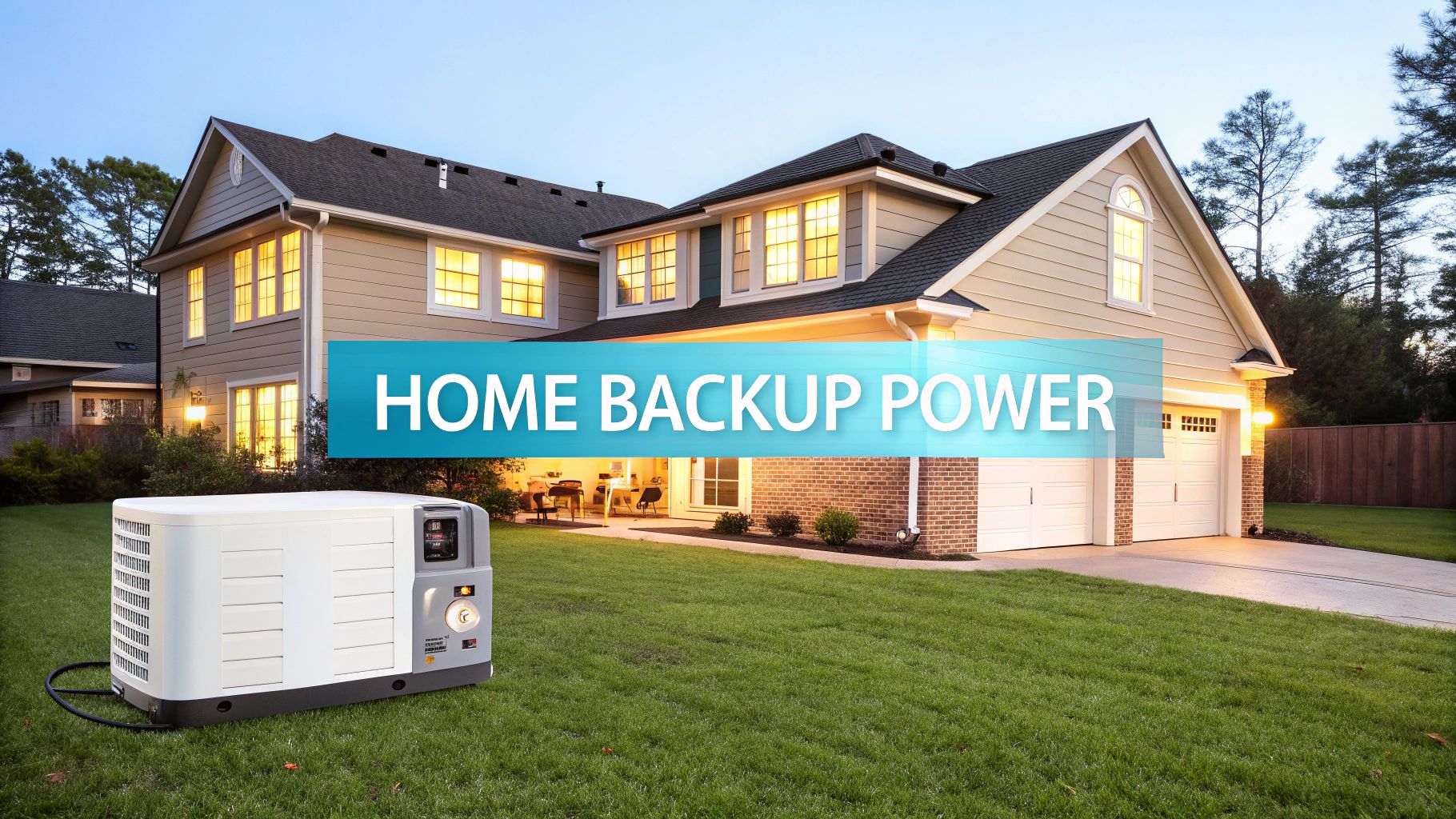
When the power goes out, a home generator can feel like a bit of magic. One moment you're in the dark, and the next, everything is back on. But how does it actually work? The short answer is that a generator converts mechanical energy into electrical energy, and it does this using a brilliant principle that’s been powering our world for nearly two centuries.
The Simple Science Behind Keeping Your Lights On
At its core, every generator—from a massive power plant down to a sleek Generac home backup system—runs on a surprisingly simple idea.
Think about an old-fashioned bicycle light that turns on when the wheel spins. As you pedal, a small device called a dynamo rubs against the tire, and its spinning motion creates just enough electricity to light up the bulb. The faster you pedal, the brighter the light gets. Your home generator does the exact same thing, just on a much, much bigger scale.

Instead of your leg power, it uses an engine. Instead of a tiny dynamo, it has a sophisticated part called an alternator. But the fundamental idea is identical: motion creates electricity.
Turning Motion into Power
This amazing process is called electromagnetic induction. It sounds complicated, but it just means that moving a magnet near a coil of wire forces an electric current to flow. This scientific breakthrough was first demonstrated way back in 1831 by Michael Faraday, whose invention of the Faraday disk laid the groundwork for nearly 100% of the world's electricity generation today. From giant wind turbines to massive hydroelectric dams, they all depend on this one core principle.
A Generac generator simply perfects this process for your home. Its engine, usually powered by natural gas or propane, spins the alternator at a very precise speed. This steady, controlled rotation produces a consistent and stable flow of electricity—ready to power everything from your refrigerator to your home office the moment an outage hits.
Key Takeaway: A generator doesn't "create" energy out of thin air. It uses the chemical energy stored in fuel (like natural gas) to produce mechanical motion, which is then converted into the electrical energy your home needs.
To put it even more simply, the process breaks down into a few key steps.
A Generator's Core Process at a Glance
Step | What Happens | Simple Analogy |
|---|---|---|
1. Fuel Ignition | The engine burns fuel (natural gas or propane) to create controlled explosions, driving a piston. | The engine is like your legs, providing the initial power to start everything moving. |
2. Mechanical Motion | The piston's movement turns a crankshaft, which in turn spins the rotor inside the alternator. | This is you pedaling the bike, turning the wheel and creating motion. |
3. Electricity Generation | The spinning rotor (a magnet) moves past stationary coils of wire, inducing an electric current. | This is the dynamo rubbing against the tire, converting that motion into light. |
Once you understand this basic concept, it’s easy to see how a whole-home backup system provides such reliable security. It’s a proven, time-tested technology refined for modern homes.
Of course, traditional generators aren't the only way to build a resilient power strategy. Many homeowners now explore options like a well-planned solar panel installation to supplement their energy needs. For homeowners here in Los Angeles and Ventura County, facing constant threats from fire seasons and grid instability, just knowing your lights will stay on is priceless.
Ready to protect your home from the next power outage? Contact RC Generators for a free consultation on a Generac home backup system.
Meet the Key Components Inside Your Home Generator
A home generator isn't just one single machine; it's a team of specialized parts working together to keep your lights on when the grid goes dark. To really get a handle on how a Generac generator provides such reliable power, you need to know who the key players are inside that weather-proof enclosure.
Think of it like a car. You don't need to be a mechanic to drive one, but knowing what the engine, transmission, and alternator do helps you understand what's happening under the hood. It’s the same with your generator—each component has a critical job, and they all have to work in perfect sync.
The Engine: The Powerhouse of the System
At the very core of any backup generator is the engine. This is the muscle of the whole operation. Its job is simple but crucial: to provide the raw mechanical energy that gets the whole process started.
Just like in a car, the engine combusts fuel to create motion. For a Generac home standby system, that fuel is either natural gas or liquid propane (LP), which are usually piped directly from your home's existing utility line. This is a huge advantage, as you'll never have to worry about storing gasoline or refueling in the middle of a California rainstorm. When the power cuts out, the engine automatically roars to life, ready to get to work.
The engine's sole purpose is to spin a driveshaft at a constant, precise speed—typically 3,600 revolutions per minute (RPM). This specific speed is what allows the generator to produce electricity at the correct frequency for all your home's appliances.
The Alternator: The Electricity Creator
If the engine provides the muscle, the alternator is where the real magic happens. This is the component that takes the spinning motion from the engine and turns it into usable electricity, all thanks to a principle called electromagnetic induction.
Inside the alternator, you'll find two main parts: a stationary piece called the stator (wrapped in copper wire coils) and a rotating magnet called the rotor. As the engine spins the rotor at high speed, its magnetic field sweeps past the copper wires in the stator. This action gets the electrons in the wire moving, creating an electric current.
It’s this non-stop, high-speed rotation that produces the steady stream of alternating current (AC) your home needs. The alternator is what truly makes a generator a generator and not just a standalone engine.
The Fuel System: The Lifeline
The fuel system is what keeps the engine fed and running smoothly. With Generac standby generators, this system is designed to be completely hands-off for the homeowner, drawing fuel right from your property's natural gas or propane supply.
Here’s a quick rundown of how it works:
Direct Connection: A certified electrician, like our team at RC Generators & Electric, connects the generator directly to your home’s main fuel line.
Automatic Flow: When the generator gets the signal to start, a valve opens automatically, letting fuel flow to the engine.
Continuous Power: As long as your natural gas service is active, the generator can run for days or even weeks on end, providing truly uninterrupted power during those extended Southern California outages from fires or hurricanes.
This automated fuel delivery is what makes a standby generator a true "set it and forget it" solution.
The Voltage Regulator: The Brains of the Operation
Last but not least is the voltage regulator. You can think of this as the generator’s onboard computer or the cruise control for your electricity. The amount of electricity the alternator produces can waver depending on the "load"—that is, how many lights and appliances you have running.
The voltage regulator constantly monitors the electrical output, making sure it stays at a safe and steady level. For example, when your air conditioner kicks on, it draws a massive amount of power. The regulator senses this, tells the engine to adjust its output slightly, and keeps the voltage stable. This prevents the power surges or sags that can fry sensitive electronics like your laptop, smart TV, or microwave.
It’s this little component that ensures the power from your Generac is just as clean and reliable as what you get from the utility company—sometimes even cleaner.
Understanding how these parts work together takes the mystery out of how a generator works. It’s not magic, just well-designed engineering built to protect your home. If you're ready to secure your power with a system that has all the right parts, schedule a free consultation with RC Generators today.
How the Automatic Transfer Switch Manages Your Power
The real genius of a modern Generac home backup system isn’t just making electricity—it’s knowing the perfect moment to step in. This is where the Automatic Transfer Switch (ATS) becomes the unsung hero of your home’s power security.
Think of the ATS as a vigilant guardian, constantly standing watch over your electrical system. It’s a smart device installed right next to your main electrical panel with one critical job: monitoring the flow of power from the utility grid 24/7. The moment it detects an interruption, it springs into action.
This is what makes a standby generator so different from a portable one. There’s no running outside in a storm, no fumbling with extension cords, and no manual switches to flip. The entire transition happens automatically, often in just a few seconds.
The Seamless Hand-Off From Grid to Generator
When the power fails, the ATS performs a precise, three-step sequence to safely restore power to your home. It’s a carefully managed process that’s fundamental to how a complete backup system works.
Disconnecting from the Grid: The very first thing the ATS does is completely disconnect your home’s electrical system from the utility lines. This is a critical safety measure that prevents back-feeding—a dangerous situation where your generator’s electricity could travel back into the grid and harm utility workers.
Signaling the Generator: Once your home is safely isolated, the ATS sends a signal to your Generac generator, telling it to start its engine.
Transferring the Power: As soon as the generator is running at the correct speed and producing stable electricity, the ATS switches your home's electrical panel over to draw power from the generator instead. Your lights, AC, and appliances kick back on seamlessly.
This simple flowchart shows the core components that spring to life, with the engine’s mechanical power being converted by the alternator and stabilized by the regulator.
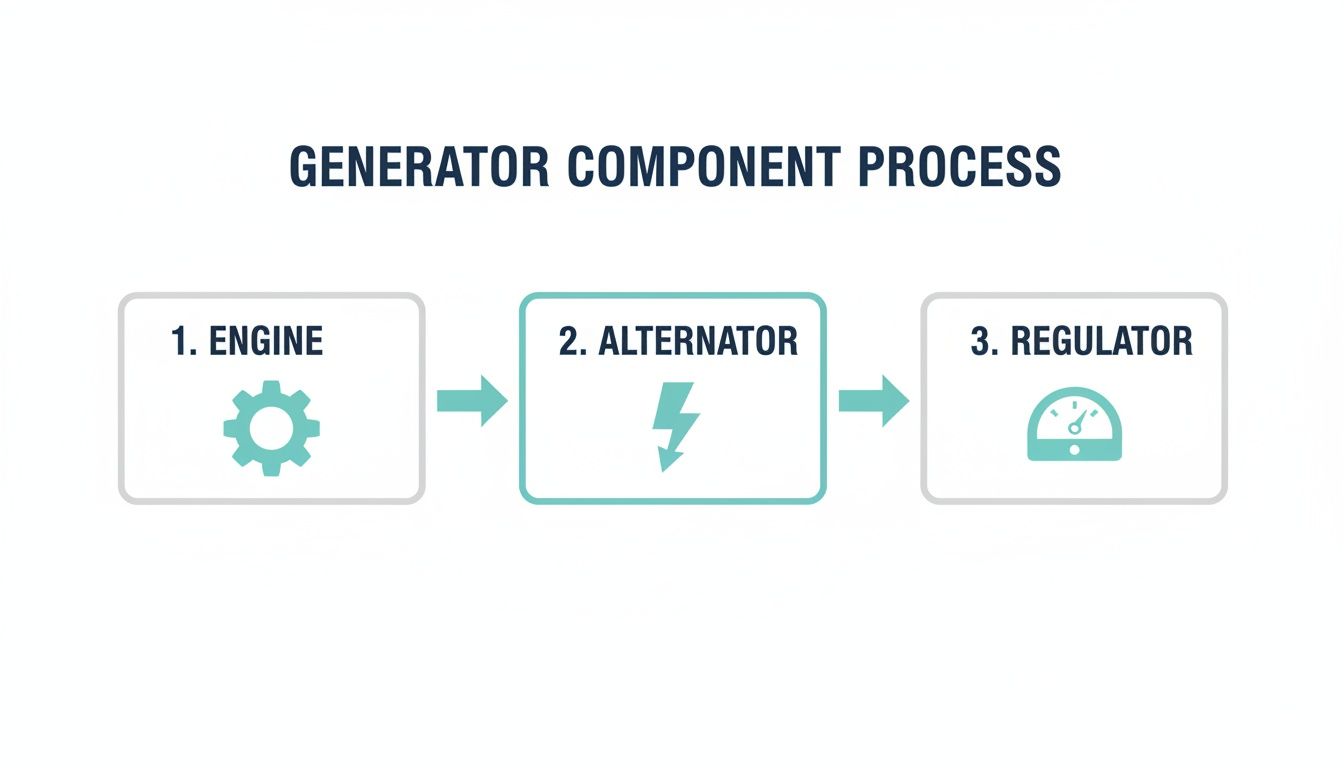
From there, the ATS takes that clean power and delivers it right where it's needed—your home.
Why the ATS Is Essential for California Homeowners
For families in Los Angeles and Ventura County, where outages from wildfires or heatwaves are a real concern, the ATS provides more than just convenience. It provides true peace of mind.
You don't even have to be home for it to work. If an outage hits while you're at work or on vacation, the system activates on its own, keeping your refrigerator cold, your security system running, and your home safe.
The ATS is what delivers true automation. It ensures the power inside your home is just as reliable as the utility grid is supposed to be, protecting everything from your food to your sensitive electronics.
When utility power is eventually restored, the ATS senses it, transfers your home back to the grid, and signals the generator to cool down and shut off. The entire process is completely hands-free. To dive deeper into its mechanics, you can learn more about what an automatic transfer switch is and why it's such a critical part of any standby system.
Understanding Standby Versus Portable Generators
When someone says “generator,” the first thing that probably pops into your head is a small, noisy, gas-powered box you’ve seen at a campsite or construction site. Those are portable generators, but RC Generators does not help with those. We specialize in home standby and commercial standby generators for full-system backup.
Knowing how they differ is the key to understanding why one is a temporary patch and the other is a permanent, reliable power solution for your home.
A portable generator is a reactive tool. When the lights go out, you have to haul it out of the garage, find a safe spot to run it outside (away from windows), fill it up with gasoline, and then snake extension cords through your house to power a few specific things. It's a completely hands-on, limited fix meant for short-term, partial power.
On the other hand, a Generac standby generator is a proactive, fully automated system. It’s permanently installed outside your home—much like your air conditioning unit—and connected directly to your home’s electrical panel and fuel source. It’s designed to handle everything without you ever lifting a finger.
Power, Fuel, and Automation
The differences really stand out when you look at three key areas: how they’re powered, what they can power, and how they operate when you need them most. A standby system gives you a level of safety and reliability that portable units just can't touch.
The fuel source is a huge one. Portable generators almost always run on gasoline, which is a pain to store safely in large amounts and can be impossible to find during a widespread emergency. A Generac standby system, however, taps into your home's existing natural gas or propane line, giving it a virtually endless fuel supply.
That means no frantic, last-minute trips to the gas station during a storm and no storing flammable liquids in your garage. During the extended outages that are becoming more common in fire-prone areas of Los Angeles and Ventura County, this continuous fuel supply is what keeps your entire home running normally for days or even weeks. For a deeper dive, our detailed comparison of portable vs. standby generators breaks it down even further.
A home standby generator is not just a bigger version of a portable unit—it's a completely different approach to power security. It’s the difference between temporarily running a few lights and seamlessly living your life without interruption.
A Clear Comparison
To make the choice crystal clear, let's put these two types of generators head-to-head. It really boils down to convenience, safety, and how much of your home you want to keep running.
Home Standby Generator vs Portable Generator
This table breaks down the essential differences between a permanently installed standby system and a manual portable unit.
Feature | Generac Home Standby Generator | Portable Generator |
|---|---|---|
Operation | Fully automatic; starts and stops on its own. | Manual start; requires you to set it up and run it. |
Fuel Source | Natural gas or propane (connected to your home supply). | Gasoline or diesel (requires constant, messy refueling). |
Power Output | Powers the entire home, including HVAC and large appliances. | Powers only a few selected items via extension cords. |
Safety | Permanently installed away from the home to prevent CO risk. | Poses a high risk of carbon monoxide poisoning if run too close to windows or doors. |
Cost | Higher initial investment for a permanent, whole-home solution. | Lower upfront cost for temporary, limited use. |
While portable power sources are great for specific needs like camping or tailgating, they are not a service provided by RC Generators.
But when it comes to protecting your home and family, the advantages of a standby system are undeniable. It’s the only comprehensive solution that delivers true peace of mind.
Sizing and Maintaining Your Home Generator
Once you understand how a generator works, the next steps are making sure you get the right one and know how to take care of it. Choosing the correct size and sticking to a simple maintenance plan are the two keys to guaranteeing your Generac system performs flawlessly when you need it most—a must for anyone living in California’s fire and storm-prone areas.
Think of it this way: this proactive approach protects your investment, but more importantly, it secures your family’s comfort and safety during an outage.
How to Correctly Size Your Generator
"Sizing" is just the professional term for matching a generator's power output to your home's specific electricity needs. Getting this wrong can cause big headaches. A unit that’s too small will struggle to keep up, potentially damaging your appliances. One that’s too large is just a waste of money.
To get it right, we have to calculate your home's electrical "loads"—that’s just a technical way of saying everything that uses electricity. Every appliance has a specific wattage it needs to run.
For instance, your refrigerator might need a surge of 1,200 watts to kick on, but it only uses about 200 watts to keep running. A central air conditioner is a much heavier load, often demanding 5,000 watts or more just to start. A professional sizing consultation adds up the total wattage of all the essential circuits you want to keep powered.
Essential Power: This is the bare minimum, covering things like the fridge, a few lights, and outlets to charge your phones.
Managed Whole-Home Power: This is a smarter approach. It powers most of your home by intelligently managing high-demand appliances so they don’t all run at once.
Complete Whole-Home Power: This is the ultimate solution—a generator big enough to run everything in your house at the same time, just as if the grid never went down.
For a deeper dive into how this all works, check out our comprehensive home generator sizing guide. Sizing is definitely not a DIY job; it takes an expert to make sure your system is perfectly matched to your lifestyle.
Key Insight: Proper generator sizing is the foundation of a reliable home backup system. A professional assessment ensures you invest in a unit that can handle your specific needs without being overworked or oversized, saving you money and preventing future headaches.
The Importance of Routine Maintenance
Once your Generac is installed, it becomes your silent guardian, always ready to spring into action. But just like any high-performance engine, it needs a little TLC to stay in peak condition. Honestly, neglecting maintenance is one of the top reasons a generator fails to start when an outage hits.
Luckily, modern Generac systems make this incredibly easy. The most important checks are completely automated. Your generator will run a self-test cycle for about 10-12 minutes every week. During this quick exercise, it starts up, runs diagnostics, and makes sure every component is ready to go. You’ll barely notice it, but this weekly checkup is crucial for its long-term health.
Beyond that automated test, a simple maintenance schedule is all it takes.
Your Simple Generator Maintenance Checklist
While professional servicing is absolutely vital, here are the core tasks that will keep your generator reliable for years to come:
Monitor the Weekly Self-Test: Just listen for it. If you ever notice it missed a cycle, that's your cue to call in a professional for a quick look.
Keep the Area Clear: The generator needs to breathe to stay cool. Make sure the area around the unit is always free of leaves, overgrown shrubs, snow, or anything else that could block airflow.
Check Fluid Levels: Every so often (and definitely before a big storm is forecast), pop the hood and check the oil and coolant levels, just like you would with your car.
Schedule Annual Professional Service: Once a year, have a certified technician from a company like RC Generators perform a full tune-up. This includes changing the oil and filters, inspecting the battery, checking spark plugs, and tightening all the electrical connections.
This simple routine ensures that when the power goes out, your generator will be ready to answer the call. Ready to find the perfect-sized generator for your home? Contact RC Generators & Electric today for a free, no-obligation consultation and let our experts design the ideal backup power solution for your California home.
Ready for a Free Home Backup Power Consultation?
Now that you understand how a generator works, you can see that a Generac standby generator isn't just another appliance. It's a complete, automated system built for one purpose: to give you total peace of mind when the grid goes down.
Think about it—from the engine turning fuel into motion to the alternator spinning up clean electricity, every piece works together flawlessly. But the real magic is in the automatic transfer switch. It’s like a silent guardian for your home, standing watch 24/7 and jumping into action to restore your power in seconds. You don’t have to lift a finger.
It's Time to Secure Your Power
For homeowners across Los Angeles and Ventura County, reliable power isn’t a luxury anymore; it's a must-have. With the constant threat of wildfires, punishing heatwaves, and an overworked electrical grid, sitting around waiting for the next blackout just isn't a viable plan. The time to act is now—to protect your family, your home, and your day-to-day life.
This is exactly where a professionally installed home backup generator changes everything. Instead of dreading the next outage notification, you can relax, knowing your home is always prepared. A system designed specifically for your needs means everything from the refrigerator to your home office and medical equipment stays on without a hiccup.
Don’t wait for the lights to go out. The absolute best time to install a home backup generator is before you actually need it. Investing in a Generac system today is really an investment in your family's safety and comfort for years to come.
Your Custom Power Solution Is a Phone Call Away
Here at RC Generators & Electric, we don't just sell generators; we design and install custom home backup solutions that fit your home's unique demands and your budget. Whether you're considering a traditional Generac system running on natural gas, a solar-powered generator, or another home battery backup option, our licensed electricians are here to guide you.
We offer a professional, no-pressure consultation to figure out exactly what your home needs. We'll walk you through the entire process and answer every single question, so you can feel confident in your decision.
Ready to take control and protect your home from the unpredictable? Contact RC Generators today to schedule your free home backup power consultation and let our team build the perfect power security plan for your California home.
Still Have a Few Questions?
It's completely normal. After getting the rundown on how these machines work, most homeowners still have a few practical questions. Investing in a whole-home generator is a big decision, and you deserve clear, honest answers before moving forward.
We've put together some of the most common questions we hear from homeowners in Los Angeles and Ventura County about their Generac systems.
How Loud Is a Standby Generator, Really?
This is probably the number one concern we hear, and the answer usually comes as a pleasant surprise. A modern Generac standby generator is a world away from those loud, sputtering portable units. In fact, when it’s running, it sounds a lot like a central air conditioning unit—typically around 67 decibels.
They're specifically engineered to be neighbor-friendly, with sound-dampening enclosures and advanced engine designs. You'll hear it switch on, but it's more of a background hum than a disruptive roar.
How Long Can a Generac Generator Run Continuously?
Here’s where a standby generator really shines. Since it's hooked up directly to your home's natural gas line or a large liquid propane tank, its runtime isn't limited by a small gas can.
As long as your utility company is supplying natural gas, your generator can keep running for days—or even weeks—if needed. This is a game-changer during the long outages we sometimes see with wildfires or major storms in our area.
Will a Generator Actually Increase My Home's Value?
Without a doubt. A permanently installed home backup generator isn't just a piece of equipment; it's a major selling point. For anyone looking to buy a home in an area prone to power outages, a standby generator signals safety, security, and a home that's ready for anything.
A recent study found that installing a home standby generator can deliver up to a 150% return on investment when you sell. Think of it less as an emergency expense and more as a smart, long-term upgrade to your property.
What’s the Deal with Solar-Powered Generators?
Solar-powered "generators" are a fantastic, eco-friendly alternative. These are actually home battery backup systems. Instead of an engine, they use solar panels to charge a large battery, which then powers your home when the grid goes down. They're completely silent, produce zero emissions, and can even help lower your regular energy bills.
We specialize in installing both traditional Generac generators and these more advanced solar-powered and solar-free home backup systems. The best choice really depends on your specific needs. During a quick consultation, we can walk you through the pros and cons of each and figure out which solution is the perfect fit for your home, your budget, and your energy goals.
Understanding the mechanics is the first step. The next is making sure your home is protected. RC Generators and Electric provides professional installation for Generac systems, home battery backups, and a full range of electrical services to ensure your family is never left in the dark.
Ready for total peace of mind? Contact us today for a free, no-obligation consultation in Los Angeles or Ventura County.