
Compare solar generator vs gas generator for your California home - learn cost, runtime, and maintenance to choose the best backup power.
Date
Dec 12, 2025
Author
RC Admin
Read
9 min
When you're weighing a solar generator against a gas generator, the decision usually boils down to one key tradeoff: quiet, clean power with a higher upfront cost versus loud, powerful energy with ongoing fuel demands. For California homeowners facing power shutoffs and an unstable grid, the right choice depends on what you value more—long-term savings and eco-friendliness, or raw, unlimited power for extended blackouts.
Choosing Your Home Backup Power for California
Living in California means you have to be ready for anything, from Public Safety Power Shutoffs (PSPS) during fire season to random grid failures. Having a reliable home backup power system isn't just a luxury anymore; it’s a core part of modern homeownership. It’s also just one piece of the puzzle—smart homeowners should also consider broader strategies for San Jose home storm preparedness to create a truly resilient household.
This guide focuses on the two best solutions on the market: solar-powered home battery systems (often called "solar generators") and traditional standby gas generators from top-tier brands like Generac.
Here at RC Generators and Electric, we specialize in installing permanent, whole-home standby systems built to keep your lights on and your family safe during fires, hurricanes, and more. Our expertise is in robust systems from brands like Generac and solar-powered home battery backups that integrate seamlessly with your home’s electrical panel for automatic, uninterrupted power.
At-a-Glance Comparison Solar vs Gas Generators
Before we get into the nitty-gritty, this table gives you a quick rundown of the main differences between a professionally installed solar battery system and a Generac standby gas generator. It’s a great way to grasp the major trade-offs at a glance.
Feature | Solar Generator (Home Battery System) | Generac Gas Generator (Standby) |
|---|---|---|
Fuel Source | Solar panels (sunlight) or the electrical grid | Natural gas or propane |
Runtime | Limited by battery capacity and daily sunlight for recharging | Unlimited (as long as the fuel supply is connected) |
Noise Level | Virtually silent operation | Similar to a lawnmower; noticeable during operation |
Emissions | Zero emissions during operation | Produces carbon monoxide and other exhaust fumes |
Maintenance | Minimal to none; no moving parts or fluids | Requires regular maintenance (oil, filters) like a car engine |
Long-Term Costs | Higher initial investment but lower operating costs; potential for energy savings and financial incentives | Lower initial investment but ongoing fuel and maintenance costs |
Incentives & Savings | Qualifies for federal tax credits and state rebates; can save on utility bills via net metering | Generally does not qualify for clean energy incentives |
After reviewing the table, it’s clear that each system has its place. Your budget, power needs, and long-term goals will point you toward the best fit.
A solar generator's value extends beyond just blackouts. With the right setup, it can reduce your daily electricity bills and provide a return on investment over time. You can learn more about how solar saves you money in our guide on what net metering is and how it works.
Ready to secure your home's power? Contact RC Generators and Electric today for a professional consultation on the best Generac or solar backup system for your California home.
Understanding Your Backup Power Options
When you start comparing a solar generator vs. a gas generator, let's be clear about what we're discussing. For true home resilience, you need a professionally installed system that ties directly into your home's electrical framework. At RC Generators and Electric, these permanent, whole-home backup solutions are our specialty.
These systems are engineered to restore power automatically and safely, keeping everything from your refrigerator humming to your air conditioning blasting without you lifting a finger. Let's break down the two main options we install for homeowners across California.
The Modern Solar Generator: A Home Battery System
The term "solar generator" has really evolved. In the world of whole-home backup, it means a sophisticated home battery system. A perfect example is the Generac PWRcell, a system that smartly stores energy for you to use later.
Where does that energy come from? You have two choices:
Solar Panels: On sunny days, your rooftop solar panels charge the battery, capturing clean, free energy right from the source.
The Electrical Grid: You can also program the battery to charge from the grid during off-peak hours when electricity rates are at their lowest.
When the power goes out, the system flips over instantly, powering your home with the energy it has stored. It’s completely silent and produces zero emissions, which makes it a clean, neighbor-friendly solution. This kind of tech is quickly becoming a go-to for modern homes.
The interest in these systems is exploding globally. Projections show the solar generator market is expected to nearly double from USD 632.16 million in 2025 to USD 1.21 billion by 2035. You can dig into the numbers yourself in the full market research.
The Powerhouse: Generac Gas Generator
For raw, unwavering power that lasts for days, the Generac home standby generator is the undisputed industry standard. Unlike a portable generator that you have to constantly refuel, a standby unit is a permanent fixture outside your home.
It’s connected directly to your home’s natural gas line or a propane tank, giving it a nearly endless fuel supply. The magic is in the automatic transfer switch, which is always monitoring for a power loss.
Within seconds of an outage, the transfer switch disconnects your home from the grid and signals the Generac generator to fire up. Your power is back on automatically, whether you're home or halfway across the country.
This is what makes Generac systems the ultimate peace-of-mind solution, especially during the multi-day outages we see during California's wildfire season. It’s a robust, powerful machine built to run your entire home without compromise.
Both options provide incredible security, but they get there in fundamentally different ways. The right choice really boils down to your priorities—fuel source, desired runtime, and environmental impact.
Ready to figure out the perfect backup system for your home? Contact RC Generators and Electric for a personalized home assessment and let our experts design a solution that keeps your family safe and comfortable, no matter what.
A Detailed Comparison for California Homeowners
Choosing between a solar battery and a gas generator for your California home is about much more than just pros and cons. It’s a decision that hinges on your lifestyle, your budget, and what you prioritize when the power goes out. Here in the Golden State, things like noise ordinances, air quality, and the all-too-common Public Safety Power Shutoffs (PSPS) make this choice even more critical.
Let’s really dig in and compare a modern home battery system against the raw power of an industry-leading Generac standby generator.
Upfront Cost Versus Lifetime Value
The initial investment is almost always the first hurdle. A Generac gas generator usually has a lower upfront cost, which makes it a very appealing option if you need powerful, immediate backup without breaking the bank right away. But that sticker price is just the starting line.
With a gas generator, you have to factor in the ongoing costs that add up over its life:
Fuel Costs: Whether it’s hooked up to your home’s natural gas line or a big propane tank, you’re paying for fuel every time it runs—during an outage and during its weekly self-test.
Regular Maintenance: Think of it like a car engine. A Generac needs annual service to stay reliable. That means oil changes, new filters, and spark plug checks.
Repairs: Over a decade or more, mechanical parts can and do wear out, requiring a professional service call.
On the other side of the coin, a solar-powered home battery system comes with a higher initial price tag. That cost covers the battery itself, the inverter, and the labor to integrate it with your home’s electrical panel and solar array. But once it’s installed, its long-term value really starts to shine.
A home battery system has almost no ongoing costs. It makes its own “fuel” from the sun, needs next to no maintenance because it has no moving parts, and can even save you money on your utility bills through programs like net metering.
We've seen a massive shift toward solar generators, driven by both their green credentials and their improving economics. Since the early 2010s, the price of solar photovoltaic (PV) modules has plummeted by over 80%, which has made solar backup power accessible to far more homeowners.
Power Output and Runtime
This is where the two technologies really part ways. A Generac standby generator has a clear advantage in delivering raw, uninterrupted power. If it’s connected to a natural gas line, its runtime is, for all practical purposes, unlimited. It can run your entire home—AC, pool pump, everything—for days or even weeks without you having to think twice about conserving energy.
That makes it the hands-down winner for long, multi-day outages, which are becoming more common in California's high-fire-risk zones. If you want to learn more about fuel options, check out our guide comparing propane and natural gas generators.
A solar generator, however, is all about storage capacity. The energy it holds is finite. A standard system can easily power your essential circuits for hours, and a larger, well-designed setup can run the whole house. But its ability to keep going depends on getting enough daily sunlight to recharge. A string of cloudy days means you’ll probably have to be more mindful of your energy use.
Noise and Neighborhood Impact
In the tight-knit neighborhoods of Los Angeles and Ventura County, noise is a huge deal. A solar generator is completely silent. This is a massive quality-of-life benefit, as it won’t bother you, your kids, or your neighbors, letting life feel a little more normal during a stressful blackout.
A Generac generator, while incredibly efficient, makes a sound comparable to a lawnmower or a central AC unit. Generac has done a fantastic job with sound-dampening technology, but you can’t escape the noise of an engine. For homes on small lots or with picky homeowners' associations (HOAs), the silent operation of a battery is often the deciding factor.
Comparison of Key Operational Factors
Factor | Solar Generator (Home Battery) | Generac Gas Generator (Standby) |
|---|---|---|
Typical Runtime | Limited by battery size and daily sun | Unlimited with a natural gas line |
Operational Noise | Virtually Silent (under 30 dB) | Audible (60-70 dB) |
Emissions | Zero local emissions | Produces exhaust (CO, NOx) |
Neighborhood Friendliness | High; no disruption | Moderate; noise can be a factor |
Maintenance and Reliability
When you need backup power, it has to work. Period. Both systems are extremely reliable when maintained properly, but what "properly" means is totally different for each.
A home battery system is pretty much a "set it and forget it" solution. No moving parts, no fluids, no filters—maintenance is almost zero. The only real upkeep involves your solar panels, which might need an occasional cleaning to keep them producing at their peak. Making sure you understand what's involved is key, and following a comprehensive solar panel maintenance checklist will give you a good idea of the long-term commitment.
A Generac standby generator, on the other hand, needs proactive, scheduled care to guarantee it will start when you need it most. These units are built to run a weekly self-test, firing up the engine for a few minutes to circulate oil and confirm everything is ready to go. They also require an annual service from a certified technician to keep the engine in top shape for an emergency.
Ultimately, the right choice in the solar generator vs. gas generator debate comes down to what you value most: upfront cost, unlimited runtime, or quiet, clean, and maintenance-free operation.
Ready to secure your home’s power with a solution that actually fits your life? Contact RC Generators and Electric today for a complimentary home assessment, and let our experts design the perfect backup system for you.
Which Backup System Fits Your California Lifestyle?
Specs and feature lists are one thing, but the real question in the solar generator vs gas generator debate comes down to this: which one actually works for your life, especially when the power goes out? The right answer for a homeowner in a packed Los Angeles neighborhood is probably all wrong for someone on a sprawling property in a Ventura County high-fire-risk zone.
So, let's step away from the hardware for a moment and walk through a few real-world scenarios California homeowners know all too well. By seeing how each system performs in a specific situation, you can get a much clearer picture of what "peace of mind" really looks like for you.
The Eco-Conscious Bay Area Homeowner
Imagine you live in a Bay Area community where sustainability isn’t just a buzzword—it’s a way of life. Your goal is more than just keeping the lights on during a blackout; it's about minimizing your carbon footprint and getting the most out of your solar panel investment.
For you, a home battery system is the clear winner. It works hand-in-glove with your existing solar panels, soaking up clean energy all day so you can power your home silently through the night or during an outage. There are zero emissions, you won't get any noise complaints from the neighbors, and you can even chip away at your utility bills. It's the modern solution for a modern California home.
The Rural Homeowner in a High-Fire-Risk Zone
Now, let's paint a different picture. You own a home in a rural area that's no stranger to multi-day Public Safety Power Shutoffs (PSPS). Your water comes from a well pump, and you might have critical medical equipment that absolutely has to stay online. Here, runtime isn't just a feature; it's a lifeline.
In this scenario, the rock-solid reliability of a Generac standby generator is what delivers true security. Since it’s hooked up to a natural gas line, its power supply is virtually unlimited. It can run your entire home—including power-hungry appliances like well pumps and air conditioning—for as long as the outage drags on.
When you can't afford to be without power for even a moment, and outages could last for days, the guaranteed, long-duration power of a Generac gas generator is the only solution that offers complete peace of mind.
This infographic breaks down the key trade-offs to help you visualize the choice.
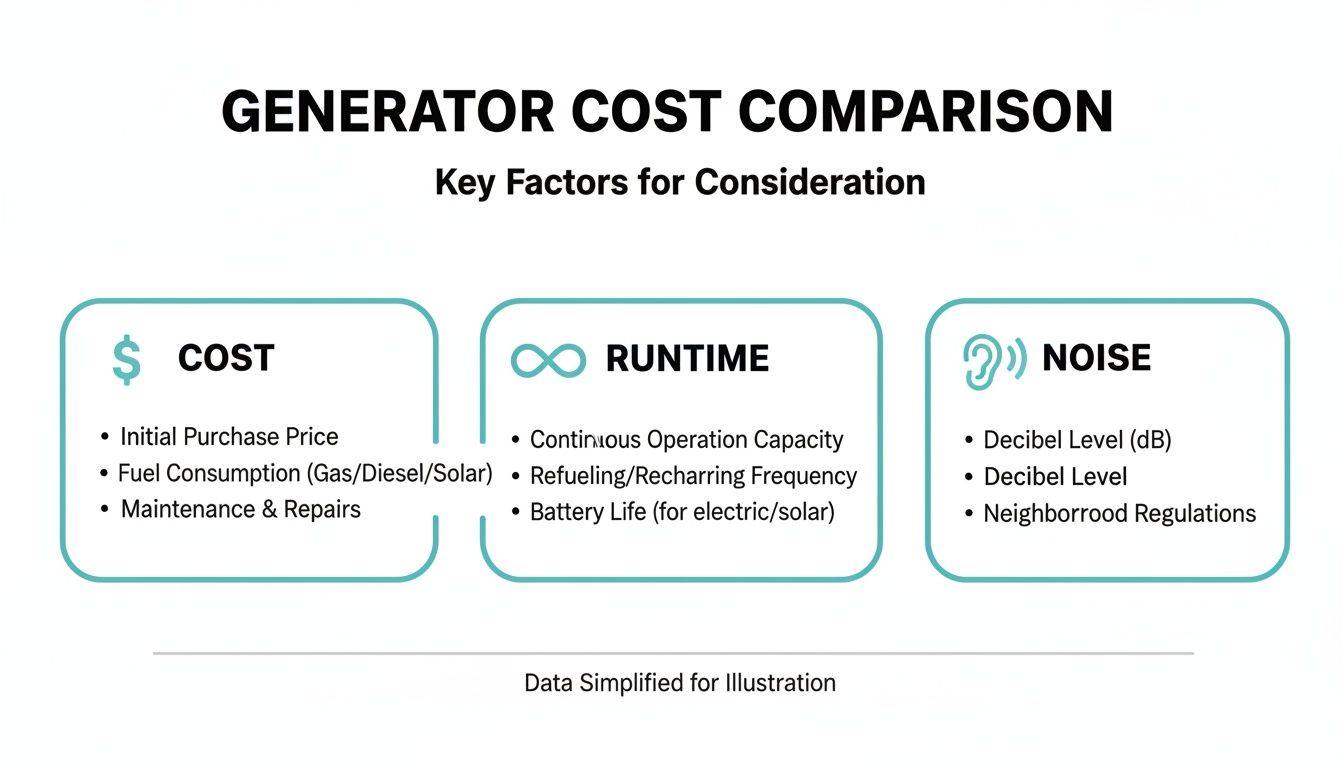
As you can see, solar comes with a higher upfront cost but runs completely silently. Gas generators, on the other hand, deliver that unlimited runtime at a much more audible level.
Hybrid Needs and Future-Proofing Your Home
Of course, most California homeowners find themselves somewhere between these two extremes. What if you need to charge your electric vehicle during a blackout? Both systems can get the job done, but they do it differently. A Generac can power your EV charger indefinitely, while a solar battery will draw from its stored energy—which you’ll have to balance with your other household power needs.
Ultimately, making the right choice is about matching a system’s strengths to your unique priorities and vulnerabilities. Whether you need silent, clean power or unwavering, long-haul energy, the perfect solution is out there.
Ready to find the backup system that fits your California lifestyle like a glove? Contact RC Generators and Electric today to schedule a professional home assessment and let our experts design a reliable power solution just for you.
Why Professional Installation Is Non-Negotiable
When you're comparing a solar generator to a gas generator, it’s easy to get caught up in cost and runtime. But the most critical factor isn't what you buy—it's how it's installed. A whole-home backup system, whether it’s a modern battery setup or a classic Generac standby unit, is not a weekend DIY project. It's a major electrical upgrade that absolutely demands professional expertise.
Trying to install these systems yourself is incredibly dangerous. Beyond the risk of injury, a botched job can lead to thousands in damages and instantly void your expensive new equipment’s warranty. This is where a licensed electrician makes all the difference. At RC Generators and Electric, our entire focus is making sure your backup power is safe, reliable, and perfectly integrated from day one.
The Complexities of Home Integration
Tying a powerful generator into your home's main electrical panel is a precise and hazardous task. One wrong connection can cause an electrical fire, fry your home's wiring, or create a dangerous "back-feeding" situation that can injure or kill utility workers down the line.
Our licensed electricians manage every detail of this complex process, including:
Safe Panel Integration: We install an automatic transfer switch—the brain of your backup system. This device is non-negotiable. It safely disconnects you from the grid during an outage and switches you over to generator power in seconds.
Gas Line Connections: For standby gas generators, we ensure all gas lines are connected safely and to code, eliminating the risk of dangerous leaks.
System Sizing: We perform a detailed load calculation to figure out exactly how much power your home actually needs. This ensures your system can handle everything from the fridge to the AC without tripping or failing.
The decision between solar and gas is important, but professional installation is what guarantees either choice will work safely when you need it most. An improperly installed generator is an unreliable one.
Navigating California's Permitting Maze
California has some of the toughest building and electrical codes in the nation. Installing a home backup system involves a complex permitting process that changes from city to city. You have to submit detailed plans for approval and then pass a series of tough inspections.
As seasoned pros in Los Angeles and Ventura County, we handle this entire process for you. We know exactly what inspectors look for and ensure every part of your installation is 100% code-compliant. This saves you the massive headaches—and potential fines—that come with unpermitted work. You can learn more about our structured approach by reading about our whole home battery backup installation services.
While solar generators are getting a lot of attention, the gas generator market is still a major player in home backup. In fact, North America’s gas generator market passed USD 515.5 million in 2024 and is expected to keep growing. This detailed industry analysis highlights why. This enduring popularity shows just how critical it is to have professional installers who are experts in both traditional and new technologies.
Don't gamble with your family's safety. Contact RC Generators and Electric today to schedule a professional home assessment and let our certified experts design and install the perfect backup power system for your California home.
Answering Your Home Backup Power Questions
Investing in your home's energy security is a big decision, and it’s natural to have questions. When you're weighing a solar generator against a gas generator, you want to be sure you're making the right call for your family. This final section tackles the most common questions California homeowners ask, giving you clear answers to help you decide with confidence.
Can a Solar Generator Power My Whole House Like a Generac?
Yes, a properly sized home battery system can absolutely power your entire home. The real difference isn't about capability—it's about runtime.
A battery’s power is finite, limited by its storage capacity and how much sun it can soak up each day to recharge. During a long outage with overcast skies, you’ll probably need to be mindful of your energy use.
A Generac generator, on the other hand, is built for pure endurance. Hooked up to your utility gas line, it can run for as long as the outage lasts, powering everything in your home without compromise. It’s the ideal setup for prolonged blackouts where you just want total peace of mind.
An expert from RC Generators can perform a professional load calculation on your home. This analysis determines your exact power needs, allowing us to recommend the right size system—solar or gas—to meet your specific requirements.
What California Rebates or Tax Credits Can I Get?
California is one of the best states for home energy incentives, which can seriously bring down the cost of a solar battery system.
Federal Solar Investment Tax Credit (ITC): This is the big one. It lets you deduct 30% of the total system cost right off your federal taxes.
Self-Generation Incentive Program (SGIP): This state program offers huge cash rebates for installing battery storage. The incentives are even higher for homeowners in high-fire-threat areas or for those who depend on medical equipment.
Our team at RC Generators and Electric is always on top of the latest local and federal incentives. We’ll help you find every single credit and rebate you qualify for to make sure you get the maximum savings on your new system.
How Much Maintenance Does Each Generator Type Require?
The maintenance needs for these two systems are night and day.
Home battery systems are practically maintenance-free. With no moving parts, no engine fluids, and no filters, all they really need are occasional system checks to make sure everything is communicating correctly.
In contrast, a Generac standby generator needs regular upkeep, just like your car's engine. To keep it reliable, it requires annual service that usually includes:
Changing the oil and oil filter.
Replacing the air filter and spark plugs.
Running a full system diagnostic test.
RC Generators and Electric offers comprehensive maintenance plans for every Generac unit we install. This scheduled service guarantees your generator is always ready to perform flawlessly the moment an outage hits.
Which System Is Better for Public Safety Power Shutoffs?
Both systems are fantastic for handling California's Public Safety Power Shutoffs (PSPS), but they shine in different scenarios.
A solar generator gives you silent, clean power that recharges every day with the sun. This makes it perfect for managing these often-predictable shutoffs without any noise or fumes.
A Generac gas generator offers total, unwavering assurance with its ability to run continuously. It powers your entire home automatically, so you don’t have to change your routine or think about conserving energy. It just takes over, letting life carry on as normal.
Ultimately, the best choice comes down to your personal plan for dealing with PSPS events. Our experts can help you weigh the pros and cons of each to find the perfect fit for your home.
Ready to secure your home against power outages with a solution that perfectly matches your needs? The experts at RC Generators and Electric are here to design and install the ideal Generac or solar-powered backup system for your California home.
Visit us online to schedule your free, no-obligation home assessment today!