
Wondering what is a subpanel? Learn how this vital electrical upgrade safely powers your home, from EV chargers to Generac generators, especially in California.
Date
Dec 16, 2025
Author
RC Admin
Read
7 min
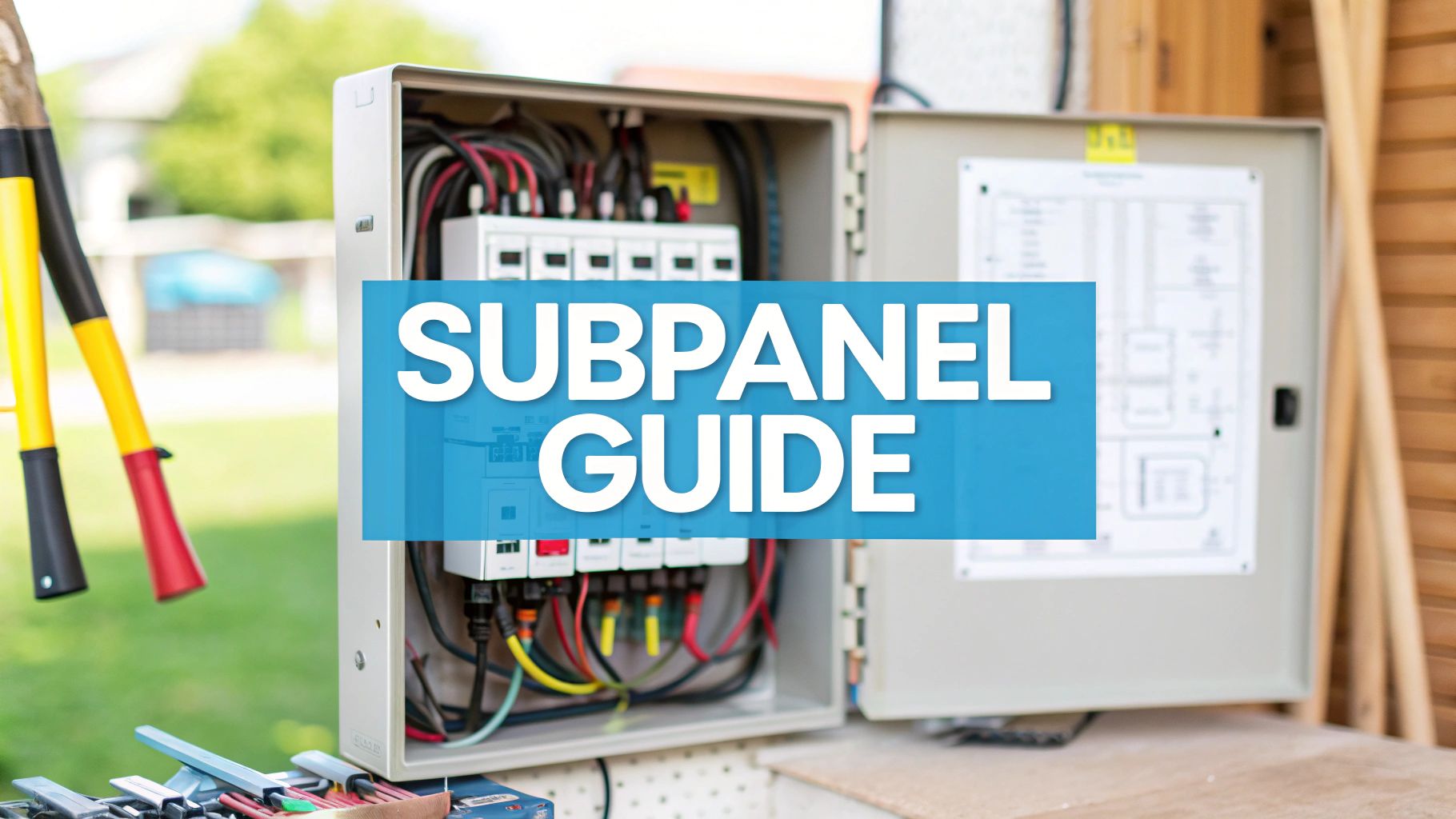
Think of your home's main electrical panel as the central hub for all its power. It's the command center that takes electricity from the utility grid and routes it to every light, outlet, and appliance in your house. So, what’s a subpanel?
In the simplest terms, a subpanel is a smaller, secondary breaker box that branches off the main panel. It acts like an express lane on the electrical highway, safely managing and distributing power to a specific area or for a high-demand device that your main panel can't handle on its own.
Your Home's Electrical System and the Role of a Subpanel
Let's use an analogy. Imagine your home’s electrical system is a tree. The main electrical panel is the sturdy trunk, the part connected directly to the power grid. A subpanel is like a major branch growing from that trunk, dedicated to nourishing a specific part of the tree—say, a new home addition, a detached garage, or a power-hungry workshop.
This secondary panel gets its power from the main panel, but it has its own set of circuit breakers. This setup is brilliant because it lets you add a bunch of new circuits for a dedicated purpose without cluttering up or, more importantly, overloading your primary system. It’s pretty much an essential upgrade for modern homes, especially as our demand for electricity keeps growing.
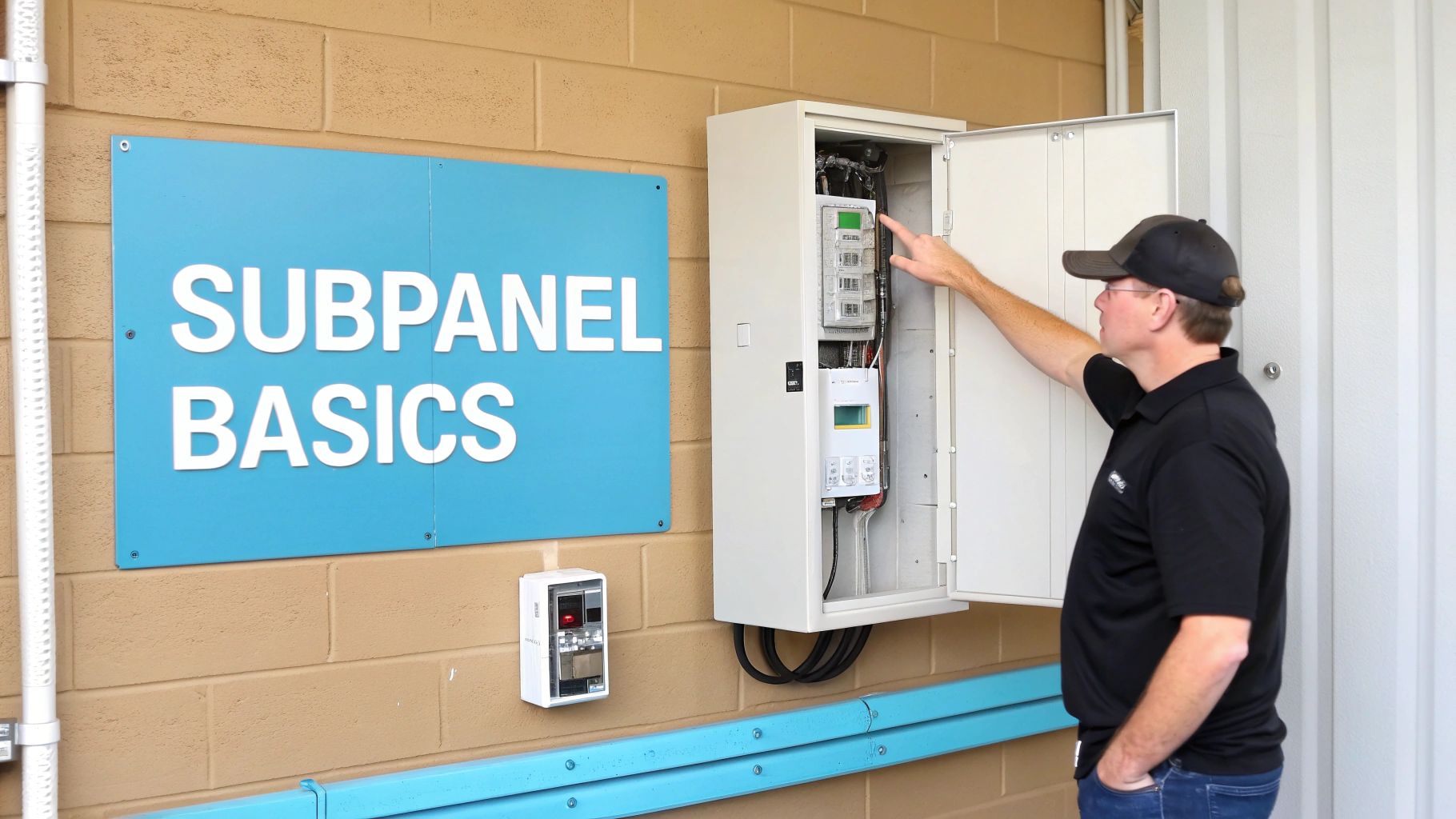
Why Modern California Homes Need More Power
So many homes here in Los Angeles and Ventura County were built back when our electrical needs were a lot simpler. Today, it’s a different story. We have home offices, high-efficiency appliances that pull a lot of juice, EV chargers, and a real need for backup power during California's fire season or grid failures.
All these modern additions put a serious strain on older electrical systems that just weren't designed for such heavy loads.
This is where a subpanel becomes the perfect solution. It helps you:
Expand Capacity: It gives you brand-new slots for breakers when your main panel is completely full.
Isolate Power: You can neatly manage the power for a specific zone, like a remodeled kitchen or an Accessory Dwelling Unit (ADU), without it impacting the rest of the house.
Improve Safety: By spreading out the electrical load, it prevents your main panel from becoming dangerously overloaded.
This becomes especially critical when you're integrating something like a Generac home backup generator. A subpanel can be dedicated just to your essential circuits, allowing the generator to efficiently power what matters most during an outage. If you think your main system is the issue, our guide on when you might need a home electrical panel upgrade offers some deeper insights.
A professionally installed subpanel is more than just an add-on; it's a foundational investment in your home's safety, capacity, and readiness for future technology.
Subpanels are a key part of the energy storage revolution in homes. As our houses get smarter and more self-sufficient with things like solar-powered generators and battery storage, having a robust and expandable electrical system isn't just a nice-to-have—it's non-negotiable.
Top Signs You Need an Electrical Subpanel
How can you tell if your home’s electrical system is sending out an SOS? It’s not always obvious, but there are clear signs that you’re pushing its limits. Recognizing these indicators is the first step toward a safer, more capable electrical setup. Often, the solution isn't a massive overhaul but a strategic addition—an electrical subpanel.
Many homeowners think flickering lights are just a minor annoyance, but they can be a symptom of an overloaded system. If your home is showing any of the signs below, it’s a strong signal that it's time to consider a subpanel installation.
Your Main Panel Has No More Room
This is the most straightforward sign of them all. Open the door to your electrical panel. Do you see every single slot occupied by a circuit breaker? If so, you’ve officially run out of space. You simply can't add new circuits for that home office, workshop, or EV charger you’ve been planning.
Some people try to force more connections by "double-tapping" breakers, which means jamming two wires into a single breaker terminal. This is a major fire hazard and a clear violation of electrical codes. The only safe and correct solution is to install a subpanel to create the new circuits you need.
Your Circuit Breakers Trip Frequently
Do you feel like you're constantly walking over to the panel to reset a tripped breaker? Maybe the power in the kitchen cuts out every time you run the microwave and the coffee maker at the same time. This is a classic sign of an overloaded circuit.
While a single overloaded circuit might not scream "subpanel," it's a different story if multiple areas of your home are experiencing this. It points to a larger, systemic issue. A subpanel helps by distributing the electrical load more evenly, creating dedicated circuits for high-demand areas so they don’t have to compete for power.
You Are Planning a Major Home Upgrade or Addition
Modern life demands more electricity, plain and simple. Certain home projects are particularly power-hungry, and if you’re planning any of the following, a subpanel isn't just a good idea—it's often a necessity for a safe, code-compliant installation.
Kitchen or Bathroom Remodel: Today's kitchens are packed with powerful appliances. Induction cooktops, double ovens, and high-speed blenders each need their own dedicated circuit.
Accessory Dwelling Unit (ADU): Building a guest house or ADU in your California backyard is like adding a small apartment. It absolutely needs its own electrical system, which is managed by a subpanel.
Home Workshop or Studio: Power tools like saws and compressors draw immense amounts of current. They require multiple, heavy-duty circuits to run safely and effectively.
Hot Tub or Pool Installation: These backyard luxuries have heaters and pumps that need robust, dedicated 240-volt circuits, which a subpanel is perfect for providing.
A subpanel provides a clean, organized, and safe way to power these new spaces without putting a dangerous strain on your home’s original electrical infrastructure.
You're Installing High-Power Equipment
Some of the most popular home upgrades today are also the most demanding on your electrical system. Just adding one of these can max out an older main panel.
EV Charger: An electric vehicle charger is one of the single largest electrical loads you can add to a home. It often requires a dedicated 50-amp or 60-amp circuit.
Generac Home Backup System: To manage power efficiently during an outage, a subpanel can isolate essential circuits (like your fridge, lights, and medical devices) for your Generac generator to power.
Central Air Conditioning: Installing or upgrading an HVAC system requires a significant power commitment, usually managed through its own dedicated circuits fed from a subpanel.
If your home is showing these signs of electrical strain, don't wait for a bigger problem to pop up. A professionally installed subpanel is the key to safely powering your modern lifestyle.
Ready to expand your home's electrical capacity? Contact RC Generators and Electric today for a professional consultation in the Los Angeles or Ventura area!
Connecting a Subpanel to Your Generac Home Backup System
When California's grid gets shaky from fires, storms, or heatwaves, a Generac home backup generator is a lifesaver. But how does that power actually get to the most important parts of your home? This is where a subpanel becomes the unsung hero of your energy plan, working as the perfect partner for your generator.
A subpanel lets you create a backup power plan that’s smart, efficient, and easier on your wallet. Instead of installing a massive generator to run every single circuit—from the guest room TV to the garage door opener—a subpanel lets you be selective. This targeted approach is really the key to a great home backup system.
Creating a Power Lifeboat for Your Essentials
Think of a subpanel connected to your generator as a "power lifeboat." During a widespread blackout, this lifeboat doesn't need to carry the whole ship; it just needs to carry the essentials to keep you safe and comfortable until the main power comes back online.
Your electrician can move all your critical circuits into one dedicated subpanel. This usually includes things like:
Refrigeration: To keep your food and medications from spoiling.
Essential Lighting: Key areas like the kitchen, a bathroom, and hallways.
Medical Devices: Making sure life-sustaining equipment stays on.
Communication: Powering your Wi-Fi router so you can stay connected.
HVAC Fan: Circulating air to keep your home comfortable.
When the power cuts out, your Generac system automatically fires up. It sends power through a device called a transfer switch, which is the brain of the whole operation. You can learn more about how this critical piece works in our guide on what is a transfer switch.
The transfer switch then directs all the generator’s power only to the circuits in that essential subpanel. This strategy is way more efficient than trying to power the whole house. It lets you use a smaller, more affordable generator while still making sure your most important needs are always covered.
The Role of a Subpanel in a Modern Energy System
Subpanels aren't just for generators anymore. They're a cornerstone of modern home energy management, especially for California homeowners looking to pull in power from multiple sources. A subpanel acts as a central hub, keeping everything organized and safe.
For a comprehensive system like Generac, having a reliable fuel supply is just as vital as the electrical wiring. You can explore the importance of emergency natural gas solutions to see how critical infrastructure stays running. That same principle of reliability applies right inside your own walls.
A dedicated subpanel ensures that power from your generator, solar panels, or home battery is managed cleanly and safely, without interfering with your main electrical panel or the utility grid.
This separation is crucial. It prevents dangerous "backfeeding" of electricity to the grid, which could endanger utility workers, and it protects your sensitive electronics from power surges when the grid finally kicks back on.
Future-Proofing with Subpanels for Solar and Battery Backup
As more homeowners in Los Angeles and Ventura County turn to solar-powered generators and home batteries, the subpanel's job becomes even more important. It provides the perfect infrastructure to manage these advanced energy sources.
For example, a subpanel can be set up to:
House Solar Circuits: Grouping the circuits that run off your solar array during the day.
Manage Battery Power: Directing stored energy from your home battery to essential circuits in the evening or during an outage.
Integrate Generator Backup: Seamlessly switching over to your Generac generator when both solar and battery power are depleted during a long blackout.
By centralizing control in a subpanel, you create a tough, layered energy strategy. Your home can operate independently from the grid, powered by whatever source is most efficient at that moment. This kind of setup doesn't just prepare you for emergencies; it positions your home for a future of true energy independence.
Ready to secure your home's power with a Generac generator and a smart subpanel setup? Contact RC Generators and Electric for an expert consultation and start building your energy resilience plan today!
Subpanel Sizing, Wiring, and Essential Safety Codes
While installing a subpanel is a job that absolutely belongs in the hands of a licensed pro, it helps to understand the fundamentals. Knowing a little about how these systems are sized, wired, and regulated helps you have a smarter conversation with your electrician and appreciate why certain rules are non-negotiable.
Picking the right subpanel isn’t a wild guess. It’s all about a careful calculation based on what you plan to power. This process, called a load calculation, is how an electrician figures out the correct "size," or amperage, for the new panel.
Choosing the Right Size Subpanel
A subpanel's size is measured in amps, with common ratings like 60-amp, 100-amp, or 125-amp. For something simple like a small workshop or a few circuits in a finished basement, a 60-amp subpanel is often plenty. But if you're building an ADU or renovating a kitchen with a bunch of power-hungry appliances, you’ll likely need a 100-amp subpanel or even larger.
Your electrician will tally up the total potential power draw of everything that will connect to it—lights, outlets, appliances, you name it. The goal is to choose a panel that can easily handle the load without ever pushing past 80% of its total capacity. That buffer is a critical safety margin required by the National Electrical Code (NEC).
The Critical Rule of Neutral and Ground Separation
This is one of the most important—and dangerously misunderstood—rules in subpanel wiring: keeping the neutral and ground wires separate. In your main electrical panel, these two wires are connected, or "bonded," together at one specific point.
That bond, however, can only happen at the main panel.
In a subpanel, the neutral wires and ground wires must be on separate bus bars. The neutral bus needs to "float," while the ground bus gets bonded directly to the panel's metal box.
Think of your wiring like a two-lane road. The neutral wire is the return lane for everyday electrical current, bringing it back to the source. The ground wire is the emergency shoulder, only meant to be used if there's a problem, like a short circuit. If you bond them together in a subpanel, you're essentially forcing normal traffic onto the emergency shoulder. This creates a lethal hazard where metal pipes, appliance casings, and other surfaces could become energized. It's a common and life-threatening DIY mistake.
California Codes and Professional Installation
Beyond sizing and neutral separation, electricians follow strict rules for wire gauge (thickness) to prevent wires from overheating. They also have to follow local codes in Los Angeles and Ventura County, which are built on the NEC. These regulations dictate everything from where the panel can be located to the specific type of circuit breakers required. The professional-grade materials and labor do come at a cost, and you can get a better feel for that by reading our guide on the factors that influence electrical panel cost.
Because the safety stakes are so high, pulling a permit is mandatory for any subpanel installation. This ensures the work gets inspected and signed off on by a local authority, giving you real peace of mind that the job was done right.
What to Expect During Your Subpanel Installation
A professional subpanel installation should be a smooth, predictable process, not some chaotic construction mess. Knowing the steps ahead of time removes all the guesswork, so you know exactly what’s happening and when. The journey from a maxed-out main panel to a safe, powerful new setup follows a pretty clear path.
It all kicks off with a detailed assessment to make sure the solution we design fits your home’s power needs perfectly—not just for today, but for whatever you might add down the road.
The Initial Consultation and Load Calculation
First things first, a licensed electrician from RC Generators and Electric will come out to your home for a professional consultation. We’ll sit down and talk about your goals. Are you finally getting that EV charger? Remodeling the kitchen with new appliances? Maybe you're installing a Generac backup generator. This isn't just a quick peek; it's a deep dive into your current electrical system.
From that conversation, we perform a critical step called a load calculation. This is where we add up the power demands of everything new you want to install. This simple math tells us exactly what size subpanel you need, ensuring it has more than enough capacity to handle the load without ever breaking a sweat.
Permitting and Planning the Location
Once we know the right size, we handle all the paperwork. Here in California, any subpanel installation requires a permit from your local building department, whether you're in Los Angeles or Ventura County. This isn't optional—it's a crucial step that protects you by ensuring the work is done to the high safety standards of the National Electrical Code (NEC).
Next, we figure out the best spot for the new panel. According to the NEC, a subpanel needs to be:
Easily Accessible: You can't hide it away in a closet, a bathroom, or a cramped crawlspace.
In a Dry Location: It has to be protected from any moisture or potential water damage.
Have Proper Clearance: The code requires a clear workspace of at least 3 feet in front of the panel.
We’ll work with you to find a location that’s both convenient for you and 100% compliant with the code.
The Installation and Final Inspection
With the plan and permits locked in, our licensed electricians get to work. The installation itself starts by running a new, heavy-gauge feeder cable from your main service panel over to the subpanel’s new home. We’ll securely mount the new panel and make the vital grounding and neutral connections with absolute precision—this is where safety really counts.
The most critical part of the wiring is keeping the neutral and ground wires completely separate in the subpanel. This is a non-negotiable rule that prevents dangerous electrical faults and is the true mark of a professional, code-compliant job.
After the panel is wired up, we install the new circuit breakers and connect the individual circuits for your new outlets, appliances, or equipment. We test everything from top to bottom to make sure it's all working perfectly. The very last step is the official inspection, where a city or county inspector comes out to verify that the installation meets every code requirement, giving the project its final stamp of approval.
Ready to upgrade your home’s electrical system with a professionally installed subpanel? Contact RC Generators and Electric today for a free consultation in the Los Angeles and Ventura area!
Ready to Upgrade? Let's Get It Done Right.
Upgrading your home with a professionally installed subpanel is one of the smartest, most forward-thinking investments you can make. It’s more than just a box on the wall—it’s the backbone for your home's future, enhancing safety, boosting functionality, and preparing you for what’s next.
A subpanel is the key that unlocks everything from seamless EV charging to uninterrupted power during outages with a Generac generator. It’s the critical step that ensures your home’s electrical system can handle modern demands safely and reliably.
As the go-to experts for homeowners across Los Angeles and Ventura County, our licensed electricians at RC Generators and Electric are here to help you expand your home's capabilities. We know the unique electrical challenges California residents face, from getting ready for wildfire season to integrating the latest smart home tech.
Your Trusted Local Electrical Partner
We always start with a thorough, on-site assessment of your home’s system to understand exactly what you want to achieve. From there, we design a solution that fits your needs perfectly and handle the installation flawlessly, making sure everything is up to code for your complete peace of mind.
A professionally installed subpanel isn't just about adding more circuits; it's about building a safer, more resilient, and future-ready home for you and your family.
Whether you’re building a new workshop, an ADU, or setting up a complete home backup system with a Generac generator, our team has the expertise to get the job done right. Don't let an outdated electrical panel limit what your home can do or put its safety at risk.
Ready to power up your home's future? Contact RC Generators and Electric today for a professional consultation in the Los Angeles or Ventura area!
Your Top Questions About Electrical Subpanels, Answered
Diving into your home's electrical system can feel a little intimidating, and it’s natural to have questions. If you're thinking about adding a subpanel to handle more power, you're not alone. Here are some clear, no-nonsense answers to the questions we hear most often from homeowners.
Can I Install a Subpanel Myself?
We get this question a lot, and our answer is always the same: this is one job you absolutely want to leave to the pros. Installing a subpanel isn't like changing a light fixture; it involves high-voltage electricity and a deep understanding of the National Electrical Code (NEC).
One tiny mistake, like failing to separate the neutral and ground wires correctly, can create a serious risk of shock or fire. For your safety and to make sure the job is done right, always bring in a licensed and insured electrician. They have the experience and tools to get it done safely and ensure it passes inspection in places like Los Angeles and Ventura County.
Does Adding a Subpanel Increase My Home's Value?
Yes, in almost every case, it's a solid investment. A subpanel is a major electrical upgrade that tells potential buyers your home is safe, modern, and ready to handle their needs.
It’s a huge selling point for anyone wanting to add an EV charger, a home workshop, or even a sophisticated home office. It shows that your home's electrical backbone is strong and has been well cared for.
How Many Subpanels Can One House Have?
Interestingly, the NEC doesn't put a hard cap on the number of subpanels you can have. The real limit is the total capacity of your main electrical service—the amount of power your home gets from the utility company.
The rule of thumb is that your main service has to be big enough to safely power the main panel and all the subpanels connected to it. An electrician will do a detailed “load calculation” to make sure your entire system is balanced and won’t get overloaded.
Is a Subpanel the Same as a Transfer Switch?
That’s a great question. No, they're different, but they often work together as part of a home backup power system. Think of them as teammates.
A subpanel is like a new distribution hub. It takes a chunk of power from your main panel and sends it out to a new set of circuits.
A transfer switch is the brain of a generator system. Its job is to safely switch your home's power source from the grid to your Generac generator during an outage.
In many generator setups, the transfer switch is wired to power a dedicated subpanel. That subpanel holds all your essential circuits—like the refrigerator, key lights, and outlets—so they're the first thing to get power back when the generator kicks on.
Ready to upgrade your home’s electrical system with the help of trusted professionals? The licensed electricians at RC Generators and Electric are here to provide expert installations for subpanels, Generac generators, and more. Contact us today for a consultation and let's future-proof your home.