
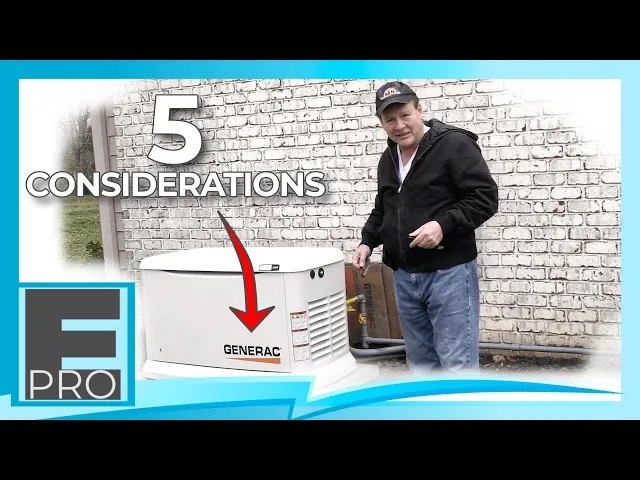
Unsure what size generator do I need? This practical guide helps you calculate your home's power needs to choose the right Generac standby generator.
Date
Dec 5, 2025
Author
RC Admin
Read
6 min
Let's get right to it. The first question everyone asks is, "what size generator do i need?" The answer isn't about your home's square footage; it's about what you absolutely need to keep running when the power goes out. For most homes here in California, a Generac standby generator between 10kW and 22kW is usually the sweet spot for providing reliable home backup power.
Your Guide to Choosing the Right Home Generator Size
When the grid goes down, a reliable backup generator is more than just a convenience—it’s a lifeline. Whether you're navigating the wildfire-related Public Safety Power Shutoffs in California or a standard grid failure, having a correctly sized Generac home standby generator means your life can go on without skipping a beat. Picking the right one is the single most important step you'll take to secure real peace of mind for your family.
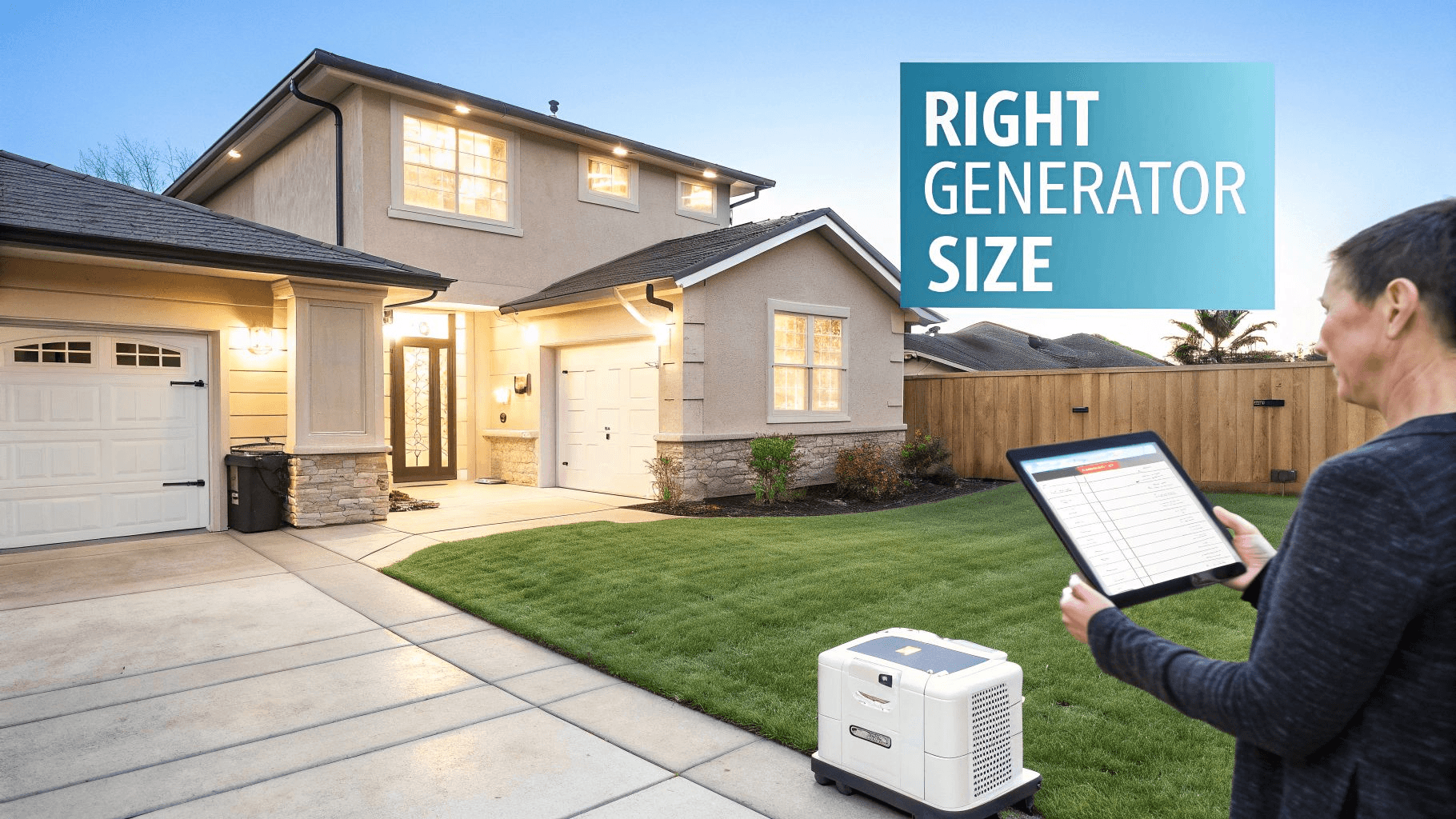
Sizing Is About Lifestyle, Not Square Footage
One of the biggest myths out there is that a bigger house automatically needs a bigger generator. The truth is, the perfect size comes down to your personal priorities. Are you okay with just keeping the basics running, or do you want a seamless transition where every light, appliance, and outlet works just like normal?
Think of it like building a custom power safety net for your home. We figure out the right size by adding up the wattage of everything you want to power at once. A whole-house setup that covers essentials like your AC, heat, and refrigerator will often land somewhere between 7,000 to 20,000 watts (7-20 kW). You can find more insights into generator sizing and market trends from industry analysts like Fact.MR.
To make this simpler, we've broken down power needs into three common scenarios we see with California homeowners:
Essential Power: This covers the bare necessities—your refrigerator and freezer, a few lights, and outlets to keep your phones and laptops charged.
Managed Whole-Home Power: This handles all your essentials plus larger appliances like an air conditioner or well pump. The system intelligently manages these heavy loads to prevent overloads.
Complete Whole-Home Power: This is the ultimate "set it and forget it" solution, powering your entire home simultaneously without you having to think twice about what you can and can't use.
A Quick Sizing Reference
To give you a better feel for what this looks like, the table below offers a quick reference for typical generator sizes based on different power needs. It's a great way to get a ballpark idea before we dig into your specific home.
Quick Guide to Home Generator Sizing
This table provides a quick estimate of the Generac standby generator size needed based on typical California home power needs.
Power Need Level | Typical Appliances Covered | Recommended Generac Size (kW) |
|---|---|---|
Essential Power | Refrigerator, freezer, some lights, outlets, sump pump, garage door opener. | 10 - 14 kW |
Managed Whole-Home Power | All essentials plus a central AC (up to 5 tons), well pump, and electric oven. | 18 - 22 kW |
Complete Whole-Home Power | The entire house, including multiple AC units, electric water heater, and all circuits. | 24 - 26 kW |
A professional load calculation is the only way to guarantee a perfect fit. This table is a great starting point, but an on-site assessment by a licensed electrician ensures your investment is precisely matched to your home's unique electrical demands.
For a precise assessment and professional installation of a Generac system perfectly tailored to your home, the experts at RC Generators are here to help. Contact us today for a free, no-obligation consultation and secure your family's comfort and safety.
Understanding Watts: Starting vs. Running Power
To figure out what size generator you really need, we first have to talk about power. And in the world of generators, power is measured in watts. You'll see two key numbers: starting watts and running watts. Getting these two straight is the single most important step in choosing a Generac that won’t let you down when you need it most.
Think of it like pushing a stalled car. That first big shove to get it moving takes a massive effort—that's your starting wattage. Once it’s rolling, it’s much easier to keep it going at a steady pace—that's your running wattage.
The Power Surge of Starting Up
Many of your home's most critical appliances, like the refrigerator, air conditioner, or well pump, rely on motors. When these devices kick on, their motors demand a huge, split-second surge of electricity to get going. This initial jolt can be two to three times higher than the power they need to just run normally.
This is the one detail homeowners almost always overlook. If your generator’s starting wattage is too low, it simply won't have the muscle to handle that initial demand. The best-case scenario? Your generator's circuit breaker trips. The worst? You could damage both the generator and your expensive appliances.
It's crucial to remember that a generator must be able to supply the total running watts of all your appliances plus the single largest starting watt requirement at any given moment. This ensures a stable and reliable power supply during an outage.
Running Watts: The Marathon Power
Once an appliance gets over that initial startup hump, its power consumption settles into a consistent, steady draw. This is its running wattage. For example, a refrigerator might need 2,000 watts to start its compressor, but then it only sips around 700 watts to keep your food cold.
When adding up your home’s needs, you’ll total the running watts of everything you want to power at the same time. But you must also account for that one highest starting watt figure to ensure your system can handle the load without faltering.
If you're curious about how a backup system manages all this behind the scenes, you can learn more about how a home generator works and handles these power loads. A correctly sized Generac system, installed by a professional, is designed to manage these surges automatically. You don't have to worry about what you turn on and when—this kind of intelligent power management is what sets a modern home backup solution apart.
Ultimately, both starting and running watts are essential pieces of the puzzle. Understanding this difference moves you beyond guesswork and toward a precise calculation. It ensures the Generac generator you choose has the muscle to both start up your essential systems and keep them running smoothly for as long as you need, giving your family true peace of mind.
How to Calculate Your Home Power Requirements
Alright, let's get down to the brass tacks and figure out exactly what size generator your home needs. We're moving past the theory of starting and running watts and into a practical, step-by-step process. Think of it as a quick power audit for your home, helping you pinpoint the absolute essentials you can't live without during a California power outage.
This isn't just about crunching numbers. It's about deciding what comfort and safety look like for your family. By the end, you'll have a solid number to work with, giving you the confidence to pick the right generator.
Step 1: Start With Your Non-Negotiable Essentials
First things first, grab a notepad and walk through your house. Make a list of every single appliance and device that you consider absolutely critical during an outage. Don't sweat the wattage numbers just yet—just focus on what you need to keep your home safe, comfortable, and running.
For most folks, this list usually includes:
Kitchen Staples: The refrigerator and freezer are non-negotiables to keep hundreds of dollars of food from spoiling.
Comfort Systems: This could be your furnace in the winter or central air conditioning during a summer heatwave.
Water Access: If you're on a well, the well pump is a top priority. A sump pump is just as critical if your basement is at risk of flooding.
Medical Equipment: Any and all necessary medical devices go to the very top of the list.
Connectivity and Lighting: A few key lights, your internet modem and router, and a place to charge your phones are essentials for staying connected and informed.
Step 2: Find the Running and Starting Watts
Once your list of essentials is ready, it's time to play detective. You need to find the running watts (the continuous power draw) and starting watts (that initial power surge) for each item. You can usually find this info stamped on the appliance's data plate or tucked away in the owner's manual.
Can't find it? Don't worry. Most common appliances have a typical wattage range, and a reference chart is a lifesaver here.
Pro Tip: For the most accurate reading of what your home is actually using, an electricity consumption monitor is an amazing tool. To really get a handle on your usage, which is key for sizing, check out this guide to an electric power consumption monitor. It can reveal some surprising things about where your power is going.
To help you get started, here’s a quick reference chart with typical wattage values for common household appliances.
Common Household Appliance Wattage Chart
Appliance | Typical Running Watts | Estimated Additional Starting Watts |
|---|---|---|
Refrigerator/Freezer | 700 W | 2,000 W |
Central Air Conditioner (3-ton) | 3,500 W | 3,500 W |
Sump Pump (1/2 HP) | 1,000 W | 2,000 W |
Well Pump (1/2 HP) | 1,000 W | 2,000 W |
Furnace Fan (1/2 HP) | 750 W | 1,500 W |
Electric Water Heater | 4,500 W | 0 W |
Microwave Oven | 1,000 W | 0 W |
Lights (LED) | 10-100 W (total) | 0 W |
TV | 150 W | 0 W |
Internet Modem/Router | 20 W | 0 W |
Keep in mind these are just estimates! Always use the specific numbers from your own appliances if you can find them.
Step 3: Do the Math for a Perfect Fit
Okay, let's put it all together. The math itself is pretty simple once you have your numbers.
Add Up All Running Watts: Take the "running watts" for every item on your must-have list and add them all up. This total is the baseline power your generator needs to provide continuously.
Identify the Highest Starting Watts: Now, look at your list again and find the single biggest number in the "starting watts" column. You only need to account for the hungriest appliance, since it's highly unlikely they will all kick on at the exact same time.
Calculate Your Total: Add the highest starting wattage (from Step 2) to your total running wattage (from Step 1). That final number is the minimum starting wattage your generator needs to handle.
Home backup generators typically fall in the 5-20 kW range, which is more than enough for most homes, whether you're powering just the basics or the whole house.
While this calculation gives you a fantastic starting point, nothing beats a professional on-site load calculation. For a critical system like a standby generator, it's the only way to be 100% certain. An expert from RC Generators can perform a precise assessment of your home's unique circuits to ensure your Generac system is sized perfectly for flawless performance when you need it most.
Choosing Your Backup Plan: Essential vs. Whole Home
With your wattage calculation complete, you've hit the most important fork in the road. It's time to decide just how much of your home you want to protect. Are you looking for a solid safety net to keep the non-negotiables running, or do you want the seamless comfort of powering your entire house as if nothing ever happened?
This decision is the last major step before talking to a pro, and it will directly determine the right generator size for your home. Let's walk through the two main approaches.
The Essential Circuits Backup Plan
Think of this as the strategic approach to backup power. Instead of firing up every light and outlet in the house, an essential circuits plan focuses only on what truly matters during an outage. For most homeowners, this is the most popular and budget-friendly way to go.
A licensed electrician will wire your Generac standby generator to a dedicated sub-panel, which then feeds power only to your hand-picked circuits. This smart setup lets you use a smaller, more fuel-efficient generator while still keeping life comfortable and safe.
So, what usually makes the "essentials" list?
Kitchen Power: Keeping the refrigerator and freezer humming is priority number one. No one wants to throw out hundreds of dollars worth of food.
Climate Control: This could be the furnace fan in the winter to prevent frozen pipes or a smaller AC unit to keep things bearable during a summer heatwave.
Water Access: If you have a well pump for water or a sump pump to prevent a flooded basement, this circuit is absolutely critical.
Connectivity & Safety: Powering your internet router, a few key lights, and some outlets for charging phones keeps you connected to the outside world.
This targeted plan offers a huge advantage in upfront cost for both the generator itself and the installation. It gives you robust protection for what you need most, without the expense of a much larger system.
The Whole-Home Backup Plan
This is the ultimate "set it and forget it" solution. A whole-home backup plan is exactly what it sounds like—a generator powerful enough to run every single circuit in your home, all at once. When the power goes out, an automatic transfer switch moves your home's entire electrical load over to the generator in seconds.
The transition is so smooth, you honestly might not even know the grid went down. All your lights, appliances, and electronics just keep working. This is the perfect choice for anyone who wants zero disruption to their daily life, especially with extended outages becoming more common.
A whole-home solution removes all the guesswork. You don’t have to worry about which outlets work or what appliances you can use. Life just continues as normal, offering total convenience and security.
Of course, powering an entire house requires a much beefier generator, usually in the 22kW to 26kW range or even larger. The installation is also a bit more involved since the system has to integrate directly with your main electrical panel. To see what that process looks like, you can check out our detailed guide on whole-house generator installation.
This move toward total power security is a clear trend. The global generator market was valued at around USD 28.5 billion in 2025 and is expected to blow past USD 42.8 billion by 2035. Standby generators for homes and businesses now make up 50% of that market, showing that more and more people are investing in larger, more reliable systems. You can dig into more details about this growing market for backup power.
Whether you land on protecting just the essentials or your entire home, the goal is to match your choice with your budget, lifestyle, and what brings you peace of mind. The next step is to connect with a professional who can confirm your numbers and design the perfect system for you.
Why Professional Generator Installation Is Crucial
You've done the math and picked the right size generator—that's a huge first step. But the most critical part of the puzzle is making sure it’s installed safely and correctly. Let’s be clear: a standby generator is not a weekend DIY project. It’s a complex piece of equipment that involves high-voltage electrical wiring, natural gas or propane connections, and deep integration with your home’s main power system.
Getting any of this wrong isn't just a hassle; it's genuinely dangerous.
Improper installation can lead to life-threatening hazards like carbon monoxide poisoning from incorrect placement or electrical back-feeding. Back-feeding is especially dangerous, as it sends electricity back down the utility lines, putting the lives of line workers trying to restore your neighborhood's power at risk. This is where a licensed electrician becomes your most important ally, ensuring your system works flawlessly and safely from day one.
The Role Of A Licensed Electrician
A professional electrician from a reputable company like RC Generators does a lot more than just set the generator on a concrete pad. Their expertise is non-negotiable for several key steps that guarantee your system is reliable, safe, and up to code.
Here's what they handle:
Performing a Precise Load Calculation: Your initial math is a great starting point, but an expert will perform a detailed on-site assessment to confirm your exact wattage needs and catch anything you might have missed.
Installing the Automatic Transfer Switch (ATS): The ATS is the brain of your entire backup system. It’s what safely disconnects your home from the grid during an outage and automatically switches over to generator power, preventing that dangerous back-feeding.
Managing Permits and Codes: In California, standby generator installations are governed by strict electrical and building codes. A licensed installer navigates all the necessary permits and inspections, ensuring the entire project meets local and national safety standards.
Safe Fuel Line Connection: Whether your generator runs on natural gas or propane, a professional ensures the fuel lines are connected securely and are 100% leak-free. This is a major safety risk you can’t afford to get wrong.
An improperly installed generator is more than just an inconvenience—it's a liability. A professional installation is the only way to protect your home, your family, and your significant investment in a backup power system.
Safety Is Non-Negotiable
A key part of a professional installation is the safe integration of your generator with your existing electrical panel. This includes correctly understanding overcurrent protection devices like circuit breakers, which are essential for preventing overloads and potential fires. An expert makes sure every connection is torqued to spec, every wire is correctly gauged for the load, and the entire system is properly grounded.
This meticulous attention to detail is what separates a safe, dependable system from a potential disaster waiting to happen. The peace of mind that comes from knowing your generator was installed by a certified professional is priceless, especially when you’re counting on it in an emergency.
At RC Generators, our licensed electricians specialize in expert standby generator installation, guaranteeing your system is perfectly sized, safely integrated, and ready to protect your home. Don’t leave your family’s safety to chance. Contact us today for a professional consultation and a flawless installation that gives you true power security.
Time to Take the Next Step
You’ve done the homework. You know how to size up your power needs, what the difference is between backing up a few key circuits and powering the whole house, and why a pro installation is the only way to go. You're no longer just asking, "what size generator do I need?"—you're ready to find the right answer for your home.
For homeowners here in California, the constant threat of grid shutdowns from fires and planned Public Safety Power Shutoffs has changed the game. A correctly sized Generac generator isn’t a luxury anymore; it's a core part of keeping your home secure. It’s the peace of mind that comes from knowing your family is safe and your life won't be turned upside down when the power lines go dark.
Turn Your Power Plan Into a Reality
Now for the most important part: turning all this planning into a real, working solution. While the charts and calculators in this guide get you in the ballpark, every home has its own unique electrical personality. The only way to guarantee your generator is a perfect match is with a professional, on-site assessment. It’s how you make sure your investment works flawlessly when you need it most.
And that's where we come in. At RC Generators, our entire focus is on building custom home backup systems that can handle California's unique power challenges. Our licensed electricians don't just show up to install a box; we work with you to create a complete power security plan, whether that's a Generac generator, a solar-powered system, or a home battery backup.
Your home’s safety is too important for guesswork. A professional load assessment ensures your generator can handle critical surges from appliances like your air conditioner without faltering, providing seamless power from the moment an outage begins.
Schedule Your Free Consultation Today
We believe every homeowner deserves to feel secure, which is why we offer a free, no-obligation consultation for residents across California. One of our experts will come to your home, perform a precise load calculation right there on the spot, and talk through your goals. From there, we’ll put together a detailed, customized quote for a Generac standby generator—or even a solar-powered backup system—that fits your home perfectly.
Don't wait for the next outage to find yourself scrambling in the dark. Contact RC Generators today to schedule your complimentary consultation. Let us help you take that final step toward securing your home’s power, protecting your family, and achieving true energy independence.
Frequently Asked Questions About Generator Sizing
Even after running the numbers, it’s completely normal to have a few questions. This is a big investment in your home’s security, and you want to get it right. We've gathered some of the most common questions we hear from California homeowners to help you feel confident in your decision.
Can I Just Buy a Bigger Generator to Be Safe?
It seems like a smart move—go bigger just in case, right? But this is one of those times where more isn't actually better. Buying an oversized generator is like using a monster truck to run a quick errand. It’ll get the job done, but it’s incredibly inefficient and hard on the engine.
Here’s why: Standby generators are designed to run under a specific load, ideally at least 30% of their total capacity. When a generator is too large for the job, a nasty condition called "wet stacking" can happen. Unburned fuel and carbon build up in the exhaust system, choking the engine, reducing its efficiency, and eventually leading to expensive damage.
A professional load calculation isn't about upselling you—it's about precision. Matching the generator size to your actual needs ensures it runs efficiently, burns less fuel, and lasts for years to come.
How Does a Solar System Affect My Generator Choice?
This is a fantastic question, especially for homeowners in California who have already invested in solar. A solar and battery system is a great step toward energy independence, but what happens during a multi-day outage when the weather is cloudy? That’s where a Generac standby generator becomes the perfect partner for your solar setup.
A Generac generator integrates perfectly with solar and battery storage systems, like the Generac PWRcell. The two systems work together in a really smart way:
Your home runs on clean solar power first, pulling from the battery when needed.
If a long outage drains your battery, the generator automatically fires up to recharge it and power your home.
Once the battery is full or the sun comes back out, the generator shuts down, letting your solar system take over again.
This hybrid approach offers the best of both worlds: the quiet, clean energy of solar backed by the unwavering reliability of a Generac. It's the ultimate setup for true, long-term energy security.
What Is an Automatic Transfer Switch and Why Do I Need One?
Think of the Automatic Transfer Switch (ATS) as the brain of your entire backup power system. This smart device is the critical link between your home's electrical panel, the utility grid, and your generator. Its one and only job is to monitor the power coming from the utility, 24/7.
The second it detects an outage, the ATS jumps into action and does two things almost instantly:
It safely disconnects your home from the utility grid. This is a critical safety step that prevents dangerous “back-feeding” that could harm utility workers.
It signals your Generac generator to start up and then seamlessly transfers your home’s electrical circuits over to generator power.
When the grid power is restored, the ATS does everything in reverse, switching you back to utility power and shutting down the generator. This completely hands-free operation is what makes a standby system so amazing. It ensures your home has power within seconds of an outage, whether you're there or not.
Ready to find the perfect Generac system for your home? The team at RC Generators and Electric provides expert load calculations and flawless installations to ensure your family's safety and comfort. Contact us today for a free, no-obligation consultation and take the first step toward total power security.