
Discover if a 100 amp manual transfer switch is right for your home. Learn about safety, installation, and how it works with your Generac backup generator.
Date
Dec 7, 2025
Author
RC Admin
Read
5 min
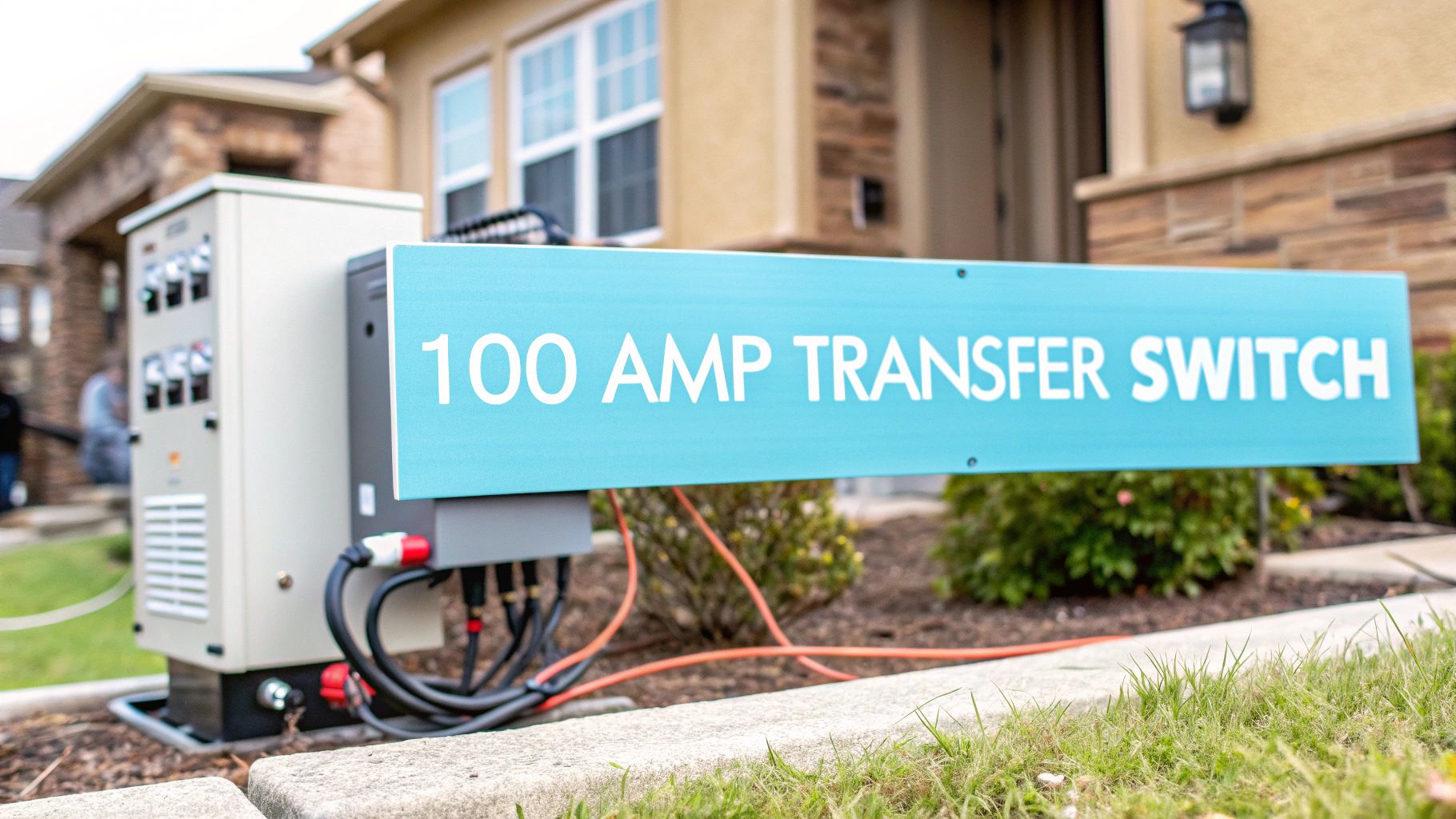
A 100 amp manual transfer switch is the critical piece of hardware that safely connects your home's electrical system to a backup power source, like a Generac home standby generator. Think of it as the ultimate gatekeeper for your home's power, making sure that electricity from the grid and power from your generator never, ever mix. This prevents a dangerous situation called electrical backfeed.
What a 100 Amp Manual Transfer Switch Actually Does
Let's picture your home's power supply as a two-way street. One lane brings in electricity from your utility company, and the other is reserved for your backup generator. A 100 amp manual transfer switch is the traffic cop standing right in the middle of that intersection. Its only job is to ensure one lane is closed before the other one opens.
When the grid goes down in your Southern California neighborhood—whether from wildfires or storms—you physically go to the switch and flip it. That single action slams the gate shut on the utility lane and swings it wide open for your generator lane. It's a simple, mechanical process, but that physical disconnection is what makes a transfer switch the most important safety component of any home backup system.
The Critical Role in Home Safety
Without a transfer switch, trying to hook up a generator directly to your home can create "backfeed." This is an incredibly dangerous scenario where your generator's electricity flows out of your house and back onto the utility lines. Not only can this electrocute line workers trying to restore power, but it can also destroy your generator and fry your home's appliances in an instant. A transfer switch makes backfeed impossible.
A properly installed transfer switch isn't just a good idea—it's a non-negotiable safety requirement mandated by the National Electrical Code (NEC). It's there to protect your property and, more importantly, the people working on the power lines.
Sizing and Compatibility
That "100 amp" rating is the key detail here. It tells you how much electrical current the switch can handle without overheating. Before you even consider a 100 amp manual transfer switch, it helps to have a good handle on understanding your home's electrical panel, which is the heart of your entire power system. Typically, a 100-amp switch is the right fit for homes with 100-amp main breaker panels—a very common size for homes throughout Los Angeles and Ventura County.
The demand for these setups is growing fast. The global market for manual transfer switches is expected to jump from USD 1.5 billion to USD 2.8 billion by 2033. That tells you just how many homeowners are deciding to invest in reliable power. For a deeper look at how these devices work and why they're so essential, check out our guide on what is a transfer switch.
Why a Transfer Switch Is a Non-Negotiable Safety Rule
Hooking up a powerful home standby generator, like a Generac, to your home's wiring without the right gear isn't just a bad idea—it's dangerously illegal. A 100 amp manual transfer switch isn't some optional add-on; it's the critical safety device that acts as a hard-and-fast barrier between your generator and the public utility grid.
Its number one job is to prevent something called backfeed, which is a potentially lethal scenario where electricity from your generator flows out of your house and back onto the grid. For the line workers trying to restore power during that outage, those lines are supposed to be dead. Suddenly energizing them can have tragic consequences.
The Dangers of Backfeed
Think of it like this: your home’s electrical system is connected to the neighborhood's power grid, just like your plumbing is connected to the city water main. If the city shuts off the water to repair a pipe, the workers are safe. But if you started pumping water from a private well into your home's pipes without disconnecting from the main, you’d flood the street and endanger everyone working there.
Backfeed is the electrical version of that disaster. A professionally installed transfer switch makes this physically impossible. It creates a "break-before-make" connection, meaning it completely severs the tie to the utility grid before it allows the generator's power to flow into your home. It’s a simple, foolproof mechanism.
California Law and Your Home’s Safety
Beyond just being common sense, it’s the law. The National Electrical Code (NEC) and local building codes right here in Los Angeles and Ventura County are crystal clear: you absolutely must use a transfer switch when connecting a generator to your home's panel. Trying to bypass this with a makeshift connection is a serious code violation that can void your homeowner's insurance and leave you with massive liability.
A transfer switch does more than just keep you legal. It also protects all your expensive electronics and appliances from the power surges and unstable voltage that can happen when the grid power finally kicks back on.
This one device protects your investment in a Generac generator, your appliances, and most importantly, the safety of your family and the utility crews working in our community. The only safe way to be ready for a power outage is with a properly installed transfer switch.
Ready to make sure your home is protected with a safe, code-compliant generator setup? The licensed electricians at RC Generators specialize in installing Generac home backup systems with the right transfer switch for your needs. Contact us today for a consultation and get real peace of mind before the next blackout hits Southern California.
Choosing Your Switch: Manual vs Automatic Operation
When it comes time to connect your Generac home backup generator, one of the biggest decisions you'll face is whether to go with a manual or an automatic transfer switch. The right answer really comes down to your budget, your lifestyle, and how you want your home to react when the lights go out. There’s no single “best” choice—only what works for your family.
Hands-On Control or Seamless Convenience?
A 100 amp manual transfer switch is the more hands-on, budget-friendly route. It’s a fantastic option if you’re usually home during outages and are comfortable with a simple, physical process. When the power cuts, you just head over to the switch, flip a lever from 'GRID' to 'GENERATOR,' and your Generac system takes over. For many homeowners, that direct control is exactly what they want.
An automatic transfer switch (ATS), on the other hand, is all about seamless, effortless convenience. It works quietly in the background, keeping an eye on your utility power 24/7. The moment it senses an outage, it automatically disconnects you from the grid, tells your Generac to start up, and switches your home’s power source—all in a matter of seconds. You don’t have to lift a finger, which is perfect for families who need uninterrupted power, especially if they travel or have members who can't operate a manual switch.
A manual switch puts you in the driver's seat but requires you to be there to make the switch. An automatic switch offers total peace of mind, making sure your essential systems—like refrigerators, medical equipment, and security—stay on without any help from you.
The infographic below shows the very first step in this decision.
This just reinforces that the only safe, code-compliant way to hook up a home backup generator is with a dedicated transfer switch. No shortcuts.
Manual vs Automatic Transfer Switch Comparison
To help you visualize the differences, here’s a quick side-by-side breakdown of what each type of switch offers for a home backup system.
Feature | Manual Transfer Switch | Automatic Transfer Switch (ATS) |
|---|---|---|
Operation | Requires you to physically flip a switch. | Senses an outage and transfers power automatically. |
Convenience | Less convenient; you must be home to operate it. | Utmost convenience; works 24/7, even when you're away. |
Cost | Lower upfront cost for both the switch and installation. | Higher initial investment due to more complex technology. |
Response Time | Depends on how quickly you can get to the switch. | Transfers power within seconds of an outage. |
Best For | Budget-conscious homeowners who are typically home. | Those needing uninterrupted power for medical devices, home businesses, or frequent travelers. |
Power Control | You choose which circuits to power and when. | Powers pre-selected circuits or the entire home automatically. |
Ultimately, this table shows the trade-off: cost and control versus convenience and speed.
While automatic switches are incredibly popular, manual switches still hold a strong place in the market for good reason. They are reliable, straightforward, and save you money. Though automatic models make up roughly 60% of the market, manual versions are a go-to choice for homeowners who value simplicity and cost-effectiveness. You can dig into more data on the transfer switch market to see the trends for yourself.
Choosing the right switch is a critical step in building a reliable backup system. If you're in the Los Angeles or Ventura County area and need a hand figuring it out, our team is here to help. Contact RC Generators today, and we'll find the perfect transfer switch for your Generac system and your family's peace of mind.
Getting the Right Size for Your California Home
Picking the right size for your transfer switch is one of the most important calls you'll make when setting up a home backup system. This isn't a guessing game—it's about perfectly matching the equipment to your home's existing electrical service. For a lot of homeowners in Los Angeles and Ventura County, a 100 amp manual transfer switch is the sweet spot, but you have to be sure before you buy.
The golden rule here is simple: the transfer switch's amperage rating must match or exceed your home's main breaker. This guarantees the switch can safely handle every bit of electricity your home is designed to pull. Slapping in an undersized switch is a serious fire hazard, and an oversized one is just a waste of money that won't work with a smaller panel anyway.
How to Check Your Main Electrical Panel
Figuring out your home's amperage is easy and perfectly safe. You don't need to open the panel cover or get anywhere near the wires. Just head over to your main electrical panel—usually in the garage, basement, or on an outside wall—and find the biggest circuit breaker. It’s typically at the very top or bottom, set apart from the rest. That’s your main breaker.
The amp rating is printed right on the handle of that breaker. You’ll see a number like "100," "150," or "200." If it says "100," then a 100 amp manual transfer switch is exactly what you need. This number is your starting point for any conversation with a licensed electrician.
Matching your transfer switch to your main panel isn’t just a best practice—it’s an absolute requirement for a safe, code-compliant installation that will protect your home and your powerful Generac standby generator.
Knowing this empowers you to have a productive conversation with a professional. It ensures every piece of the puzzle, from the switch itself down to the wiring, is correctly sized for the job. If you want to dive deeper into the wiring side of things, our guide on what size wire for 100 amp service has all the details.
The popularity of the 100-amp size for homes is no surprise. Market trends show that by 2025, switches in the ≤ 400 amp range—which includes these common 100-amp models—made up about 45% of the revenue in their market segment. That's because they're so widely used in both homes and small businesses. You can discover more insights about the transfer switch market to see why these models are such a trusted choice.
Feeling confident about what your home needs is the first step. The next is getting it installed by a pro. Contact RC Generators today and let our licensed electricians make sure your home backup system is a perfect, safe match for your needs.
Why Professional Installation Is the Only Option
When it comes to installing a 100 amp manual transfer switch, this is one job that absolutely, positively is not a DIY project. Working inside your home's main electrical panel is incredibly dangerous, with serious risks of electrocution and fire if you don't know exactly what you're doing.
A licensed electrician does more than just connect a few wires. They ensure your entire backup power system is safe, dependable, and up to code. It all starts with a thorough look at your home’s electrical setup to make sure it can handle the new equipment and your Generac generator. This first step is crucial.
Safety and Code Compliance Are Non-Negotiable
Here in Los Angeles and Ventura County, all electrical work is strictly regulated by local building codes and the National Electrical Code (NEC). A certified electrician lives and breathes these rules. They’ll manage the entire permitting process from start to finish, guaranteeing your installation is 100% legal and sails through every inspection.
Hiring a pro is non-negotiable for a few key reasons:
Keeps Your Family Safe: One wrong connection can create a fire hazard or lead to dangerous power surges.
Protects Your Gear: A botched installation can fry your transfer switch, your expensive generator, and even your home appliances.
Preserves Your Warranty: Most generator brands, including Generac, require professional installation to keep the warranty intact.
Think of it this way: paying for a professional installation is a direct investment in your family's safety and your own peace of mind. It's the only way to know for sure that your backup power will be there when you need it most.
What to Expect From a Professional Installation
A proper installation is a careful, step-by-step process. The electrician will precisely wire the transfer switch into your main service panel, which requires a deep understanding of your home’s unique electrical layout.
Sometimes, this process uncovers an outdated or undersized panel. If that’s the case, your electrician might recommend exploring main panel upgrades to ensure the entire system can operate safely and effectively.
Once everything is connected, they’ll run a series of tests to confirm every circuit works as it should and that switching from grid power to generator power is completely seamless. Don't take a chance with your home's electrical system. Let the experts at RC Generators handle it right.
Contact us today for a consultation and ensure your home is ready for anything.
Secure Your Home's Power with Expert Installation
You’ve got a solid grasp now on why a 100 amp manual transfer switch is such a key player in any home backup power system. But knowing what it does is one thing; getting it installed is another. This final step is the most critical, and it's definitely not a DIY job—your family's safety and the reliability of your power depend on getting it right.
A licensed, professional installation is the only way to guarantee your Generac generator and transfer switch will work together flawlessly when an outage hits. The wiring inside your main panel is complex. It takes an expert's touch to prevent fire hazards, protect your appliances from surges, and make sure your entire setup is compliant with California's strict electrical codes.
Your Local Generac Experts in Southern California
If you're in Los Angeles or Ventura County, the certified electricians at RC Generators are here to help. We don’t just install parts; we design and build complete home backup solutions that fit your specific needs.
Our team specializes in Generac standby systems, from solar-powered generator setups to traditional solar-free home backup systems. We handle every single detail—the initial assessment, pulling permits, and the final system check—to give you a seamless and safe installation.
Choosing a professional isn't just about buying a service. It's an investment in peace of mind, knowing your home is protected by a safe, code-compliant system built to last.
Don't wait for the next wildfire or storm to leave you in the dark. Take control of your home's power and protect your family with an expert installation from a local company you can trust.
Ready to get started? Contact RC Generators today for a professional consultation and a free quote on your home backup power system.
Your Top Questions About Transfer Switch Installation
If you’re thinking about getting a 100 amp manual transfer switch, you probably have some practical questions. It’s a smart move, but you want to know what you’re getting into when it comes to cost, capabilities, and the rules here in California.
Let’s tackle the most common questions we hear from homeowners in Los Angeles and Ventura County.
How Much Does Professional Installation Cost in California?
For a professional installation of a manual transfer switch, you’re typically looking at a range between $800 and $2,000. That covers both the switch itself and the labor from a licensed electrician.
The final price tag really depends on the complexity of your home's existing wiring and the location of your electrical panel. The only way to know for sure is to have a licensed electrician come out, assess your system, and give you a firm quote.
Can a 100 Amp Switch Power My Whole House?
It sure can—as long as your home’s main service is also 100 amps. The switch is designed to handle the entire electrical load safely.
But here’s the key thing to remember: the switch doesn't create power. The number of appliances you can run at once depends entirely on your Generac generator’s output. A professional can help you calculate what you truly need to power during an outage and match you with a generator that can handle it all.
A transfer switch installation is more than just a home improvement project; it's a critical safety upgrade. That’s why California law is crystal clear: a licensed professional has to do the work. No exceptions.
Do I Need a Permit for This Installation in California?
Yes, absolutely. Putting in a transfer switch is considered a major electrical modification, and it legally requires a permit from your local building department—whether you're in Los Angeles, Ventura, or anywhere else in the state.
A certified electrician, like our team at RC Generators, takes care of the whole permitting process for you. We handle the paperwork, coordinate with inspectors, and ensure your system is safe, up to code, and installed without any hassle.
Ready to get your home prepared with a safe, professional installation? The experts at RC Generators specialize in creating seamless backup power solutions with Generac generators that meet all local codes. Contact us today for a consultation and get peace of mind before the next outage hits.