
Discover the essential Generac generator maintenance schedule. Learn simple checks you can do and when to call a pro to keep your California home powered.
Date
Oct 28, 2025
Author
RC Admin
Read
7 min
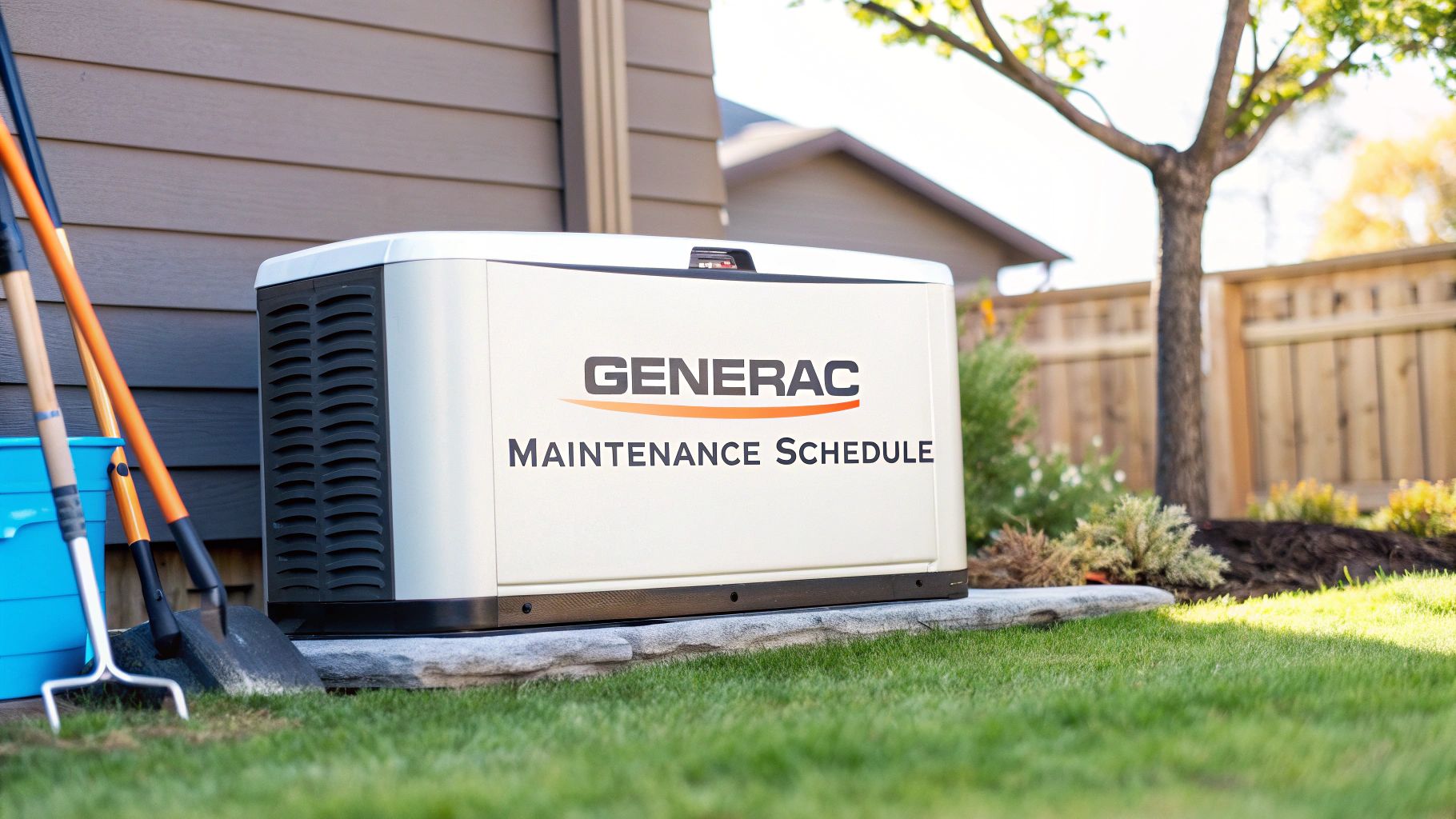
Your Generac generator maintenance schedule isn't just a list of suggestions—it's the single most important factor in guaranteeing you have power when you need it most. For California homeowners, we recommend a combination of professional servicing at least once per year, with smaller, simple checks that you can do yourself every month or so.
Why Your Generac Maintenance Schedule Matters
Think of your Generac home backup generator as an insurance policy for your family's comfort and security. It's a heavy-duty piece of equipment designed to protect your home, but it's not something you can just set and forget. Especially here in California, where wildfire seasons and Public Safety Power Shutoffs have become the norm, sticking to a consistent maintenance schedule is non-negotiable.
Following a routine shifts your approach from reactive repairs to proactive care. It’s all about catching small issues before they turn into major headaches during a storm.
This timeline gives you a great visual breakdown of what a healthy maintenance plan looks like, splitting tasks into simple, recurring checks.
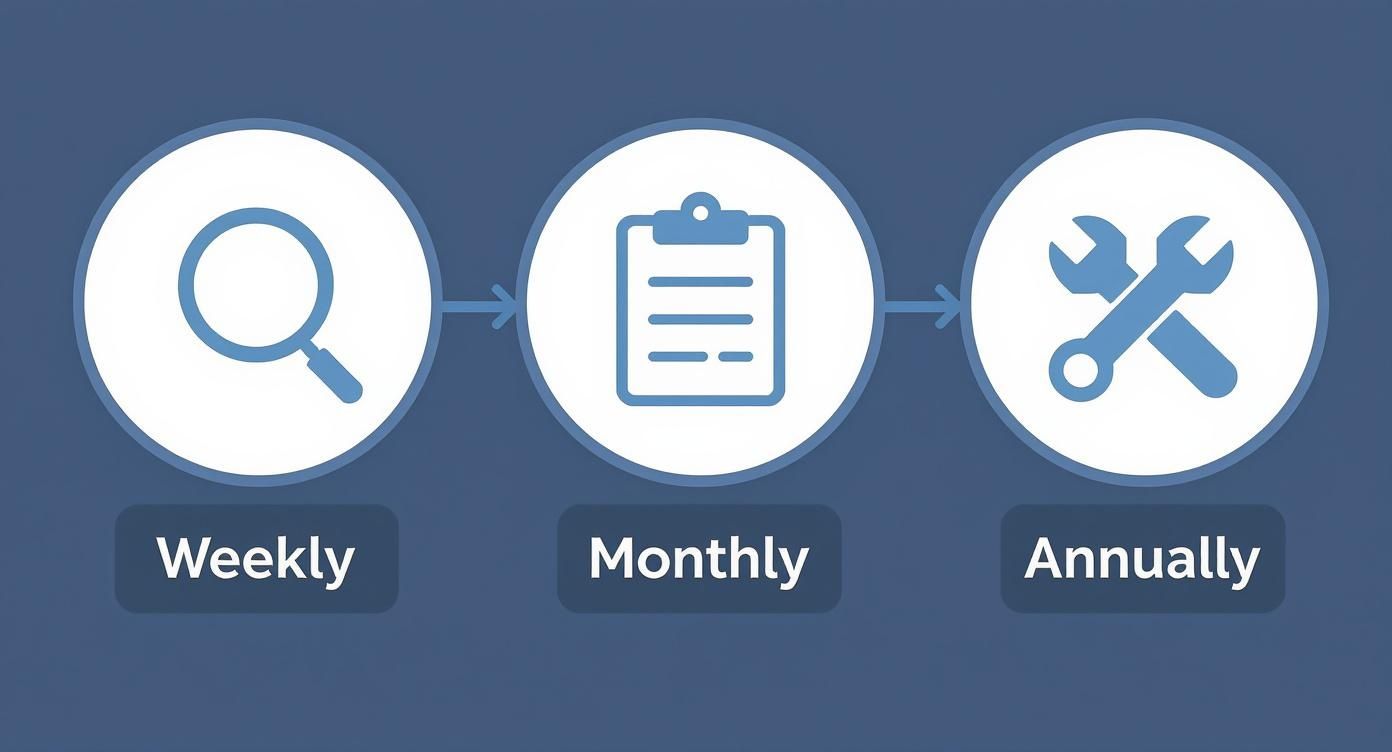
As you can see, it's a mix of quick visual inspections and more in-depth annual servicing that creates a complete protection plan for your home backup system.
The Real Cost of Neglecting Maintenance
Letting routine upkeep slide can lead to some seriously costly and stressful problems. A generator that fails to start during an outage means more than just a dark house—it could mean hundreds of dollars in spoiled food, no power for critical medical equipment, or a complete halt to your work-from-home day. Unsurprisingly, emergency repair calls are always more expensive than planned service visits.
By treating maintenance as an essential part of your power independence, you ensure your system roars to life the second the grid goes down. That's true peace of mind.
On top of that, a well-documented service history is usually required to keep your manufacturer's warranty valid. Skipping a professional tune-up could leave you on the hook for major repair costs that would have otherwise been covered. For a deeper dive into why a reliable system is so crucial, you can explore the benefits of a Generac standby generator in our related article.
Connecting Maintenance to California Living
Here in California, our environment plays a huge role in your generator’s health. Dust from our dry seasons, salty air near the coast, and intense summer heat all put extra stress on your unit's components. A standard maintenance schedule is a good baseline, but our local climate makes it absolutely critical.
Regular checks ensure that:
Air filters aren't clogged with dust and debris.
Corrosive salt air hasn't damaged sensitive electrical connections.
The engine is ready to perform reliably in extreme temperatures.
To help you keep track of everything, we've put together a simple table outlining the key tasks and their recommended timing.
Your At-a-Glance Generac Maintenance Timeline
This simple table outlines the key maintenance tasks and their recommended frequencies, helping you visualize your home backup generator's needs throughout the year.
Task | Frequency | Who Performs It |
|---|---|---|
Visual Inspection & Test Run | Weekly or Monthly | Homeowner |
Check Oil & Coolant Levels | Monthly | Homeowner |
Inspect Battery & Connections | Quarterly | Homeowner/Professional |
Full Service & Tune-Up | Annually or Every 200 Hours | Professional |
Change Oil, Filters & Spark Plugs | Annually | Professional |
Load Bank Testing | Annually | Professional |
This schedule provides a solid foundation for keeping your Generac in prime condition, ready to support you through any power outage, any time of year.
Ready to secure your home’s power supply with a reliable maintenance plan? Contact RC Generators and Electric today to schedule your professional service and enjoy uninterrupted peace of mind.
Simple Checks Every Homeowner Should Perform
You don't need to be a generator technician to play a huge part in keeping your home backup system reliable. While the professional annual service is non-negotiable, it’s the simple things you do between those visits that guarantee your generator is always ready to go. Think of yourself as the first line of defense for your home's power.
These quick visual inspections can catch a tiny issue before it balloons into a major headache, especially with California's demanding climate. Spending just a few minutes each month is a small price to pay for the peace of mind that your Generac will fire up without a hitch when the next outage hits.
Your Monthly Visual Walk-Around
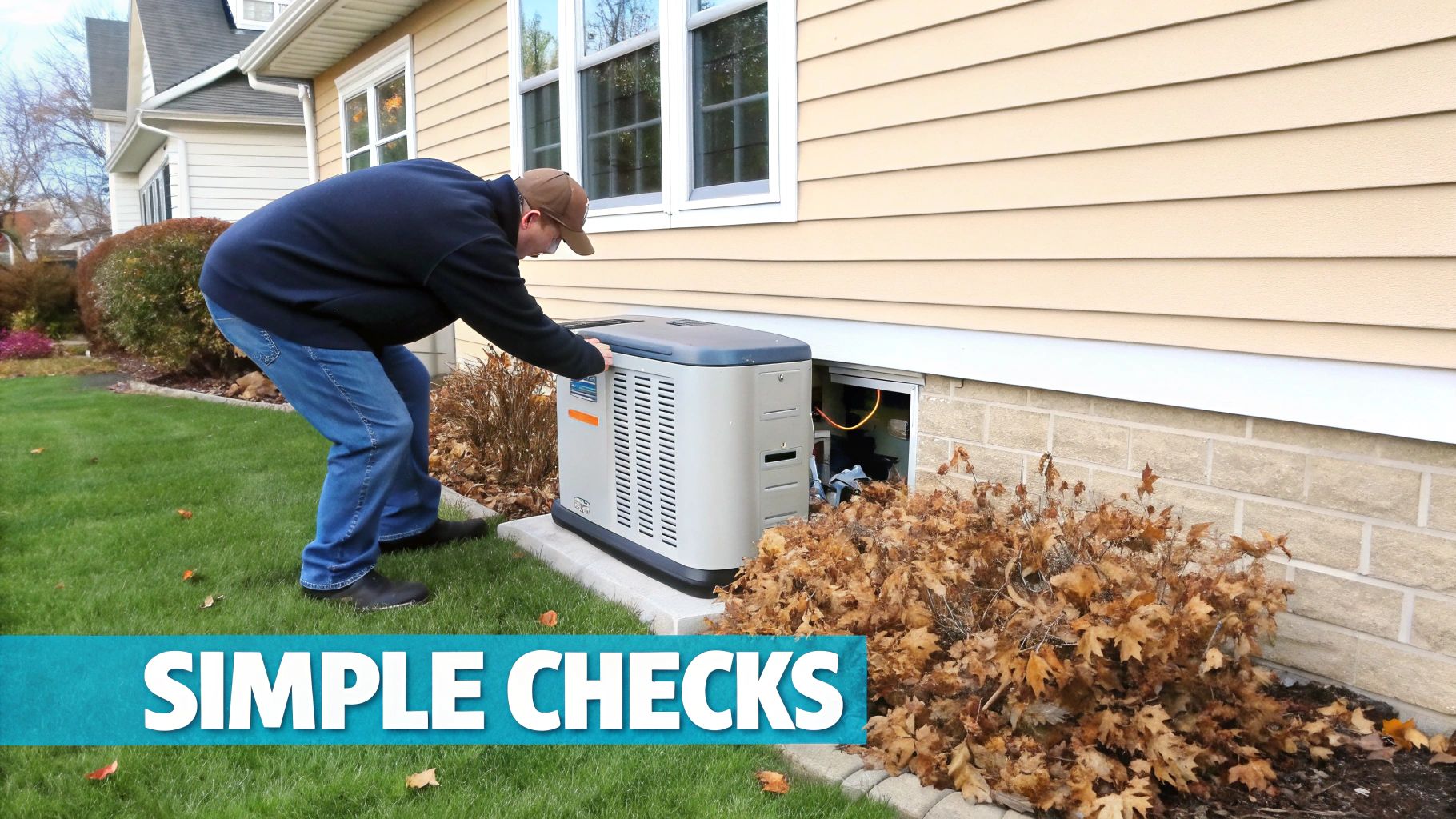
One of the most effective habits you can build is a simple walk-around inspection of your generator. You're not taking anything apart—you're just using your eyes and ears to spot anything that seems off.
Once a month, make a habit of checking these things:
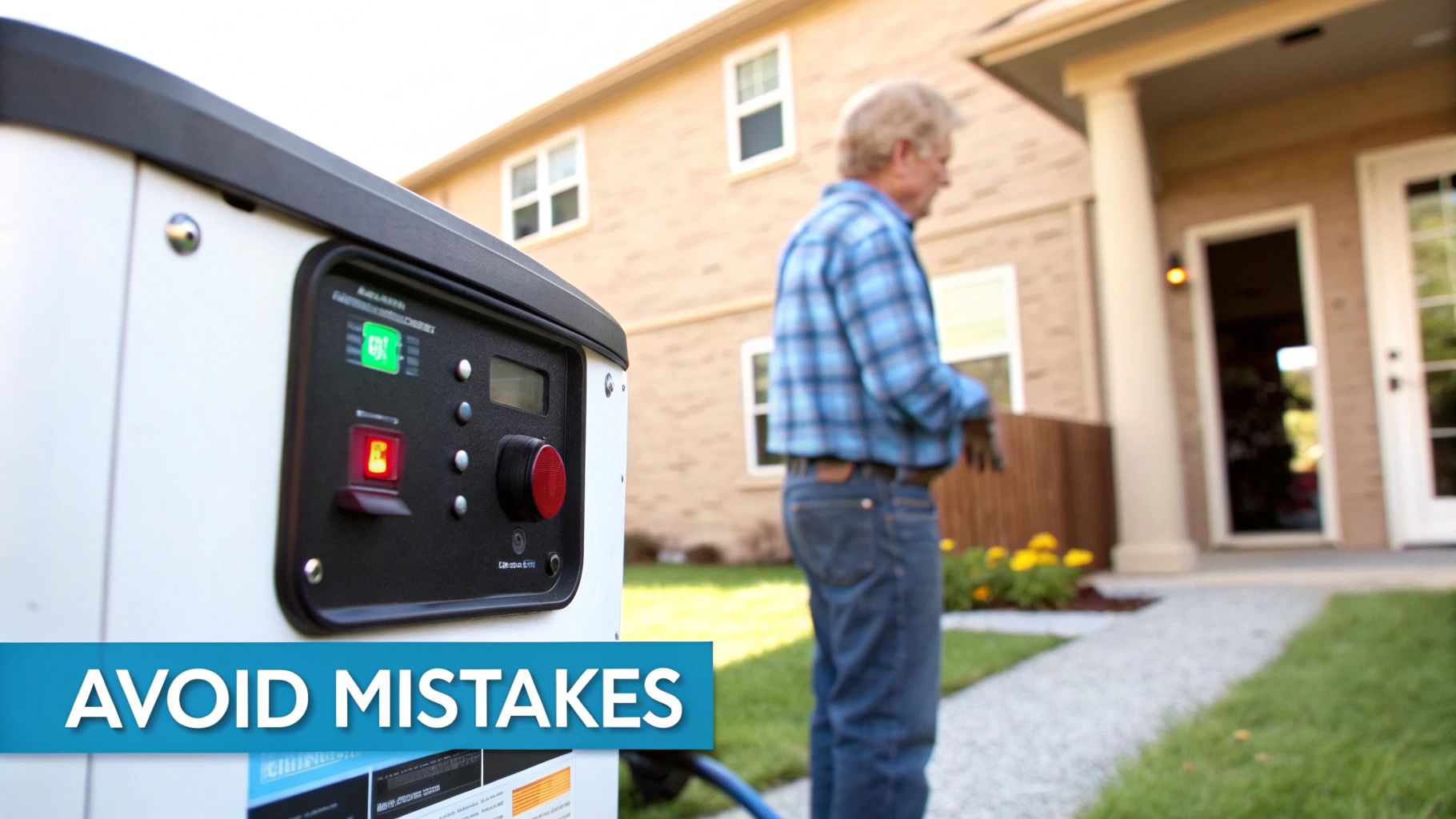
Check the Status Light: The first thing to look for is the little status indicator light on the outside of the unit. A solid green light is the all-clear signal, meaning your generator is ready. If that light is yellow or red, it’s an early warning that something needs attention from a pro.
Keep It Clean and Clear: Your generator needs to breathe. Make sure the area around it is totally free of leaves, grass clippings, overgrown bushes, or anything else that could block airflow. We recommend keeping a clearance of at least three to five feet on all sides to prevent overheating and reduce fire risk.
Look for Leaks: Take a quick peek at the ground under and around the generator. Any puddles or fresh spots of oil, coolant, or fuel are a dead giveaway that something is wrong. Catching a small drip early is always better than finding a major leak in the middle of a storm.
Inspect for Pests: Critters love the shelter a generator enclosure provides. Check for chewed wires, nests, or other signs that mice or rodents have moved in. It only takes one chewed wire to keep your generator from starting when you need it most.
This whole routine takes less than five minutes, but the value is immense. It ensures your system is actively monitored all year long, not just during its annual service appointment.
A simple monthly check can be the difference between a generator that starts instantly and one that fails when you need it most. It's the small, consistent actions that guarantee big results.
Verifying the Weekly Self-Test
One of the best features of a Generac home backup system is its automatic weekly self-test. For about 12 minutes each week, your generator starts up and runs a diagnostic cycle without actually powering your home. This "exercise" is crucial because it circulates the engine oil and confirms all the mechanical parts are ready for action.
While the test is automatic, you should still make sure it's happening. Modern Generac models are pretty quiet, but you can usually hear it run if you're outside at the scheduled time.
You can also pop the lid and look at the control panel, which will show the date and time of the last exercise. Seeing that it ran successfully is a great confidence booster. If you notice it has missed a test, that's a sign it's time to call in a technician.
Quarterly Checks for Added Security
Every three months or so, it's smart to go a little deeper than your monthly walk-around. These extra checks add another layer of preventative care.
Exterior Enclosure: Wipe down the generator's casing with a damp cloth. This isn't just about appearances; it helps prevent rust and corrosion, which is a real concern for homes in coastal California communities with salty air.
Battery Terminals: Without touching or disconnecting anything, just take a look at the battery terminals. You’re looking for any corrosion, which usually looks like a white or greenish powder. That buildup can stop the battery from delivering enough power to start the engine.
Check the Oil Level: Just like your car, your generator has an oil dipstick. When the generator is cool, pull the dipstick out, wipe it clean, push it all the way back in, and pull it out again. If the level is low, it might point to a small leak or oil consumption that your technician needs to look at during your next service.
These homeowner-friendly checks are a vital part of a complete Generac generator maintenance schedule. They put you in control of your home’s energy independence.
If you spot something concerning during your checks—like a persistent warning light or signs of a leak—don't wait. Contact RC Generators and Electric to have one of our certified technicians in California diagnose the issue and keep your system in peak condition.
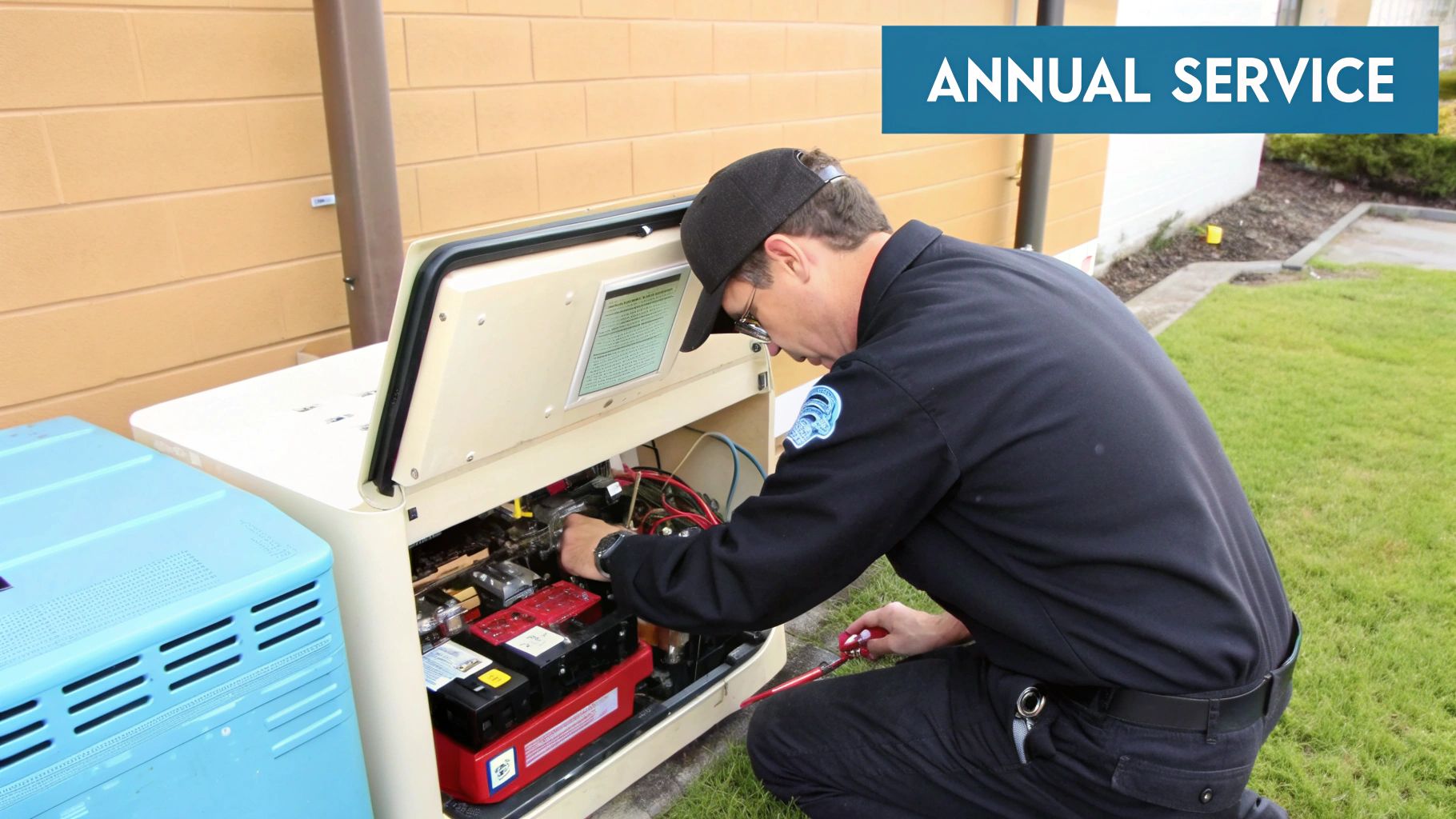
What Happens During a Professional Annual Service
Your monthly walk-around checks are great for catching obvious issues, but the annual professional service is where the real magic happens. This is the deep-dive, comprehensive tune-up that guarantees your Generac home backup system is in peak condition when you need it most.
Think of it like an annual physical for your generator. A certified technician has the right tools, factory training, and hands-on experience to check its vital signs and make sure every single component is ready for an emergency.
So, what exactly does a professional do during this crucial visit? It’s far more than a quick look under the hood. It’s a systematic process designed to service, test, and validate every critical function of your generator, ensuring it will perform flawlessly under the stress of a real California power outage.
The Heart of the Matter: Engine Maintenance
The engine is the core of your generator, and keeping it healthy is priority number one. Just like your car's engine, it needs the right fluids and parts to run smoothly and avoid premature wear and tear.
A technician’s first stop is almost always the engine's lubrication system. They will:
Drain and Replace the Engine Oil: Old oil breaks down, losing its ability to protect moving parts. Fresh, high-quality synthetic oil is added to reduce friction and heat—especially important during California's hot summers.
Replace the Oil Filter: The oil filter traps tiny particles and contaminants that can damage an engine over time. A new filter keeps the fresh oil clean and effective for the next year.
Next up are the ignition and fuel systems. These components are essential for a reliable startup the moment the power goes out. This part of the service involves replacing the spark plugs, which are responsible for creating the spark that starts the engine. Over time, spark plugs get worn, leading to a weak spark and a generator that struggles to start.
Finally, the air filter is inspected and replaced. A clogged air filter restricts airflow to the engine, forcing it to work harder and burn more fuel. In dusty California environments, a clean air filter is non-negotiable for efficient operation.
A Comprehensive System Health Check
Beyond the basic engine tune-up, a professional service includes a thorough inspection of the entire system. This is where a trained eye makes all the difference. Technicians will inspect the fuel system, verify the battery's health, and test all electrical connections.
A professional tune-up is about more than just replacing parts. It's about a trained eye spotting potential problems—like a frayed wire or a corroded terminal—that could cause a failure down the road.
This is where professional expertise really shines. An experienced technician can identify subtle signs of wear or impending issues that a homeowner would easily miss. They check everything from the fuel lines for tiny cracks to the exhaust system for blockages, ensuring every part of the machine is sound.
Testing the Brains of the Operation
Your Generac has a sophisticated control panel and transfer switch that act as its brain, constantly monitoring utility power. During an annual service, the technician will put these electronic components through their paces.
They will verify the firmware is up to date and check the control panel for any logged fault codes. These codes provide a history of the generator's performance and can point to intermittent issues that need to be addressed. If you've ever seen an error code and wondered what it meant, our article on Generac generator troubleshooting can help shed some light on common issues.
The technician will also simulate a power outage to ensure the automatic transfer switch (ATS) functions correctly. This is the ultimate test of readiness. It confirms the generator starts automatically, the ATS seamlessly switches your home's power from the grid to the generator, and then switches back once utility power is restored.
The Final Report and Your Peace of Mind
At the end of the service, the technician will clean the entire unit, inside and out, and give you a detailed report of everything they did. This document lists all the parts that were replaced, the tests that were performed, and any recommendations for future attention.
This professional annual service is the cornerstone of any effective Generac generator maintenance schedule. It provides the assurance that your investment is protected and that your family will have reliable power when it matters most.
Don't leave your home's safety to chance. Call RC Generators and Electric today to schedule your professional annual service with our certified California technicians and ensure your generator is ready for anything.
How to Extend Your Generator's Lifespan
A Generac home backup generator is a serious investment in your family’s comfort and safety. Like any other major piece of machinery, its lifespan really comes down to smart, proactive care. If you want to get decades of reliable service out of your unit, you need to shift your mindset from simply maintaining it to actively protecting it.
The goal here isn't just to keep it running; it's to get the absolute best return on your investment, ensuring you have power for years beyond what most people expect.
Location is Everything
One of the most important steps in protecting your generator happens before it’s even turned on. Where you decide to install the unit has a massive impact on how it holds up against the elements, which is a big deal here in California. A thoughtfully chosen spot can shield your generator from a ton of unnecessary wear and tear.
When you're picking a location, keep these factors in mind:
Shelter from Direct Sun: That intense California sun can be brutal. It can degrade plastic components over time and force the unit to run hotter than it should. Simply placing it on a shadier side of your home can make a surprising difference.
Protection from Coastal Air: If you live near the coast, salty air is your generator’s worst enemy. It’s incredibly corrosive and can eat away at the metal enclosure and sensitive electrical contacts. Installing the unit where it's at least partially shielded by your home or some landscaping can dramatically slow this process down.
Away from Dust and Debris: For those of us further inland, dust and dirt are the main culprits. Try to avoid placing your generator right under trees that drop a lot of leaves or near dusty patches of yard that can clog up the air intake vents.
Use Only Manufacturer-Approved Parts
When it's time for a repair or even just a routine service, insisting on Original Equipment Manufacturer (OEM) parts is absolutely critical. It might be tempting to save a few bucks with aftermarket parts, but they often don't meet the precise specifications that Generac designs for.
Using the wrong parts can cause a whole host of problems:
Reduced performance and efficiency.
A much higher risk of premature failure.
Voiding your manufacturer's warranty.
Any professional, reputable technician will always use genuine parts. It’s a small detail that makes a huge difference in the long-term reliability of your generator and, just as importantly, keeps your warranty intact.
Understanding Your Generator's True Lifespan
With the right care, a Generac generator can last an incredibly long time. You might see an operational lifespan rated for around 3,000 hours, but for a home backup system, that number can be a bit misleading. The truth is, most standby units spend the vast majority of their time just waiting, running only for their weekly self-tests and during the occasional power outage.
Because of this, a well-maintained generator can easily serve your home for 25 or even 30 years. You can learn more about what really determines your generator's age by exploring the factors influencing generator longevity.
Think of your generator's lifespan in terms of "miles on a car." A car with 30,000 easy highway miles is in much better shape than one with 30,000 miles of rough, stop-and-go city driving. It's the same principle—a generator that only runs for brief tests will last far longer than one used constantly off-grid.
Protecting your investment is all about taking a holistic approach. It starts with a smart installation, continues with a consistent, professional Generac generator maintenance schedule, and is backed up by using only the best parts for any repairs. These simple but crucial steps will make sure your generator is a reliable partner for your home for decades to come.
If you’re ready to protect your investment with professional care, our licensed electricians are here to help. Contact RC Generators and Electric to schedule a service visit and ensure your generator is set up for a long and reliable life.
Common Maintenance Mistakes to Avoid
We’ve all been there—trying to cut a corner or save a few bucks. But when it comes to your home's backup power, some of those "shortcuts" can turn into costly dead ends. A well-maintained Generac is a lifeline during an outage, but a few common oversights can leave you right back in the dark.
Understanding these pitfalls is key for California homeowners who want to protect their investment and ensure their generator is always ready to fire up.
One of the most frequent mistakes we see is people confusing the weekly self-test for a real tune-up. That quick, 12-minute automated exercise is great—it circulates oil and confirms the basics. But it’s not a substitute for a full annual service.
Think of it this way: starting your car in the driveway doesn't mean it's ready for a cross-country road trip. The self-test won't check your oil life, the condition of your filters, or the true health of your battery.
Ignoring Your Generator's Warning Signs
Your Generac is built to communicate with you, and its primary language is the status indicator light on the side of the unit. A solid green light is the all-clear signal. But if you see yellow or red, your generator is telling you it needs professional attention.
Ignoring these warnings is a gamble you don’t want to take.
A yellow light often means a non-critical fault has been detected, or it's simply a reminder that routine maintenance is due. The generator might still run, but this is an early warning that needs to be checked out.
A red light signals a critical problem. This means the generator failed its self-test and will not run during an outage until a certified technician resolves the issue.
These lights are your generator’s way of asking for help. A quick call to a professional can turn a minor issue into a quick fix, long before it becomes an emergency during the next Public Safety Power Shutoff.
A yellow warning light isn't a suggestion; it's your generator telling you that a problem is developing. Addressing it early is the difference between a quick fix and an emergency repair in the middle of a blackout.
The Dangers of DIY Repairs
In the age of YouTube tutorials, it's tempting to try and tackle maintenance yourself to save some money. While changing the oil on a lawnmower is one thing, a home backup generator is a different beast entirely. This isn't a simple portable unit; it's a sophisticated machine tied directly into your home’s electrical system.
Going the DIY route on a home backup system can have some serious consequences. For starters, you could easily void your manufacturer's warranty. Generac often requires proof of service by a certified dealer to keep your warranty valid.
Even more importantly, an incorrect repair can create a serious safety hazard or cause damage that costs far more to fix than a professional service call ever would. Tasks like checking the transfer switch or making adjustments to the engine require specialized tools and deep expertise. It’s always safer to leave the annual service to licensed electricians who live and breathe these systems.
When it comes to the health of your home's power supply, prevention is always better than a cure. Sticking to a professional Generac generator maintenance schedule and avoiding these common slip-ups is the best way to guarantee your lights stay on when you need them most.
If your generator is flashing a warning light or it's time for its annual check-up, don't put it off. Contact RC Generators and Electric to have our certified California technicians provide the expert service your home deserves.
Partner with California's Home Backup Experts
Following a proper Generac generator maintenance schedule is a team effort. This guide gives you the confidence to handle the simple visual checks, but when it comes to the heavy lifting, nothing beats the skill of a certified professional.
At RC Generators, we specialize exclusively in home backup systems—we don't service portable units. That specialization gives us a deep, hands-on understanding of the equipment that keeps your home safe and powered during California outages.
Our team is made up of licensed electricians, not just generator technicians. What's the difference? It means we see the whole picture. We understand your home's entire electrical ecosystem, from the generator itself to the automatic transfer switch that ties everything into your main panel. That's how we deliver a level of safety and reliability that ensures every component works perfectly together when an outage hits.
Why Choose a Licensed Electrician
Bringing in a licensed electrician for your generator service isn't just a good idea—it’s a critical one. Here’s what that expertise brings to the table:
System-Wide Expertise: We can diagnose problems that go far beyond the generator, making sure your home's wiring and panels are safe and up to code.
Guaranteed Safety: A generator is a powerful piece of equipment. We make sure every connection is secure and every component is installed correctly to prevent hazards.
Future-Proofing Your Home: Our work doesn’t stop at generators. We also handle services like Tesla Powerwall installations and EV charging stations, positioning us to manage all your modern energy needs under one roof.
Choosing a certified expert isn't just about maintaining equipment; it’s about investing in the safety and reliability of your entire home's power system. It’s the ultimate peace of mind.
And if you're just starting to explore backup power, our Generac generator installation guide offers a detailed look at the process from start to finish.
When you’re ready to ensure your power stays on no matter what, partner with the California experts who specialize in complete home energy solutions.
Contact RC Generators and Electric today to schedule your annual maintenance and let our licensed professionals provide the expert care your home deserves.
Your Top Generac Maintenance Questions Answered
We get a lot of questions from California homeowners about how to keep their Generac generators ready for anything. Here are the answers to the ones we hear most often.
How Often Should I Service My Generac in California's Climate?
While Generac's official recommendation is for professional service once a year, California's climate can be tough on equipment. Things like dust, extreme heat, and the salt air along the coast can really speed up wear and tear.
Think of an annual professional tune-up as the bare minimum.
Between those professional visits, you should be doing your own quick visual checks every month. And if your area sees a lot of long outages, you might need to change the oil more often—just like a car that sees heavy use needs more frequent service.
Can I Do the Annual Maintenance Myself?
Doing the simple visual checks and keeping the unit clean is a great idea for any homeowner. But when it comes to the full annual service for a home backup system, that's a job for a certified technician.
This isn't just an oil change. The annual service involves tasks like checking fuel pressure, adjusting the engine, and testing the transfer switch. These things require specialized tools and deep knowledge of the system. Trying to do it yourself can easily void your warranty if something goes wrong. A pro not only gets it done right but ensures your generator is genuinely prepared for an emergency.
Attempting complex DIY repairs on a home backup system can lead to costly damage or, worse, create significant safety hazards. It's a job best left to licensed professionals who understand the entire electrical system.
What Happens If I Skip a Year of Maintenance?
Skipping a service is a gamble. Your generator might still pass its weekly self-test, making you think everything is fine. But beneath the surface, hidden problems like degrading oil, a weakening battery, or a clogged filter could be developing.
These are the kinds of issues that don't show up until the generator is under a heavy load during a real outage—which is the absolute worst time to discover a failure. Plus, keeping up with consistent service records is essential for keeping your manufacturer's warranty valid. Staying on schedule protects both your power and your investment.
Keeping your home powered and your family safe is our top priority. For professional, reliable service from licensed electricians who specialize in home backup systems, trust RC Generators and Electric.
Schedule Your Generac Maintenance Service in California Today