
Learn how to test generator safely with a step-by-step guide on safety checks, load testing, and home standby readiness.
Date
Dec 23, 2025
Author
RC Admin
Read
9 min
Testing a home standby generator is about more than just flipping a switch—it’s a quick process to verify the entire system works as a team, from the engine roaring to life to the transfer switch seamlessly powering your home. The simplest check is the weekly automated "exercise," but a true "load test" is like a dress rehearsal for an actual power outage in California, confirming your investment is ready when you need it most.
Why You Must Test Your Home Generator
Picture this: a wildfire warning flashes across your screen, and just like that, the grid goes dark. Your Generac home backup generator is now your lifeline, but only if it performs exactly as it should. Owning a home standby generator, like a Generac or a solar-powered backup system, is the first big step toward energy independence, but regularly testing it is what delivers genuine peace of mind.
This isn't just about hearing the engine start. It's about knowing the entire backup system will function perfectly the moment you're cut off from the utility. For California homeowners, where power shutoffs during fire season are a harsh reality, that reliability is completely non-negotiable.
The Exercise Cycle vs. The Load Test
It’s vital to understand the difference between the two main types of tests. Think of one as a light jog around the block and the other as a full-on sprint to simulate game day. Knowing which is which is key for your Generac system.
The Exercise Cycle: This is a simple, no-load test that modern Generac home standby generators perform automatically every week. The generator kicks on and runs for about 15-20 minutes without actually powering your home. Its main job is to circulate engine oil, keep the battery charged, and make sure the engine is primed and ready to go.
The Load Test: This is the real deal—a manual, comprehensive test that mimics an actual power outage. It confirms the generator starts and that the automatic transfer switch (ATS) correctly disconnects your home from the grid and connects it to generator power. This is the only way to be 100% sure your lights, refrigerator, and other essentials will actually turn on.
A successful load test proves that every component—from the engine and fuel lines to the transfer switch—is working in perfect harmony. It’s what transforms a major inconvenience like a blackout into a minor, manageable event.
Building Confidence and Ensuring Readiness
For homeowners in places like Los Angeles and Ventura County, a Generac generator is more than a luxury; it's a critical piece of your home's safety equipment. By learning the simple steps for testing your home standby generator, you empower yourself to spot small issues before they become big problems.
A sputtering engine during a weekly exercise or a transfer switch that hesitates for a second too long are early warning signs. Catching these tells allows you to schedule professional maintenance before an emergency strikes. Don't wait for a crisis to discover a problem.
Is it time to verify your Generac home backup system is ready for the next outage? If you're unsure about performing a load test or notice anything unusual, contact the certified electricians at RC Generators for a professional inspection and service.
Your Essential Pre-Test Safety Checklist
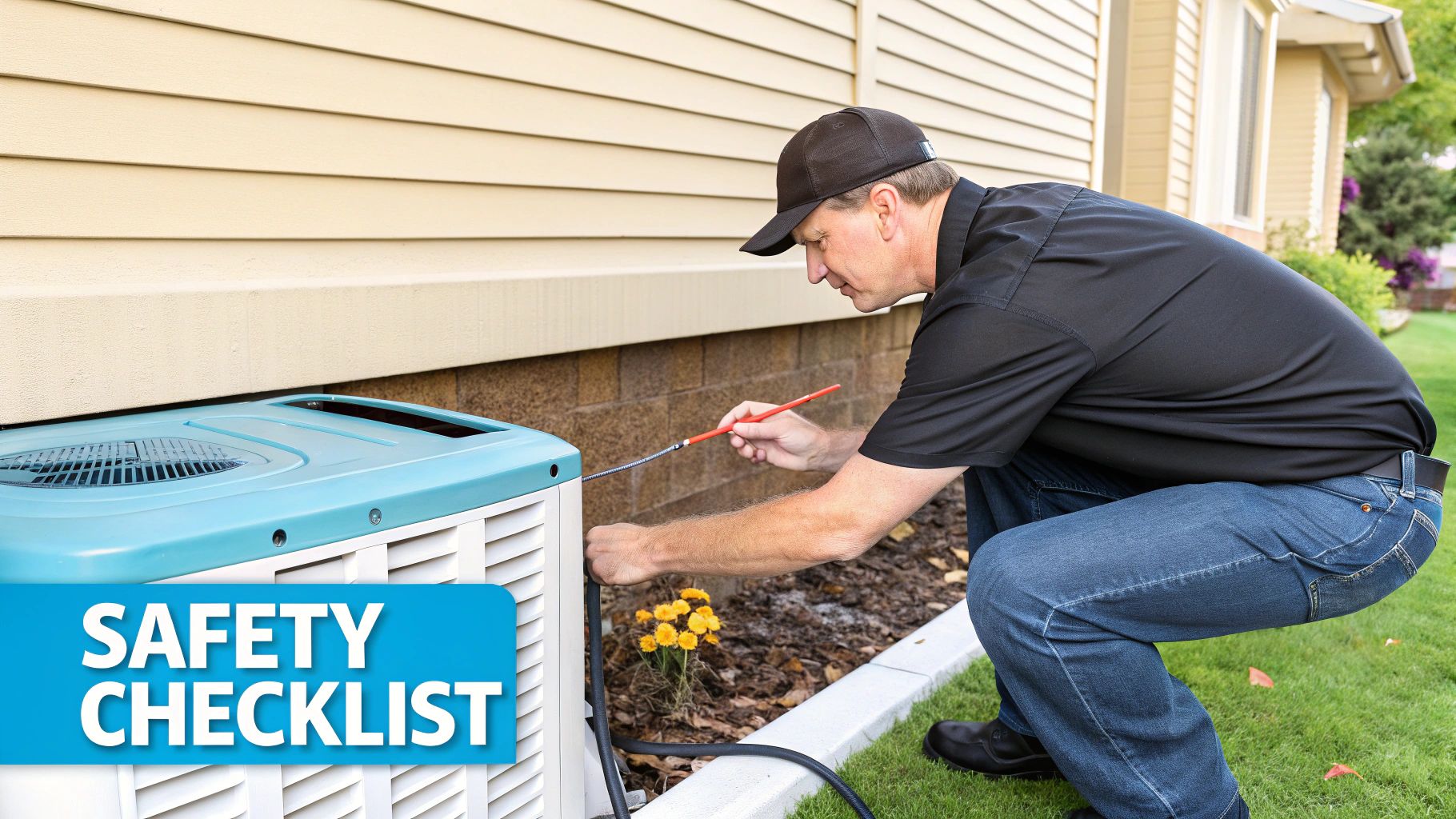
Before you even think about firing up your Generac for a test, you have to put safety first. A home backup generator is a serious piece of equipment, and spending just a few minutes on prep work can prevent a major headache—or worse. This isn't just about checking off boxes; it's about making sure the area is secure before you simulate an outage.
The first thing to do is a simple walk-around. A good visual inspection tells you a lot. Your goal is to create a clean, safe zone around the unit, which is especially critical here in California where dry brush can become a serious fire hazard.
Creating a Safe Zone
Start by clearing away any debris from around your Generac generator. Get rid of leaves, branches, tall grass, or anything else that could catch fire. You need at least three to five feet of clear space on all sides. This isn't just for fire safety—it also ensures the generator gets proper airflow so it doesn't overheat during the test.
Next, take a look at the generator's enclosure itself. Make sure every panel is closed and latched tight. This keeps critters from moving in and protects the internal components from the weather. Look for any obvious signs of damage, like dents or corrosion, and check for fluid leaks on or underneath the unit. A puddle of oil or coolant is a definite red flag, and you'll want to get that checked out by a pro before you go any further.
Pro Tip: Keep a dedicated logbook for your Generac generator. Jot down the date, what you saw during your inspection, and anything you noticed during the test. This creates a priceless service history for you and any technician who works on your system down the line.
Checking Fluids and Fuel
Just like your car, your generator’s engine needs the right fluid levels to run safely. Before you start it, you absolutely have to check the engine oil. Find the dipstick, pull it out, and wipe it clean. Then, push it all the way back in and pull it out again for an accurate reading. The oil level should be right between the 'Full' and 'Add' marks.
Before any test, you'll want to run through a quick checklist of the basics. Here’s a simple table to keep you on track.
Essential Pre-Test Safety and Inspection Checklist
Check Area | What to Look For | Why It's Important |
|---|---|---|
Clearance | 3-5 feet of clear space on all sides | Prevents overheating and reduces fire risk. |
Enclosure | Securely latched panels, no visible damage or corrosion | Protects internal components and prevents pest intrusion. |
Leaks | Puddles of oil, coolant, or fuel underneath the unit | Indicates a potential engine problem that needs immediate attention. |
Engine Oil | Level is between the 'Full' and 'Add' marks on the dipstick | Protects the engine from damage due to low oil. |
Fuel Line | Valve for natural gas or propane is in the 'On' position | Ensures the generator has fuel to start and run the test. |
Electrical | Know the location of your main breaker and generator disconnect | Critical for safely simulating an outage and isolating the system. |
Making sure all your levels are correct is key for a good test. Using the right essential generator maintenance fluids also makes a huge difference in performance.
You also need to make sure your fuel source is ready to go. If your unit runs on natural gas or propane, find the fuel line valve and confirm it’s in the 'On' position. For a more complete guide, our detailed generator maintenance checklist breaks down everything you should be looking at.
Identifying Key Electrical Components
Finally, get familiar with your home's electrical setup before you're in the dark. You need to know where two specific components are:
The Main Circuit Breaker: This is inside your home's main electrical panel. You'll use it to manually disconnect from the grid to simulate an outage.
The Generator Disconnect Switch: This is usually a separate breaker near the generator or transfer switch that lets you completely isolate the generator from your home.
Knowing where these are is fundamental to running a safe load test. And it’s a big deal—the global market for generator load testing was around USD 1.2 billion in 2023 and is expected to hit USD 2.4 billion by 2032. That growth shows just how much homeowners and businesses are investing to avoid the high cost of blackouts, something we all worry about in California.
If you're ever unsure about any of these steps or spot something that doesn't look right, don't take a chance. For homeowners in Los Angeles or Ventura County, the smartest and safest thing to do is call RC Generators. Our certified techs can handle a professional inspection and make sure your Generac system is ready for whatever comes its way.
Running a No-Load Test: The Weekly Exercise
This is probably the simplest yet most important test you can run on your home standby generator. In fact, most modern Generac systems are designed to do it for you, running an "exercise cycle" automatically, usually once a week. Think of it as a quick jog around the block—it keeps the system limber and ready for a marathon.
Still, knowing how to kick off this test yourself is a skill every Generac owner should have.
The no-load test is all about the engine. The generator will start up and run for about 15 to 20 minutes without actually sending any power to your house. Its purpose is purely mechanical: to circulate engine oil, keep the seals lubricated, top off the battery, and burn off any moisture that’s settled in the fuel system or exhaust. It's a small bit of prevention that can add years to your unit's life.
Kicking Off the Manual Test
Running the test yourself is easier than you think. On most Generac control panels, you’ll find a straightforward switch or button that lets you toggle between three modes: Auto, Off, and Manual.
Find the Control Panel: Just lift the main lid of your generator enclosure, and it’ll be right there.
Flip it to Manual: Move the controller switch from ‘Auto’ to ‘Manual.’ This is the signal for the generator to fire up its engine.
Let It Run: The generator should start within a few seconds. Now, just let it run for the full recommended cycle, which is typically 15-20 minutes.
That’s it. This process doesn't touch your home's main breaker or the automatic transfer switch (ATS). It’s just a self-contained engine checkup, making it a safe and simple way to get comfortable with your system’s basic operation.
What to Listen For: A Healthy Hum
While the generator is running, your main job is to use your ears. Over time, you’ll get to know the normal, healthy sounds of your particular model. A happy Generac should put out a steady, consistent hum—the sound of a confident engine running smoothly at its designated speed.
Listen for anything that deviates from that baseline. Are you hearing something… odd?
Sputtering or Hesitation: This might point to a fuel delivery problem, a clogged filter, or moisture in the system. Basically, it’s a sign the engine is struggling to maintain a consistent RPM.
Loud Clanking or Grinding: These are serious red flags. Sharp, metallic noises often mean there are internal engine problems that need a professional eye, and fast. Shut the unit down immediately if you hear anything like this.
Excessive Vibration: A little bit of shaking is normal, but if the whole unit seems to be rattling more than usual, you could have a mounting issue or an imbalanced engine component.
Your ears are the best diagnostic tool you have during a no-load test. The goal is to catch these subtle audio clues early, so you can fix a small problem before it becomes a big one during a real power outage in your California home.
Wrapping Up and Switching Back to Auto
Once the test cycle is done, the last step is crucial. You have to remember to return the generator's controller to the 'Auto' position. If you forget, your generator will not start automatically when the power goes out. It'll just sit there, waiting for you to manually start it, which defeats the whole purpose of having a standby system.
After you switch it back to ‘Auto,’ the generator will run through a quick cool-down period before shutting off completely. You should see a green light or some other confirmation on the control panel, letting you know the system is armed and ready to protect your home.
This simple weekly or bi-weekly routine builds your confidence and ensures the heart of your backup power system is always in fighting shape. If you're ever unsure about the sounds you're hearing or how to operate your specific model, don't guess. For homeowners in Los Angeles and Ventura County, a quick call to RC Generators can give you the professional guidance and peace of mind you need.
Performing a Real-World Load Test
Okay, you’ve confirmed the engine is running smoothly with a no-load test. Now it’s time for the real dress rehearsal. A real-world load test is where you see the entire system—engine, transfer switch, and all—perform under pressure, just like it would during an actual outage here in California. This is the only way to be absolutely sure everything works together to keep your family safe.
The process is all about simulating a power outage to make sure the generator can handle your home's most important electrical needs. It sounds more complicated than it is, but you'll want to pay close attention to the details to do it safely.
Simulating a Power Outage Safely
The heart of a load test is manually cutting your home off from the grid, which forces your standby system to jump into action. Before you start, give your family a heads-up that you’ll be turning off the power for about 30 minutes.
First, find your home’s main circuit breaker, usually located in the main electrical panel. With the generator still set to 'Auto' mode, firmly flip that main breaker to the 'Off' position. This is what simulates a utility power failure.
Within a few seconds, you should hear your Generac start up on its own. Almost immediately after, you'll hear a distinct 'clunk' from the automatic transfer switch (ATS). That’s the sound of your home being seamlessly moved from grid power to generator power. If everything is working right, your lights will pop back on, running completely off your standby system.
This is the moment that proves your investment was worth it. Seeing your home light back up while the grid is technically "down" brings an incredible sense of security, confirming your system is ready for anything from fire season blackouts to winter storm outages.
Applying a Realistic Electrical Load
Now that the generator is powering your home, the next step is to actually put it to work. You don't need to turn on every single thing in the house, but you should activate a few key circuits to mimic a real outage scenario.
Think about what you would truly need running if the power went out:
Essential Appliances: Flip on your refrigerator and freezer. Their compressors draw a big surge of power when they kick on, which makes them a great test for your generator.
Lighting: Turn on lights in a few different rooms.
Electronics: Power up a television or a computer.
The idea here is to apply a meaningful load without trying to max out the generator's capacity. You’re just confirming it can sustain your most critical circuits. If you're curious about how much power different appliances use, check out our guide on how to calculate your home's electrical load. Let the generator run under this load for at least 20-30 minutes.
The infographic below gives a simple overview of starting and monitoring a manual test.
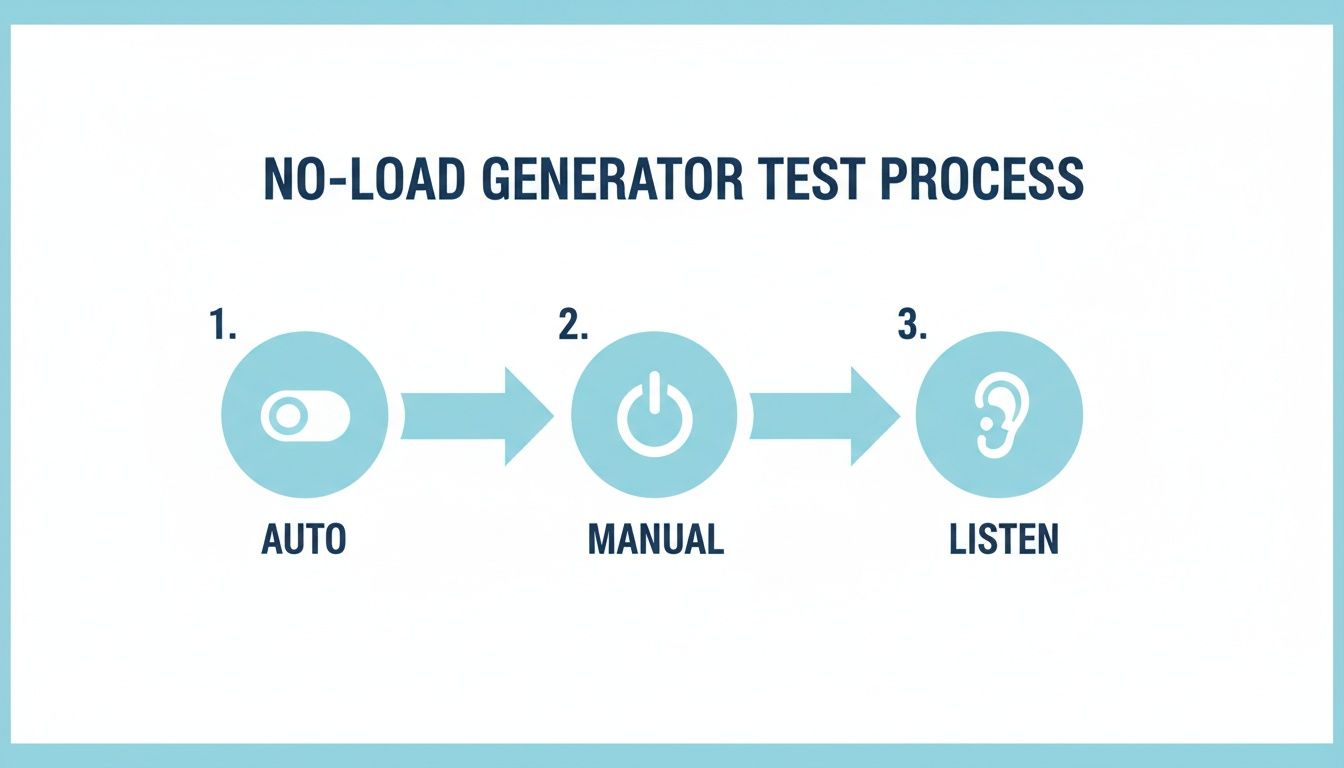
As this shows, it's really about switching from automatic to manual and then just listening. Pay close attention to how the engine sounds. Does it maintain a steady hum, or does it sound like it's struggling or surging? A healthy generator should handle a moderate load without much change in engine noise.
Restoring Utility Power
Once your 20-30 minute test is done, it's time to bring your home back to grid power. The process is just the reverse of how you started.
First, turn off the appliances and lights you were using for the test. Then, head back to your main electrical panel and flip the main breaker back to the 'On' position. You should hear that same 'clunk' from the ATS as it transfers the electrical load back to the utility.
Your Generac will keep running for a minute or two to cool down before shutting itself off. The most important step here is to double-check that the generator's control panel is still set to 'Auto'. This ensures it's armed and ready for the next real outage.
If you ran into any problems—the generator didn't start, the transfer switch failed to engage, or the engine sputtered under the load—that’s a clear sign it's time to call in a professional. For homeowners in Los Angeles and Ventura County, don't wait. Contact RC Generators to have a certified technician diagnose the problem and get your system back in fighting shape.
Interpreting The Results And When To Call A Pro
A perfect generator test is almost boring—the engine hums to life, the transfer switch clicks over, and everything just works. Honestly, that's exactly what you want.
But what happens when the test isn't so quiet? Knowing how to spot the warning signs is just as important as knowing how to run the test in the first place. This is where your role as a diligent homeowner ends and the need for a professional electrician begins.
When you're dealing with a sophisticated piece of equipment like a Generac home standby generator, trying to DIY a fix for a serious issue is not recommended. Small symptoms can point to much bigger problems inside the engine or electrical system. Recognizing these red flags is crucial for keeping your system reliable and your family safe, especially with the threat of power shutoffs during California's fire or storm seasons.
Common Red Flags During A Test
Whether you're running a no-load or full-load test, you're on the lookout for anything out of the ordinary. Pay close attention to how the generator starts, how it runs, and how your home’s electrical system responds. Certain symptoms should be an immediate sign to stop the test and pick up the phone.
Here are the most common warning signs that your Generac generator needs professional attention:
Failure to Start: The engine cranks but never actually turns over, or maybe it doesn't even try. This is often a dead battery, but it could also point to a fuel delivery problem or a faulty starter.
Struggling or Sputtering Engine: If the generator sounds like it's choking, surging, or just can't maintain a steady RPM, you could be dealing with anything from a clogged fuel filter to an internal engine issue.
Visible Smoke: A tiny puff of white smoke on startup can be normal, but if you see continuous blue, black, or thick white smoke, you’ve got a serious problem. This usually indicates the engine is burning oil or has a bad fuel mixture.
Transfer Switch Failure: This is a big one. The generator roars to life, but your home stays dark. This means the automatic transfer switch (ATS) failed to do its one critical job.
The automatic transfer switch is the brain of your entire home backup power system. If it fails to engage, the generator's power has nowhere to go. This is never a DIY fix and requires a certified technician immediately.
For a deeper dive into this vital component, you can learn more about what a transfer switch is and how it works in our detailed guide. Understanding its function helps clarify why a failure here is so critical.
What The Warning Signs Mean
Think of these signs as your generator's way of telling you something is wrong. A strange noise isn't just a quirk; it's a symptom. Ignoring it can lead to catastrophic failure right when you need power the most.
To help you connect the dots, we've put together a quick-reference table.
Generator Test Warning Signs
Symptom | Potential Cause (Simplified) | Recommended Action |
|---|---|---|
Generator won't start | Dead battery, fuel issue, or starter failure. | Stop the test. Call a professional. |
Unusual engine noises | Sputtering, clanking, or grinding. | Shut down immediately. Call a professional. |
Visible smoke (blue/black) | Burning oil or an incorrect fuel/air mix. | Shut down immediately. Call a professional. |
ATS doesn't 'clunk' or transfer | Faulty switch, wiring issue, or control board failure. | Restore grid power. Call a professional. |
Generator overheats | Low coolant, blocked airflow, or internal issue. | Shut down immediately. Call a professional. |
This table covers the most frequent issues, but any behavior that seems off should be treated with caution. When in doubt, shut it down.
If your generator test points to a problem, knowing how to find the right help is key. While it's geared toward a different engine type, this guide on finding elite diesel engine specialists offers some great, transferable advice on how to vet and hire a qualified technician.
Don't Wait For An Emergency
The entire point of testing your generator is to find problems before an emergency strikes. If your load test reveals any of the issues we've covered, you’ve actually succeeded—you found a weakness in a controlled, safe environment.
For homeowners in Los Angeles and Ventura County, this is the moment to act. Don't wait for the next wildfire alert or storm warning. Contact RC Generators today. Our certified Generac technicians have the diagnostic tools and hands-on expertise to pinpoint the problem and perform reliable repairs, ensuring your home is truly protected when the grid goes down.
Answering Your Generator Testing Questions
Even after you've run through the steps, it's natural to have a few questions pop up. Getting comfortable with the ins and outs of your Generac home standby generator is what gives you real confidence when the lights go out. Especially here in California, where power shutoffs can roll in with little warning, being prepared means knowing your system inside and out.
We've pulled together the most common questions our technicians hear from homeowners all over Los Angeles and Ventura County. These are the things people really want to know.
How Often Should I Test My Generac Generator?
This is, without a doubt, the number one question we get. Your Generac is built to run a weekly automatic "exercise cycle." It's a short, no-load test that's absolutely vital for keeping the engine parts lubricated and the battery topped off.
But that’s only part of the story.
We strongly urge homeowners to perform a manual load test—where you actually simulate a power outage—at least twice a year. For California residents, the perfect schedule looks like this:
Once before the peak fire season kicks in around late summer or early fall.
Once before the winter storm season starts up.
This approach ensures your entire system, including the all-important automatic transfer switch (ATS), is ready to go right before you’re most likely to need it.
Is It Safe To Test My Generator In The Rain?
That’s a hard no. You should never perform a manual load test in the rain, during a storm, or in any kind of wet weather.
While your Generac home standby generator is built to run safely during a real outage in bad weather, a manual test is a different beast entirely. You have to physically interact with your home's main electrical panel to shut off the utility power. Water and high-voltage electricity are a recipe for disaster.
Always wait for a clear, dry day. Your safety is non-negotiable.
Think of it this way: the generator itself is weatherproof, but your main breaker panel isn't. Protecting yourself by waiting for good weather is the smartest move you can make.
My Generator Runs Its Weekly Test But Failed During An Outage. What Happened?
This is an incredibly frustrating scenario, and it almost always points to one culprit: the Automatic Transfer Switch (ATS).
Here's the key detail: the weekly exercise cycle only tests the generator's engine. It does not test the switch that physically moves your home's power source from the grid to the generator.
So, if the engine fires up but your house stays dark during an outage, the ATS failed to do its one job. It’s like having a rescue boat with a perfect engine but no way to launch it into the water. This isn't a DIY fix; it's a complex electrical problem that needs a certified pro. A technician from a trusted company like RC Generators will have to diagnose and repair the switch to get your home backup power system back online.
What’s The Difference Between An Exercise Cycle And A Load Test?
Getting this distinction is crucial for any generator owner. They sound similar, but they test completely different parts of your system.
An exercise cycle is just a quick engine check-up. The generator starts, runs for a few minutes without actually powering your home, and shuts down. Think of it like starting your car in the driveway just to keep the battery fresh and the fluids moving.
A load test, on the other hand, is a full-dress rehearsal for a real power outage. It forces the generator to start up, take on your home's actual electrical demand (the "load"), and proves the transfer switch is working. A load test is the only way to know with 100% certainty that your entire home backup power system is ready for an emergency.
Feeling a little unsure about your generator's last test, or just ready to have a professional give it a thorough inspection? The certified electricians at RC Generators are here to help. We specialize in installing and servicing Generac home backup generators, solar-powered systems, and commercial standby generators across Los Angeles and Ventura County. Don't wait for the next outage to find a problem.